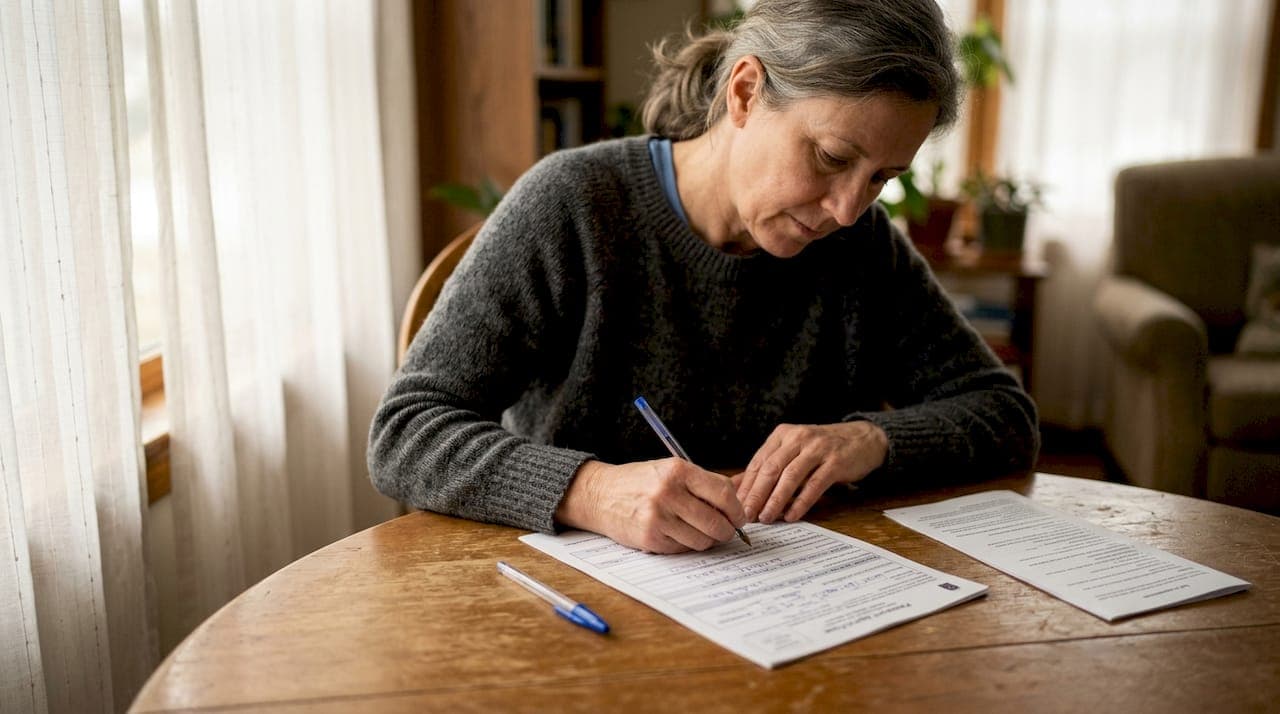
The "has applicant ever been married" passport question on Form DS-11 exists to verify your legal identity and confirm the correct name for your passport. It is not a background check, and it does not affect your eligibility. The State Department uses your answer to establish a legal name trail, specifically to confirm whether a name change has occurred that requires documentation. Understanding this single purpose makes the entire application process far less confusing.
How to answer the marriage question on your passport application
Section 11 of Form DS-11 asks whether you have ever been married and requests details about your current or most recent spouse only. You do not need to list every person you have ever married. The State Department needs enough information to verify your legal name, and your most recent marriage provides that.
Answer "Yes" if any of the following apply to you:
- You are currently married.
- You are divorced, even if the divorce was finalized years ago.
- You are widowed.
- Your marriage was annulled but was legally recognized at the time.
- You were in a common-law marriage recognized by the state where it occurred.
Answer "No" only if you have never been legally married in any jurisdiction.
When you answer "Yes," provide the full legal name of your current or most recent spouse, the date of that marriage, and your current marital status (married, divorced, or widowed). That is all the form requires. Legal experts confirm that "single" on a passport application covers those who are divorced or widowed, not just those who were never married. This distinction matters because it tells you exactly what box to check.

Answering "No" when you have been married is a false statement on a federal form. That creates a legal problem far more serious than any documentation hassle. If you are unsure whether a past relationship qualifies as a legal marriage, check with the vital records office in the state where the relationship occurred.
Pro Tip: If your most recent marriage ended in divorce or death, you still answer "Yes" to the marriage question. Your current marital status goes in the status field, not the "ever been married" field.
How does previous marriage affect name change document requirements?
Previous marriages affect your passport application only when they caused a name change. The State Department does not care about your marital history for its own sake. It cares whether the name on your application matches your legal name and whether you can prove any difference.
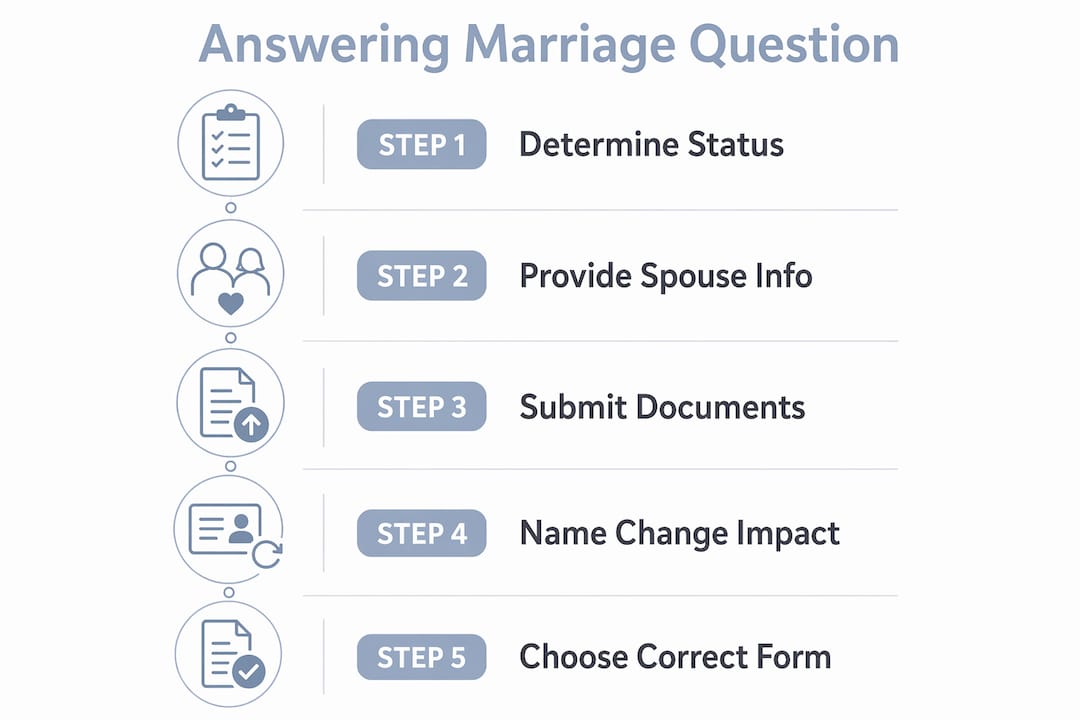
When you do need to submit documents
A certified marriage certificate is required if you are changing your passport name to a married name. Routine processing for a name change takes 4–6 weeks, and expedited processing takes 2–3 weeks, not counting mailing time. Plan accordingly if you have international travel scheduled.
A certified divorce decree is required if you are resuming a former name after divorce. The decree must show the court's order restoring your previous name. Not all divorce decrees include this language, so check yours before you submit.
Certified copies with embossed or raised seals are mandatory. Photocopies, notarized copies, and religious or unofficial certificates cause delays or outright rejection. Only documents issued by a government vital records office meet the standard.
When you do not need to submit documents
Applicants who keep their birth name after marriage do not need to submit a marriage certificate. If your legal name has not changed, the marriage question is simply a yes/no answer with spouse details. No additional paperwork is required.
Choosing the right form
| Situation | Correct form | Cost |
|---|---|---|
| Name changed, passport issued less than 1 year ago | DS-5504 | No additional fee |
| Name changed, passport issued 1–5 years ago | DS-82 (renewal by mail) | Standard renewal fee |
| First-time applicant or passport expired over 5 years | DS-11 (in person) | Standard application fee |
Form DS-5504 is the most cost-effective option if your passport is less than a year old and your name changed by marriage or court order. Using it correctly saves you the full renewal fee.
Pro Tip: Government-issued IDs in your new name, such as a driver's license or Social Security card, can serve as supporting proof alongside your certified marriage certificate. They are not substitutes, but they strengthen your submission.
What are the nuances in marital status reporting?
Some situations do not fit neatly into "married" or "never married," and the passport application does not always make the gray areas obvious.
Annulments. An annulment legally declares a marriage void, but if the marriage was legally recognized at any point, you should answer "Yes" to the marriage question. The annulment decree itself may be required if it resulted in a name change. If no name change occurred and the marriage was brief, the practical impact on your application is minimal, but truthfulness on the form is not optional.
Common-law marriages. The United States recognizes common-law marriages in a limited number of states, including Texas, Colorado, and Iowa. If your common-law marriage was legally valid in the state where it occurred, it counts as a marriage for passport purposes. You answer "Yes" and provide the relevant details. If you later moved to a state that does not recognize common-law marriage, the original state's recognition still applies.
Foreign marriages and divorces. A marriage performed in another country is generally recognized in the United States if it was legal where it occurred. The same applies to foreign divorces, though foreign divorce decrees sometimes require additional authentication, such as an apostille, before the State Department will accept them. If your foreign divorce decree is not in English, a certified translation is required alongside the original document.
The key principle across all these cases:
- The marriage question captures your legal name history, not a moral or social record.
- Overreporting or underreporting both cause processing delays.
- When in doubt, answer truthfully and let the documentation speak for itself.
- Previous marriages do not make you ineligible for a U.S. passport under any circumstances.
Practical steps to avoid delays on your passport application
Getting the marriage question right is straightforward when you prepare before you sit down to fill out the form.
-
Identify your correct form first. Check the issue date on your current passport. If it was issued less than a year ago and your name changed, use DS-5504. If it was issued 1–5 years ago, use DS-82. If you are applying for the first time or your passport expired more than five years ago, use DS-11 and apply in person at a passport acceptance facility.
-
Gather certified originals, not copies. Name change documentation must come from a government vital records office with an embossed or raised seal. Order these documents before you start your application, because processing times at vital records offices vary.
-
Check your divorce decree language. If you are resuming a former name, confirm that your divorce decree explicitly restores that name. If it does not, you may need a court order or additional documentation.
-
Match your passport name to your travel bookings. Mismatched names on your passport and airline tickets create identity verification problems at the airport. Update your passport before booking travel, or book travel in the name currently on your passport and update afterward.
-
Consider expedited processing if your trip is soon. Expedited processing takes 2–3 weeks, not counting mailing time. If your departure is within six weeks, contact the National Passport Information Center or visit a regional passport agency for an appointment.
-
Double-check every field before submitting. Errors on the marital status section, including leaving fields blank or providing inconsistent dates, are a common reason applications get returned for correction.
Key Takeaways
The "has applicant ever been married" passport question verifies your legal name only. It requires details about your most recent marriage, not your full marital history, and previous marriages never affect passport eligibility.
| Point | Details |
|---|---|
| Answer "Yes" for any legal marriage | Includes divorced, widowed, annulled, and common-law marriages recognized by law. |
| Only most recent marriage details required | Provide spouse name, marriage date, and current status. No need to list all prior spouses. |
| Name change drives document requirements | Submit a certified marriage certificate or divorce decree only if your legal name changed. |
| Use the right form to save time and money | DS-5504 is free for name changes within one year of passport issuance. |
| Match passport name to travel bookings | Mismatched names cause airport delays. Update your passport before booking international travel. |
What I've learned from watching applicants overcomplicate this question
The marriage question trips people up not because it is complicated, but because they assume it is. Applicants regularly come in having gathered years of divorce records, ex-spouse contact information, and marriage certificates from multiple past relationships. None of that is required. The form asks for one marriage's worth of details, and that is all you should provide.
The deeper issue is that people treat the passport application as if it were a legal deposition. It is not. The State Department wants to know your legal name and whether it has changed. That is the entire purpose of the marital status inquiry. Once you understand that framing, the question becomes simple.
The timing mistake I see most often is applicants who changed their name months ago but never updated their passport. They book international travel, realize the mismatch two weeks before departure, and then scramble for expedited processing. Updating your passport promptly after a name change is not bureaucratic housekeeping. It is practical protection against a preventable crisis.
One more thing: annulments confuse people more than any other marital status. If the marriage existed legally, even briefly, answer "Yes." The annulment decree handles the legal dissolution. Your job on the form is to report what happened, not to interpret whether it "counts."
— David
Passportcenter has the passport answers you need
Sorting out passport requirements after a marriage or name change does not need to be stressful. Passportcenter covers every step of the U.S. passport process in plain language, from form selection and document checklists to routine and expedited processing timelines. Whether you are applying for the first time, renewing after a name change, or trying to figure out which certified documents you actually need, Passportcenter gives you clear, reliable information without the runaround.
If your travel timeline is tight or your situation involves a recent name change, Passportcenter also connects you with trusted passport courier services that can help you move faster through the process.
FAQ
Does being divorced affect my passport eligibility?
No. Divorce, widowhood, and annulment do not affect U.S. passport eligibility in any way. The State Department uses marital status only to verify your legal name.
Do I have to list all my previous marriages on the passport application?
No. Form DS-11 requires details only about your current or most recent spouse. You are not required to list every prior marriage.
What documents do I need if my name changed after marriage?
You need a certified marriage certificate with an embossed or raised seal issued by a government vital records office. Photocopies and unofficial certificates are not accepted.
Does a common-law marriage count for the passport marriage question?
Yes, if the common-law marriage was legally recognized in the state where it occurred. You answer "Yes" to the marriage question and provide the relevant details.
Which passport form should I use after a name change?
Use DS-5504 if your passport was issued less than one year ago. Use DS-82 if it was issued 1–5 years ago. Use DS-11 if you are a first-time applicant or your passport expired more than five years ago.