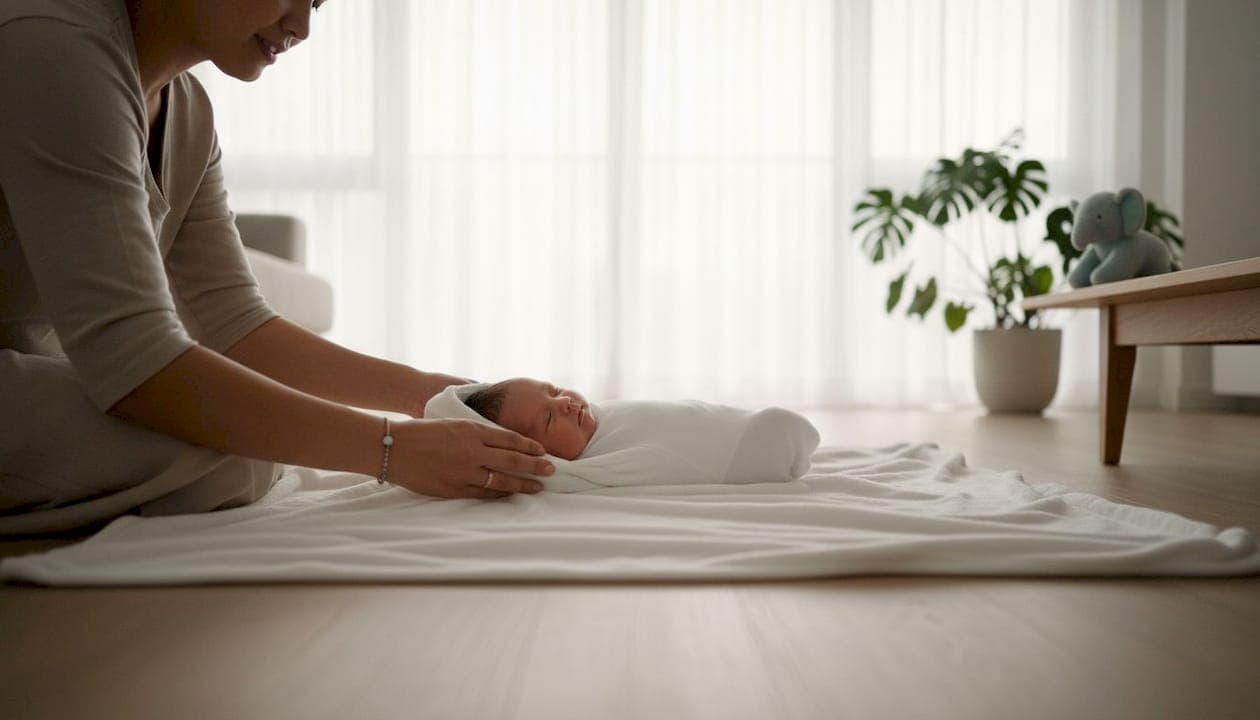
Infant passport photo requirements are defined by the U.S. Department of State as a strict set of standards covering photo size, head dimensions, background color, and expression rules that every baby's passport application must meet. The photo must be 2x2 inches with the head measuring between 1 and 1 3/8 inches from chin to crown. Getting this right the first time matters. A rejected photo delays your application, and with international travel plans on the line, that delay costs you time you may not have. Passportcenter covers these rules in plain language so you can submit with confidence.
What are the official U.S. infant passport photo specifications?
The U.S. Department of State sets the same core photo dimensions for infants as for adults. The photo must be 2x2 inches (51x51 mm), printed on photo-quality paper. The head size must fall between 1 and 1 3/8 inches (25–35 mm) measured from the bottom of the chin to the top of the head.
The background must be plain white or off-white, completely free of shadows, patterns, or objects. Any texture, wrinkle, or gray tint in the background is grounds for rejection. The photo must also be recent, taken within the last 6 months, to reflect your baby's current appearance.
Here is a quick reference for the core specifications:
| Requirement | Specification |
|---|---|
| Photo size | 2x2 inches (51x51 mm) |
| Head size (chin to crown) | 1–1 3/8 inches (25–35 mm) |
| Background | Plain white or off-white, no shadows |
| Photo age | Taken within the last 6 months |
| Number of photos required | One per application |
| Accessories | No hats, glasses, or props (religious exceptions apply) |
| Digital alterations | Not permitted; facial appearance must be unaltered |
Only one photo is required per passport application. That photo must be original and unaltered. The State Department prohibits any digital filters or enhancements that change how your baby's face looks. A simple crop or background cleanup for compliance purposes is acceptable, but nothing more.
Key specifications at a glance:
- Photo size: 2x2 inches, printed on photo paper
- Head size: 1–1 3/8 inches from chin to top of head
- Background: Plain white or off-white, no shadows or objects
- Recency: Taken within the last 6 months
- Accessories: No hats, glasses, pacifiers, or toys
- Alterations: No filters or facial edits of any kind
- Quantity: One photo per application
What special considerations apply to newborn passport photos?
Newborns present unique challenges that the State Department does acknowledge. Infants under 6 months may have their eyes partially or fully closed without causing a rejection. This is one of the few expression exceptions the government allows. For older infants, eyes must be open and visible.
Head support is another common concern. Your baby cannot hold their head up on their own, and you still need to keep your hands and body out of the frame. The State Department allows discreet support, but nothing except the baby's face and background should appear in the photo. A hand, arm, or shadow of a parent in the frame is an automatic rejection.
The most frequent infant-specific rejection causes include:
- Visible hands or body parts of the parent supporting the baby
- Hair falling across the face, obscuring facial features
- Shadows on the face or background from improper lighting
- Non-white or textured backgrounds, including patterned blankets
- Pacifiers, toys, or other objects appearing in the frame
Lighting is the factor parents underestimate most. Even slight shadowing on the baby's face or background can trigger an automatic rejection. Use diffuse front lighting, such as natural light from a window, and check carefully for shadows before you shoot.
Pro Tip: Position your baby near a large window with indirect daylight. This creates even, shadow-free lighting without the harshness of a flash or overhead bulb.
How can parents take a compliant infant passport photo at home?
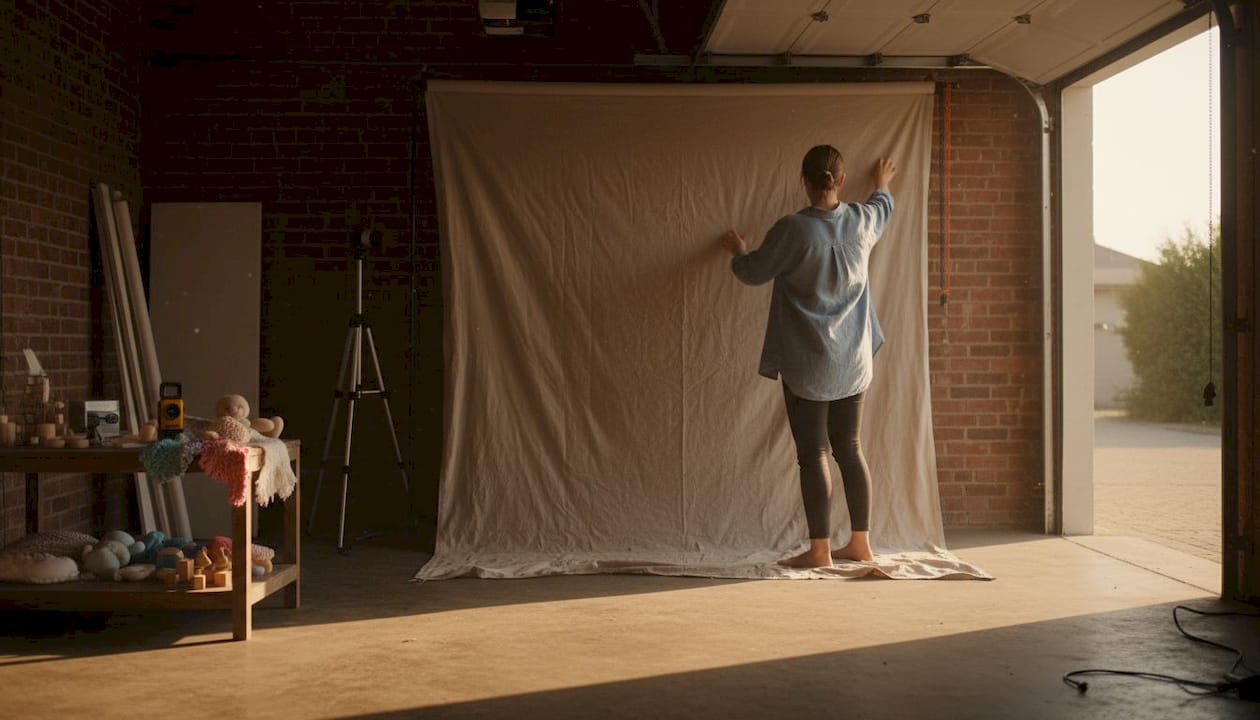
Taking a compliant photo at home is achievable with the right setup. The most reliable method for newborns is to lay the baby on a plain white sheet on a flat surface and photograph from directly above. This keeps the background clean and eliminates the need for visible support.
For older infants who can sit with some help, the car seat method works well. Drape a plain white sheet or fabric over the car seat so no pattern or color shows. Position the baby in the seat, step back about 18–24 inches, and shoot at eye level. This distance helps you capture the correct head size without aggressive cropping later.
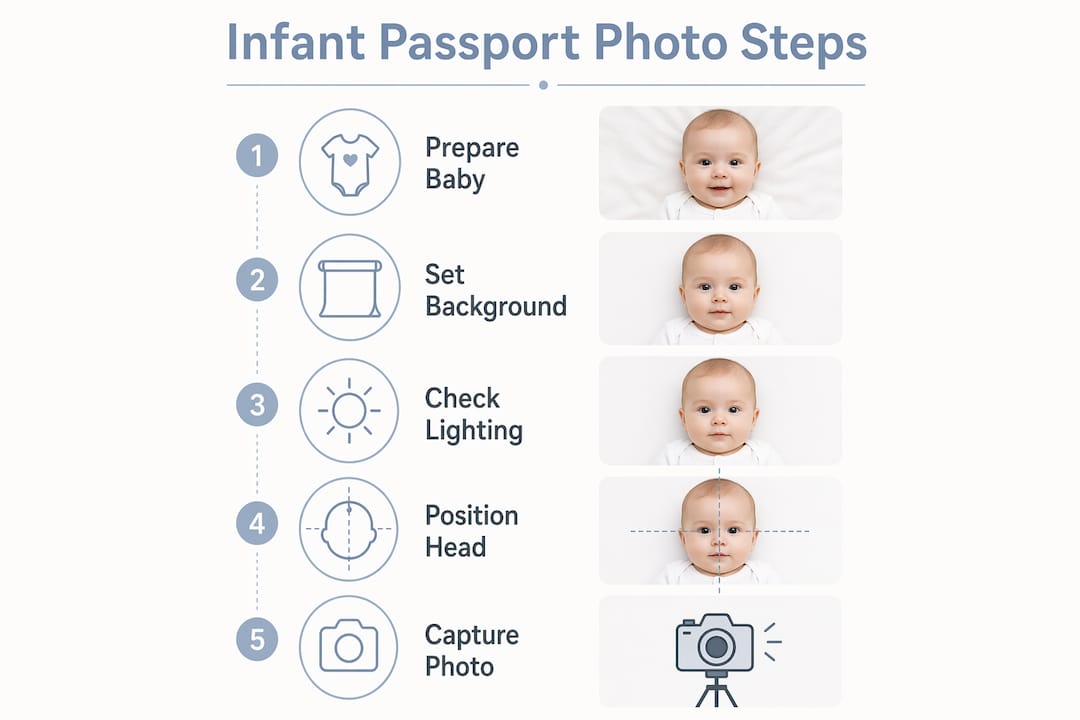
Follow these steps for the best results:
- Prepare the background first. Use a plain white sheet or poster board. Remove all wrinkles and check for shadows before placing your baby.
- Remove all accessories. Take off hats, headbands, pacifiers, and any toys before the session starts.
- Use natural light. Position near a window with indirect light. Avoid flash, which creates harsh shadows.
- Shoot from 18–24 inches away. This distance naturally frames the head within the required size range.
- Use burst mode. Multiple burst shots give you the best chance of capturing a frame where the baby's eyes are open and the head is properly positioned.
- Review photos immediately. Check for shadows, visible hands, and head size before ending the session.
- Keep the session short. A calm, well-rested baby cooperates far better than a tired one.
Cropping precision matters more than most parents realize. Frame the shot so the head size naturally fits within the required dimensions. Aggressive cropping after the fact often pushes the head outside the 1–1 3/8 inch range, which causes rejection.
Pro Tip: Shoot when your baby has just woken from a nap and is calm. A 10-minute window of alertness right after feeding is often the best time to get a clean, compliant shot.
What are the most common reasons infant passport photos get rejected?
Photo rejection is the most common reason passport applications for babies get delayed. Knowing the exact causes lets you fix them before you submit.
The top rejection reasons, in order of frequency:
- Incorrect head size. The head falls outside the 1–1 3/8 inch range, usually because the baby was too far or too close to the camera.
- Visible parent support. Hands, arms, or a parent's body appear in the frame.
- Shadows on the face or background. Shadows and non-uniform backgrounds are the top technical rejection cause for infant photos.
- Eyes closed for infants over 6 months. The closed-eye exception applies only to newborns under 6 months.
- Objects in the frame. Pacifiers, hats, or toys appearing in the photo lead to automatic rejection.
- Digital filters or alterations. Any app-based skin smoothing or color correction that changes facial appearance is prohibited.
- Non-white background. A patterned blanket, colored wall, or shadowed surface behind the baby will fail review.
Before you submit, run through this checklist: Is the background plain white with no shadows? Is the baby's head the only thing visible in the frame? Is the photo recent, unaltered, and printed on photo paper? If you can answer yes to all three, your photo is ready.
If your photo gets rejected, you can retake and resubmit within the application window. The State Department will notify you of the specific reason for rejection. Fix only the cited issue, retake the photo, and resubmit. Do not alter the original photo digitally to fix a rejection. Retake it from scratch.
Key Takeaways
Compliant infant passport photos require exact head sizing, a plain white background, and no visible parent support, making preparation the single most important factor in avoiding rejection.
| Point | Details |
|---|---|
| Head size is non-negotiable | The head must measure 1–1 3/8 inches from chin to crown in every submitted photo. |
| Newborn eye exception is limited | Only infants under 6 months may have eyes partially or fully closed without rejection. |
| Parent support must stay hidden | Hands, arms, or any adult body part in the frame causes automatic rejection. |
| Shadows are the top technical failure | Use diffuse front lighting and check for shadows before every shot. |
| Burst mode improves success rate | Multiple rapid shots capture the one compliant frame you need for submission. |
What I've learned from watching parents struggle with infant photos
Most parents walk into this process thinking the photo is the easy part. They focus all their energy on gathering the DS-11 form and birth certificate, then rush the photo at the last minute. That is the wrong order of operations.
The photo is the most rejection-prone element of the entire application. I have seen parents submit three or four times before getting it right, not because the rules are complicated, but because they skipped the preparation. A wrinkled white sheet, a flash that creates a shadow, a pacifier left in the baby's mouth. These are fixable problems that cost weeks of delay.
The other thing parents consistently get wrong is chasing the perfect expression. Your baby does not need to smile or look alert. Focus on the measurable criteria: head size, background, lighting, and no visible support. Expression is the last thing the reviewer cares about for an infant. Prioritize the technical requirements, and the rest takes care of itself.
Timing the session matters more than any equipment. A calm, fed, recently rested baby gives you a workable window. A tired or hungry baby gives you nothing. Plan the session around your baby's schedule, not yours.
— David
Passportcenter can help you get this right
Getting your baby's passport photo right is stressful, but you do not have to figure it out alone. Passportcenter is a free resource built specifically to help U.S. parents and travelers understand passport photo rules and application steps in plain language.
Whether you need to confirm the exact head size range, understand why a photo was rejected, or find out what comes next in the application process, Passportcenter covers it all without the government jargon. The site also connects parents who need faster processing to trusted passport courier services. Visit Passportcenter to get clear answers and move your application forward with confidence.
FAQ
What size does an infant passport photo need to be?
The photo must be 2x2 inches (51x51 mm), with the baby's head measuring between 1 and 1 3/8 inches from chin to crown. These dimensions apply to all U.S. passport applicants, including newborns.
Can a newborn's eyes be closed in a passport photo?
The State Department allows infants under 6 months to have their eyes partially or fully closed. For babies older than 6 months, eyes must be open and clearly visible.
How do I keep my hands out of the frame while supporting my baby?
Lay your newborn flat on a plain white sheet and photograph from above. For older infants, use a car seat covered with white fabric so the support structure stays out of the frame.
What background is required for a baby passport photo?
The background must be plain white or off-white with no shadows, patterns, or objects. A plain white sheet or poster board placed on a flat surface works well for home photos.
How many passport photos do I need for an infant application?
Only one photo is required per passport application. That single photo must meet all U.S. Department of State specifications, including correct size, background, and no digital alterations.