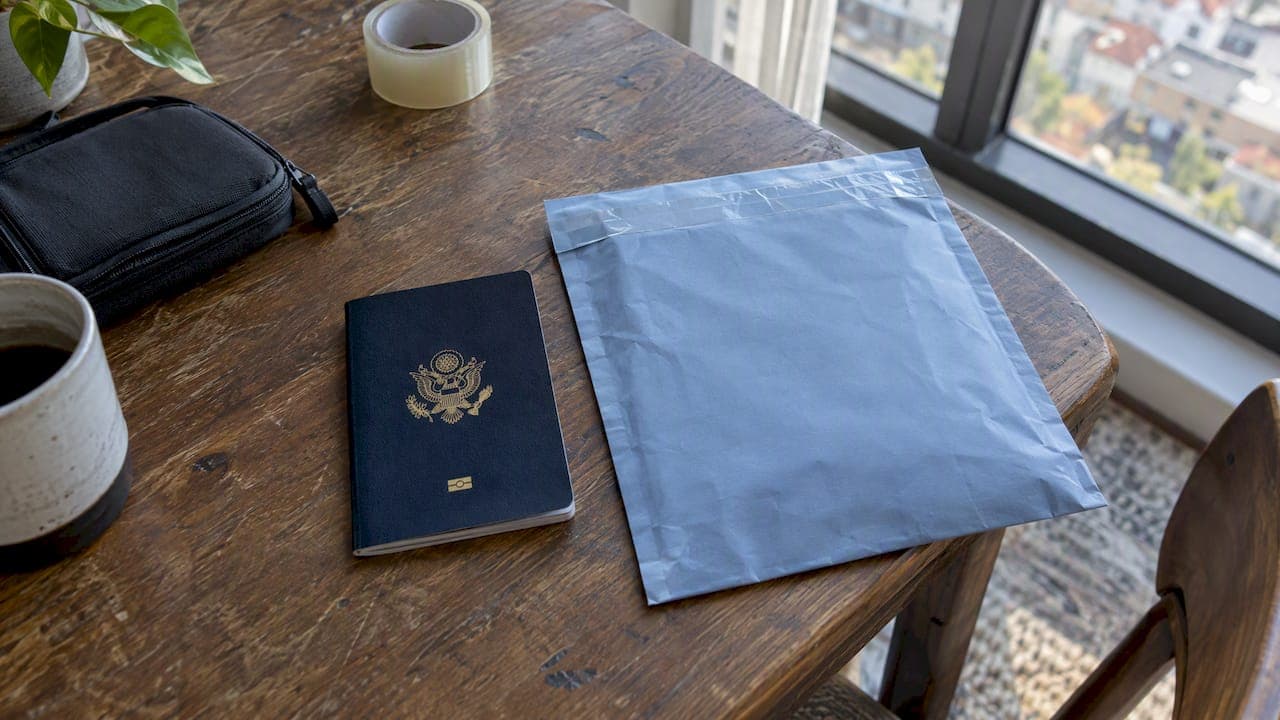
Yes, you can renew a U.S. passport while abroad. Most eligible adults renew by mail or by following instructions from the nearest U.S. embassy or consulate, while urgent travel requires an embassy or passport-agency appointment. Confirm your DS-82 eligibility now, then follow the country-specific mailing or embassy process that applies to where you live.
TL;DR:
- Only eligible adults can renew by mail from abroad, provided their last passport was issued within the past 15 years and they are at least 16 years old.
- Urgent travel within two weeks requires booking an appointment at the nearest U.S. embassy or consulate, not routine mail renewal.
- Applying in person is mandatory if the passport is older than 15 years, lost, stolen, damaged, or if local embassy rules specify it.
- Common issues delaying renewals are incomplete paperwork, non-compliant photos, or untracked mailing; verifying requirements beforehand can prevent delays.
- Processing times vary, with international mailing adding several weeks, so build extra days into your schedule for delays and postal transit.
Table of Contents
- Who can renew abroad and the three renewal routes
- Quick comparison: mail, embassy/consulate, or U.S. passport agency
- How to renew by mail from abroad: a step-by-step checklist
- Urgent travel and life-or-death emergencies: appointments and emergency passports
- Required documents, photo rules, and fees when renewing from abroad
- How long a renewal takes and top causes of delay
- When you must apply in person and immediate next steps
- How to check the rules for the country where you are
- PassportCenter.ai checklist and where to find practical help
- Avoiding common mistakes when renewing abroad
- Where PassportCenter.ai can help next
- FAQ
- Sources
Who can renew abroad and the three renewal routes
Before you pick a method, check whether you qualify for mail renewal under Form DS-82. The eligibility rules are the same whether you're in the U.S. or overseas, but your options for submitting the form differ once you're abroad.
You generally qualify for mail renewal if:
- Your most recent passport was issued within the last 15 years.
- You were at least 16 years old when it was issued.
- Your passport is not lost, stolen, or significantly damaged.
- You currently have that passport in your possession to submit with your application.
If any of those boxes go unchecked, you'll need to apply in person. That includes children under 16, anyone whose last passport is more than 15 years old, and anyone replacing a lost, stolen, or damaged book.
For travelers with imminent flights, a third track exists: expedited help through a U.S. embassy, consulate, or passport agency when routine timelines won't work. We'll cover exact thresholds for "urgent" in a later section, but the short version is this: if you're leaving within two weeks, routine mail renewal isn't a realistic option, and you need to contact the nearest mission directly.
Quick comparison: mail, embassy/consulate, or U.S. passport agency
Picking the right channel saves you weeks. Here's how the three options stack up.
- Mail renewal works best for eligible adults with no travel deadline pressure. It costs the standard fee, but total turnaround includes international mailing time on both ends.
- Embassy or consulate application is required when your destination country doesn't support mail-in renewal, when you're renewing a child's passport, or when your passport was lost, stolen, or damaged. Local mission rules vary, so confirm with the specific post.
- Passport agency or urgent appointment applies when you're traveling internationally within 14 days or facing a documented emergency. This route demands proof of travel and moves fastest but requires booking an appointment through the nearest embassy or consulate.
Mail is cheaper and simpler when you have the time. In-person service is mandatory in several common scenarios, not just a faster alternative. Urgent processing exists specifically to solve the "I'm flying next week and my passport just expired" problem, not routine renewals that were put off too long.
How to renew by mail from abroad: a step-by-step checklist
If you're eligible for mail renewal, the process is straightforward once you know the order of operations.
- Confirm your DS-82 eligibility (issued within 15 years, issued at 16 or older, not lost or damaged, currently in your possession).
- Fill out Form DS-82 online, then print it. This produces a 2D barcode that speeds data entry on the processing end.
- Attach one compliant passport photo that meets size, background, and lighting specifications.
- Include your most recent U.S. passport. It will be returned to you after your new one is issued, per the Department of State's guidance on renewing from Canada, which describes the mail-in channel some missions offer.
- Pay according to your mission's specific instructions. Some posts require a U.S. dollar check or money order, while others direct applicants to pay through pay.gov, which changes where you mail your packet.
- Mail your application to the correct address: the National Passport Processing Center in the U.S. for standard mail-in cases, or directly to your embassy when pay.gov payment is used and the mission requires it.
- Write "EXPEDITE" on the envelope only if your post's instructions say to, and use a trackable international shipping method so you can confirm delivery.
Pro Tip: Photograph every document before you mail it. If anything goes missing in transit, you'll have exactly what you submitted on hand to resend or reference.
After submission, expect a processing window similar to domestic renewals, plus the mailing time added on both legs of the trip.
Urgent travel and life-or-death emergencies: appointments and emergency passports
If you're flying internationally within 14 days, that counts as urgent travel under State Department guidance, and mail renewal won't get you a passport in time — you can get urgent-document assistance to help with urgent appointment procedures. You'll need to contact the nearest U.S. embassy or consulate directly and request an appointment.
For a documented life-or-death emergency, appointments are prioritized even more tightly, according to the Department of State's emergency passport guidance, which notes that urgent appointments are reserved for genuinely imminent travel and critical situations, not convenience.
Expect to bring:
- Proof of travel, such as an airline ticket or confirmed itinerary.
- Valid photo identification.
- Proof of U.S. citizenship if your current passport was lost, stolen, or is otherwise unavailable.
Urgent appointments generally require proof of travel within about two weeks, according to the Department of State's urgent travel guidance. In genuine emergencies, embassies can issue a limited-validity passport, a short-term document meant to get you home or to your next destination. You'll need to replace it with a full-validity passport once you're back on a normal timeline, as outlined in the Department of State's limited-validity passport guidance.
Required documents, photo rules, and fees when renewing from abroad
Incomplete paperwork is the single biggest reason renewals stall. The Department of State's guidance on lost or stolen passports notes that missing documents and non-compliant photos are common causes of delay, whether you're applying by mail or in person.
Before you submit anything, gather:
- Your current (or most recent) U.S. passport.
- Legal documentation of any name change, such as a marriage certificate or court order.
- Additional proof of citizenship if your case involves a lost, stolen, or very old passport.
Photo rejections are avoidable. Use a plain white background, neutral expression, and recent image, following the Department of State's published photo specifications exactly.
Standard adult fees are the currently applicable official amounts for a passport book, a passport card, or both together, according to the Department of State's fee chart. Some missions require a U.S. dollar check or money order, while others route payment through pay.gov, which changes your mailing address. Confirm the accepted payment type with your specific embassy before you prepare your packet.
How long a renewal takes and top causes of delay
Routine mail renewal, expedited service, and passport agency urgent processing each run on different clocks, and those estimates don't include mailing time. The Department of State's processing time page clarifies that international mail transit is additional on top of standard processing windows, often adding one to several weeks each direction depending on your location.

The most common delays we see are self-inflicted: incomplete forms, photos that don't meet spec, missing name-change documents, or mail sent without tracking. Each is avoidable with a five-minute check before you seal the envelope. If your timeline is tight, build in extra days for international postal variability rather than assuming best-case transit.
When you must apply in person and immediate next steps
Some situations rule out mail renewal entirely. You must apply in person if:
- The applicant is a child under 16.
- Your most recent passport was issued more than 15 years ago.
- Your passport was lost, stolen, or significantly damaged.
- Your mission's local rules require in-person applications regardless of eligibility.
If your passport was lost or stolen, report it to local police when your embassy requires a police report, then follow your mission's specific replacement instructions, per the Department of State's lost or stolen passport guidance. From there, find your embassy's "U.S. Citizen Services" page, book the appointment it directs you to, and bring every document listed, including photos and payment in the accepted format.
How to check the rules for the country where you are
Embassy procedures aren't uniform. Some posts, like the U.S. mission in Canada, offer a mail-in channel with specific instructions on where to send your packet. Others require in-person applications for every renewal, no exceptions.
Before you do anything else, find your nearest U.S. embassy or consulate's "U.S. Citizen Services" page. Look for:
- Mailing addresses (these can differ from the generic National Passport Processing Center).
- Appointment booking links, if in-person service is required.
- Accepted payment formats, since some posts use pay.gov while others require a check or money order.
- Posted notices about delays, closures, or local holidays that affect processing.
If instructions seem unclear or contradictory, contact the mission directly before you mail anything or show up without an appointment.
PassportCenter.ai checklist and where to find practical help
Our quick-reference order: confirm eligibility, complete your forms, check your photo, confirm payment format, then mail or book your appointment. Our eligibility checklist and printable renewal checklist walk through each step with country-specific notes so you're not guessing at mission rules.
Avoiding common mistakes when renewing abroad
The renewals that stall almost always trace back to the same three things: a photo that doesn't meet spec, missing name-change paperwork, or payment sent in the wrong format for that mission. Check all three before you mail anything or walk into an appointment.
Photograph every document and keep digital copies before you submit originals. If you're booking an embassy appointment, do it as soon as you know your travel dates rather than waiting until the 14-day window forces your hand. When timelines are genuinely tight, a vetted expedited courier service can handle logistics you don't have time for, though it won't replace the embassy appointment itself for urgent cases.
— David
Where PassportCenter.ai can help next
Renewing from abroad means dealing with rules that differ by mission, and tracking down the right page for your specific embassy takes time you might not have. We built our country-specific guides and checklists to cut through that confusion, covering mailing instructions, payment formats, and appointment requirements by location.
If your travel date is close and you need expedited help, our guide to legitimate expedited options covers vetted courier partners who handle the logistics around urgent processing. Visit Passportcenter for the checklist that matches your situation.
FAQ
Can I renew my U.S. passport while in another country?
Yes. Eligible adults can renew by mail using Form DS-82, following instructions specific to the country where they're located, according to the Department of State's renewal guidance for Canada as one example of mission-specific mail procedures. If you don't qualify for mail renewal, you'll need to apply in person at the nearest embassy or consulate.
How do I renew a passport abroad as a U.S. citizen?
Confirm your DS-82 eligibility first, then follow your specific embassy or consulate's mailing instructions if mail renewal is offered, or book an in-person appointment if it's required. Processing time depends on routine, expedited, or urgent status, plus international mailing transit on both ends.
Can I renew my passport if I am in another country but not eligible for mail renewal?
If you don't meet DS-82 criteria, such as having a passport older than 15 years or one that's lost or damaged, you must apply in person at the nearest U.S. embassy or consulate. Find the mission's "U.S. Citizen Services" page to book an appointment and confirm required documents.
What does a black U.S. passport mean?
Standard U.S. passports issued to the public are blue, not black. Black covers are not an official U.S. passport color for general citizen use, so if you've seen this claim, it's not based on current Department of State issuance.