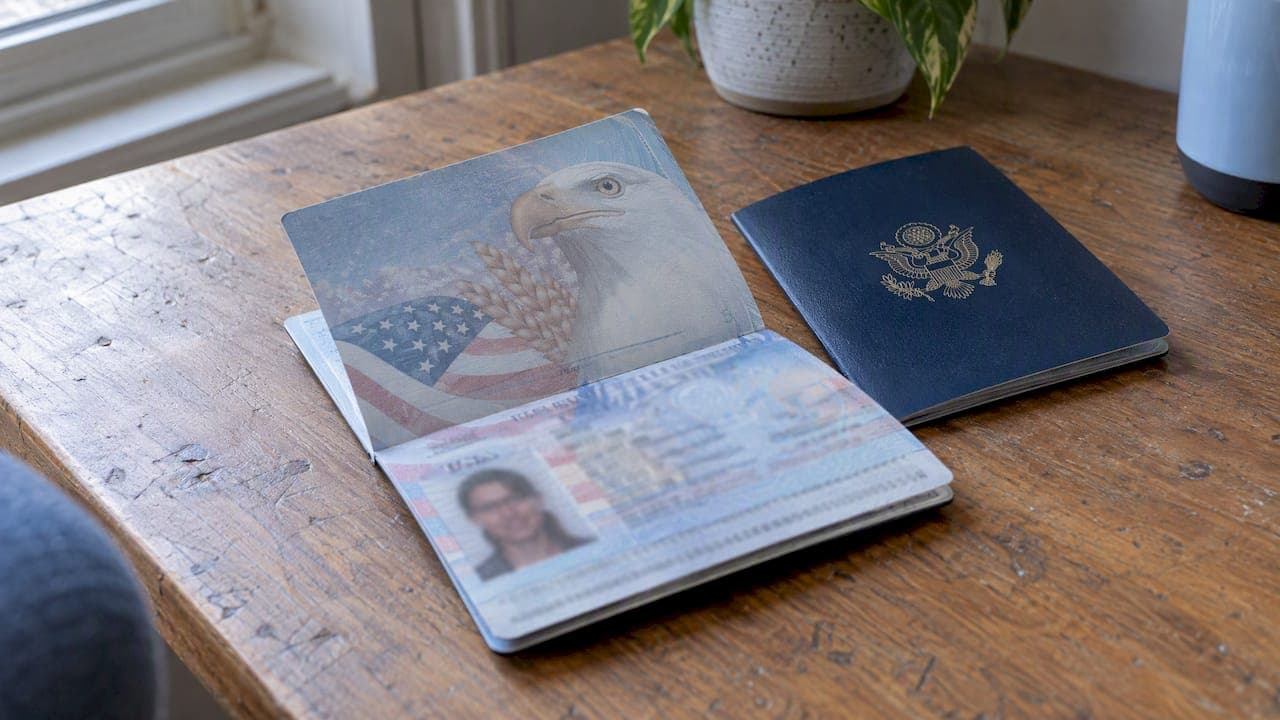
A passport book number is an inventory control number that some governments print inside travel documents, but U.S. passports may or may not display one. If yours does not show one, the passport number on your data page is the identifier you actually need for most applications and forms.
TL;DR:
- Check the data page, second page, and inside back cover; a matching number is not a separate inventory control number.
- Next Generation U.S. passports carry a one letter, eight digit passport number perforated through every page; use that identifier for travel and visa forms.
- When a form asks for a book number that your passport does not show, enter your passport number unless the instructions explicitly say otherwise.
- Never use an application locator or tracking number in its place; those identifiers track processing and expire after your passport is issued.
- If a government portal rejects your passport number or demands a specific format, contact the agency or consulate instead of guessing.
Table of Contents
- What a Passport Book Number Actually Is
- How This Differs From Your Passport Number
- Step-by-Step: Finding a Passport Book Number on a U.S. Passport
- If Your U.S. Passport Has No Passport Book Number
- Common Situations That Ask for a Passport Book Number
- Our Take on the Book Number Confusion
- How PassportCenter.ai Can Help With What Comes Next
- FAQ
- Sources
What a Passport Book Number Actually Is
A passport book number, sometimes labeled an inventory control number (ICN), is a tracking number that issuing authorities use to manage printed passport books before and after they reach a traveler. It is not unique to the United States. Many countries use this kind of number internally, which is why international visa forms and travel portals often ask for it by default, regardless of which country issued your passport.

According to the Department of State's DS-160 FAQ, the passport book number is commonly called the inventory control number, and applicants may or may not have one printed in their passport. That single line explains most of the confusion American travelers run into when a foreign visa form demands a number that simply is not there.
You may see this concept referred to by a few different names depending on the form or country:
- Inventory control number (ICN)
- Passport book number
- Booklet number or document control number
How This Differs From Your Passport Number
Your passport number is permanent for the life of that document and printed directly on your data page. Passports issued under the Next Generation design (rolled out starting in 2021) carry a perforated passport number made of one letter followed by eight digits, punched through every page of the book as a security feature, according to the Department of State's documentation on passport design.
That is different from:
- Application locator numbers, which track your application while it processes and disappear once your passport is issued.
- Inventory control or book numbers, which some countries print but the United States does not consistently include.
The perforated passport number format is one letter plus eight digits, stamped through every page of Next Generation U.S. passports, making it the most reliable number to use for travel, visa forms, and Trusted Traveler accounts.
Step-by-Step: Finding a Passport Book Number on a U.S. Passport
Here is how to check your own passport, in order, without guessing:
- Open to the data page. This is the page with your photo, name, date of birth, and passport number. Check the upper right corner and the machine-readable zone at the bottom for any secondary number labeled "book number," "ICN," or similar.
- Look at the second page. Some printed U.S. passports include a barcode or a short alphanumeric string near the top of the inside second page. Compare it to your passport number: if it matches, it is not a separate book number.
- Check the inside back cover. Older and newer passport designs sometimes print a barcode here that corresponds to internal government tracking. This is the closest thing to a book number you are likely to find.
- Confirm what you found. If every number you see on the data page, second page, or back cover matches your eight-character passport number, your passport does not carry a separate inventory control number, which is expected and not an error.
A typical U.S. passport number looks like A12345678, one letter followed by eight digits. If a form asks for a book number and all you can find is that same string, that is the number to enter.
Pro Tip: Photograph your data page and back cover before you travel, so you have every printed number on hand if a form or airline portal asks for one you cannot immediately locate.
If Your U.S. Passport Has No Passport Book Number
This is common, and it has a straightforward fix. The DS-160 FAQ directly addresses it: applicants may or may not have a passport book number, and the form's own instructions should guide what to enter when the field is blank on your document.
Practical rules to follow:
- When a book number field appears and your passport has none, enter your passport number instead unless the form explicitly says otherwise.
- Do not substitute an application locator number or tracking number for a passport book number; they serve different purposes and expire once your passport is issued, per Department of State tracking guidance.
- If a government portal rejects a blank field or demands a specific format, contact the requesting agency or consulate rather than inventing a number.
Common Situations That Ask for a Passport Book Number
A few recurring scenarios bring up this question, and most have the same resolution.
- Visa application portals, especially DS-160 and similar foreign government forms, use the term because many countries do print an inventory number.
- Immigration, customs, or identity verification forms sometimes list "book number" as an optional field rather than a required one.
- Money transfer or financial verification checks occasionally reference a book number as one of several accepted identifiers, alongside your passport number.
In nearly every case, supplying your passport number when no book number exists satisfies the request. When a form will not accept that substitution, reach out to the consulate, agency, or platform support team handling that specific application.
Our Take on the Book Number Confusion
Most of the anxiety around passport book numbers comes from forms borrowing international terminology that does not match how the United States actually prints its passports. The fix is rarely complicated. Keep your passport number recorded somewhere safe, use it when a book number field comes up empty, and contact the issuing authority directly if a portal will not accept that. Frequent travelers nearing a full passport should also look at the large book option before their next renewal, since pages cannot be added later.
— David
How PassportCenter.ai Can Help With What Comes Next
We built PassportCenter.ai to answer exactly this kind of question in plain language, backed by direct citations to Department of State guidance rather than guesswork. Beyond passport book numbers, we keep our guides current on renewal timelines, Trusted Traveler updates, and the paperwork that trips up first-time applicants.
A few places to go next:
- Read our breakdown of what to update when your passport number changes, especially if you are renewing soon.
- If you travel often and worry about running out of visa pages, see our options for adding pages or getting a second passport.
- Before you submit any application, make sure your photo meets requirements: services like Lumaris Photo's passport photo packages check compliance and deliver print-ready images so a bad photo does not delay your paperwork.
Visit Passportcenter for our full library of guides, tools, and connections to vetted expedited courier services when you need your passport processed faster than standard timelines allow.
FAQ
Do passport books have 28 or 52 pages?
U.S. passport books are available in standard and large book options, with the large book recommended for travelers who expect to need more visa space, according to Department of State guidance. Because pages cannot be added after issuance, frequent international travelers should request the large book when applying.
Where will I find my passport book number?
Check your data page first, then the second page and the inside back cover for a barcode or short alphanumeric string separate from your main passport number. Many U.S. passports do not include a separate book number at all, which the DS-160 FAQ confirms is normal.
Where is my 9 digit passport number?
A nine-character combination you encounter on government forms is more likely an application locator number used only during processing, not your final passport number. Your actual passport number is the one letter plus eight digits perforated into each page of a Next Generation U.S. passport.
Can you provide an example of a passport book number?
A typical U.S. passport number format looks like A12345678, one letter followed by eight digits, and this is usually the number to enter when a form asks for a book number but your passport does not print one separately. If a form specifically requires an inventory control number and yours has none, follow that form's own instructions or contact the issuing agency.
Sources
The clearest statement on this topic comes directly from the State Department's own guidance:
That line, from the DS-160 FAQ, settles the question for most travelers. On the security side, Next Generation U.S. passports add a polycarbonate data page and a perforated passport number as built-in verification features, which makes the passport number itself harder to forge and easier for border agents to confirm.
For related questions, our guides on updating accounts after a passport number changes and renewing a U.S. passport cover what happens to your identifiers once a new book is issued.
- DS-160: Frequently Asked Questions