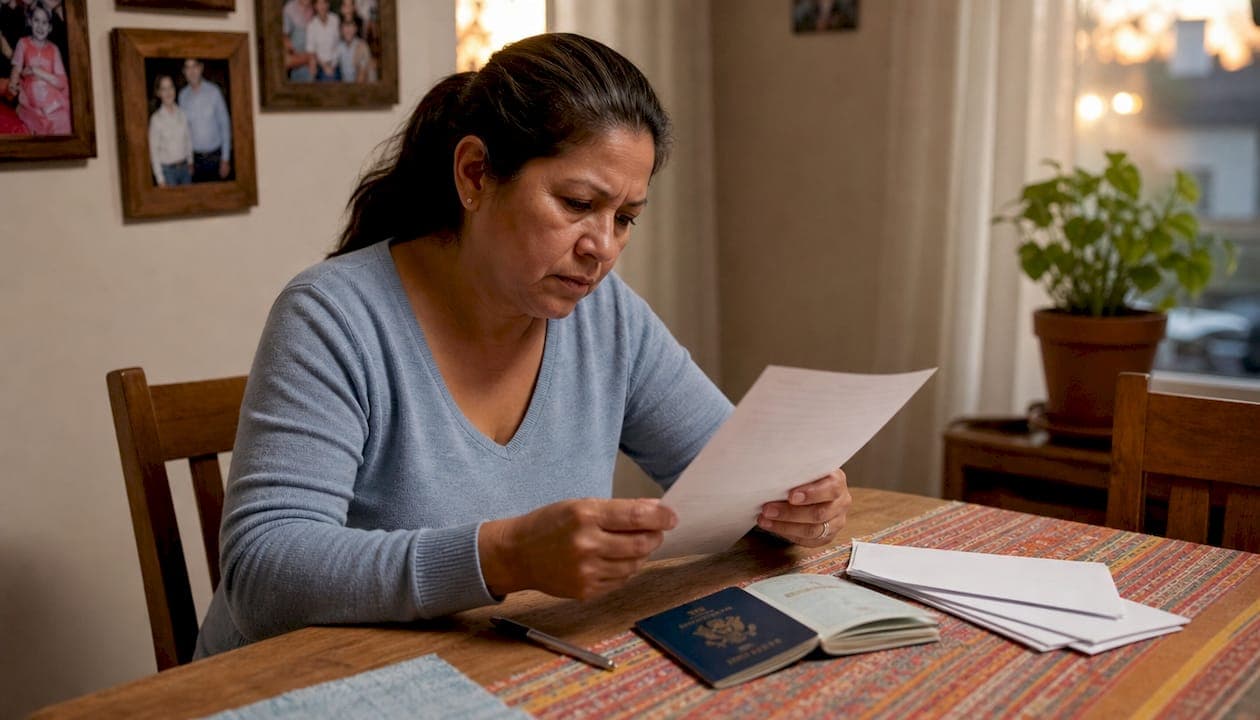
A passport warrant is an outstanding arrest warrant that can block you from obtaining or renewing a U.S. passport, particularly when it involves felony charges or court-ordered travel restrictions. The U.S. Department of State reviews your legal status during every passport application and renewal. Outstanding felony warrants are the primary disqualifiers, and the State Department will almost always deny your application to prevent flight from prosecution. Understanding exactly where you stand legally is the first step toward protecting your ability to travel.
How do different types of warrants affect your passport?
Not all warrants carry the same weight when it comes to passport eligibility. The type of warrant you have determines whether you face an automatic denial, a possible delay, or no impact at all.
Felony warrants are the most serious category. Federal, state, or local felony warrants block passport issuance in nearly every case. The State Department treats active felony warrants as automatic denials in practice, even though the formal rule describes the denial as "discretionary." The intent is clear: the government will not issue a travel document to someone who may use it to flee criminal charges.

Misdemeanor and traffic warrants sit in a different category. Minor warrants typically do not block passport issuance, but they can still flag your application during background checks. State Department agents have discretion to delay processing when your record raises questions. A simple unpaid traffic ticket is unlikely to stop your passport, but an unresolved misdemeanor with an active bench warrant is a different matter.
Bench warrants are issued by a judge when you fail to appear in court or violate a court order. They are not the same as arrest warrants issued by law enforcement, but they carry real consequences. A bench warrant can trigger a travel restriction if the judge included one in the order. Courts in some states also report bench warrants to federal databases, which the State Department can access.
Here is a quick breakdown of how warrant types typically affect passport applications:
- Active felony warrant: Near-automatic denial; passport will not be issued
- Federal drug trafficking conviction: Statutory denial under 22 U.S.C. § 2714
- Bench warrant with travel restriction: Denial or hold until the court order is resolved
- Misdemeanor warrant: Usually no denial, but possible delay or flag
- Unpaid traffic citation: Rarely affects passport; low risk of flagging
Pro Tip: Run a warrant check on yourself before you apply. Many county court websites offer free public record searches. Knowing your status before you walk into a passport acceptance facility gives you time to address any issues without risk.
What to expect during the passport application process with a warrant
The State Department does not operate its own independent warrant database. It relies on inter-agency data sharing with federal and state law enforcement systems. That means the accuracy of what gets flagged depends entirely on whether the issuing agency has reported your warrant to those shared databases. Some warrants appear immediately; others take weeks or months to show up.
Here is what typically happens when your application is flagged:
- Application submitted: Your name, date of birth, and Social Security number are run against law enforcement databases during processing.
- Flag triggered: If a match appears, your application is placed on hold and reviewed by a State Department adjudicator.
- Denial issued: If the warrant is confirmed as an active felony or a court-ordered travel restriction, you receive a written denial explaining the reason.
- Appeal or resolution required: You cannot simply reapply. You must resolve the underlying warrant before resubmitting.
The DS-11 passport application form explicitly asks whether you have outstanding felony warrants or travel-restricting court orders. Answering dishonestly is a federal crime. Falsifying a passport application adds a separate federal felony charge to whatever warrant already exists against you. The background check will catch the discrepancy anyway.
The in-person risk is real and underappreciated. Passport acceptance facilities operate as federal sites integrated with criminal databases. If you walk in with an active warrant, staff can run a check on the spot, and law enforcement can be called. Arrests at passport offices happen.
Pro Tip: If you suspect you have an active warrant, consult a criminal defense attorney before submitting any passport application. An attorney can confirm your warrant status through official channels without putting you at physical risk.
Can you get a limited-validity passport with an unresolved warrant?
A limited-validity passport is a narrow exception, not a loophole. Individuals with felony warrants may receive one in specific circumstances, typically when they are stranded abroad and need to return to the United States. The State Department issues these documents to facilitate a return trip, not to enable general international travel.
The table below shows how a limited-validity passport differs from a standard passport:
| Feature | Standard Passport | Limited-Validity Passport |
|---|---|---|
| Validity period | 10 years (adult) | Expires shortly after return travel |
| Travel scope | Worldwide | Return to the U.S. only |
| Eligibility | Standard applicants | Stranded travelers with unresolved warrants |
| Renewal path | Standard renewal process | Requires warrant resolution first |
| Use for new trips | Yes | No |
A limited-validity passport does not clear your warrant. It does not restore your full travel rights. Once you return to the United States, the document expires and you are back to square one legally. Resolving the underlying warrant remains the only path to a standard passport.
How to resolve a passport warrant and regain eligibility
The State Department enforces passport restrictions. It does not lift them. Clearing a passport hold requires resolving the warrant directly with the court or law enforcement agency that issued it. No amount of correspondence with the State Department will change your status until the issuing agency updates its records.
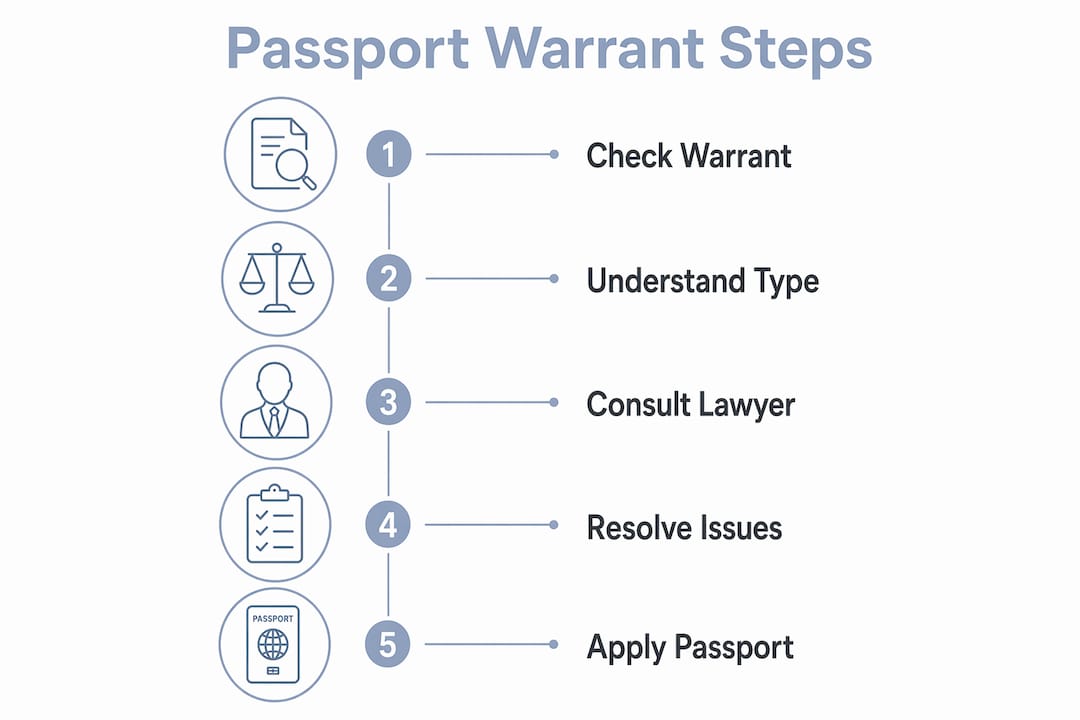
The resolution process follows a clear sequence:
- Identify the issuing court or agency: Confirm exactly which court issued the warrant and what jurisdiction it falls under.
- Consult a criminal defense attorney: An attorney can negotiate with the court to quash, withdraw, or satisfy the warrant without triggering an arrest.
- Appear in court or comply with terms: Many warrants can be resolved by appearing before the judge, paying outstanding fines, or completing required conditions.
- Obtain certified documentation: The court must issue official paperwork confirming the warrant is resolved. A verbal confirmation is not enough.
- Submit documentation with your passport application: Certified legal documentation from the court must accompany your new passport application to show the hold has been lifted.
- Allow time for database updates: Even after the court resolves the warrant, it can take days or weeks for federal databases to reflect the change.
The State Department relies on the issuing agency to update records before it will issue a new passport. Submitting your application too soon after resolution, before the databases sync, can result in another denial even though your warrant is technically cleared.
Pro Tip: Ask the court clerk for a certified copy of the order quashing or satisfying the warrant. Bring that document with you when you reapply. It gives the State Department immediate proof without waiting for database updates.
Tips to avoid passport warrant issues and protect your travel rights
Prevention is far simpler than resolution. Most passport warrant problems start with ignored legal notices, missed court dates, or unpaid fines that escalate over time. A few consistent habits keep your travel rights intact.
- Check for outstanding warrants regularly. Many county and state court websites offer free public record searches. Run your name at least once a year, especially before planning international travel.
- Respond to every traffic citation and legal notice promptly. Unpaid citations can escalate to bench warrants faster than most people expect. Handle them before they become a bigger problem.
- Consult a criminal defense attorney if you face charges. An attorney can often negotiate terms that keep a warrant from being issued in the first place.
- Understand your probation or parole travel restrictions. If you are on probation or parole, your supervising officer must approve international travel. Applying for a passport without that approval can violate your terms and trigger a warrant.
- Use reliable resources for passport guidance. Passportcenter covers passport eligibility rules and application requirements in plain language, so you know exactly where you stand before you apply.
Key takeaways
A passport warrant, meaning an active felony warrant or court-ordered travel restriction, will block your U.S. passport application until the issuing court resolves it.
| Point | Details |
|---|---|
| Felony warrants block passports | Active felony warrants result in near-automatic denial by the State Department. |
| Misdemeanors carry lower risk | Minor warrants rarely block passports but can delay or flag your application. |
| In-person applications carry arrest risk | Passport acceptance facilities run live warrant checks and can call law enforcement. |
| Limited-validity passports are narrow exceptions | They allow a return trip to the U.S. only and do not restore full travel rights. |
| Resolution requires court action | Only the issuing court can lift a warrant; the State Department cannot clear it for you. |
What I've learned from watching people misread this process
People consistently make the same mistake: they think the State Department is the problem, so they try to fix it there. They write letters, call passport agencies, and ask adjudicators to make exceptions. None of that works. The State Department is the messenger, not the decision maker. The court that issued the warrant holds all the power.
The second mistake I see is people applying for a passport hoping the warrant won't show up. The State Department's inter-agency data sharing is imperfect, and some warrants do slip through. But applying in person with an active warrant is a gamble with serious consequences. An arrest at a passport office is a far worse outcome than a denial letter.
The third mistake is waiting. Warrants do not expire on their own in most jurisdictions. They sit in the system indefinitely, blocking travel rights and accumulating legal risk. Every month you delay resolution is another month you cannot travel freely. The fix is almost always simpler than people fear. A single court appearance, a paid fine, or a negotiated agreement with the court can clear a warrant that has been sitting unresolved for years. Get an attorney, go to court, and get the paperwork. Then reapply.
— David
Passport warrant questions? Passportcenter has the answers
Dealing with a passport hold is stressful, and the official government websites are not always easy to read. Passportcenter is a free resource built specifically for U.S. travelers who need clear, plain-language answers about passport eligibility, application steps, and legal travel restrictions.
Whether you are trying to understand how a warrant affects your application or you need guidance on passport eligibility rules after resolving a legal issue, Passportcenter covers it without the legal jargon. The site also connects travelers who need expedited help to trusted passport courier services when time is short.
FAQ
What is a passport warrant?
A passport warrant refers to an outstanding arrest warrant that blocks or restricts your ability to obtain a U.S. passport. Active felony warrants are the most common cause of passport denial by the State Department.
Can a misdemeanor warrant stop me from getting a passport?
Misdemeanor warrants typically do not block passport issuance, but they can flag your application and cause delays. The State Department has discretion to hold applications when minor warrants appear in background checks.
Is it safe to apply for a passport with an active warrant?
Applying in person with an active warrant carries real arrest risk. Passport acceptance facilities are integrated with criminal databases and can contact law enforcement if a warrant is confirmed during your visit.
How do I clear a passport hold caused by a warrant?
You must resolve the warrant directly with the issuing court, then submit certified court documentation proving the warrant is cleared when you reapply. The State Department cannot lift the hold on its own.
Can I get any passport if I have a felony warrant?
In rare cases, the State Department issues a limited-validity passport to allow a stranded traveler to return to the United States. This document expires shortly after the return trip and does not grant full travel rights.