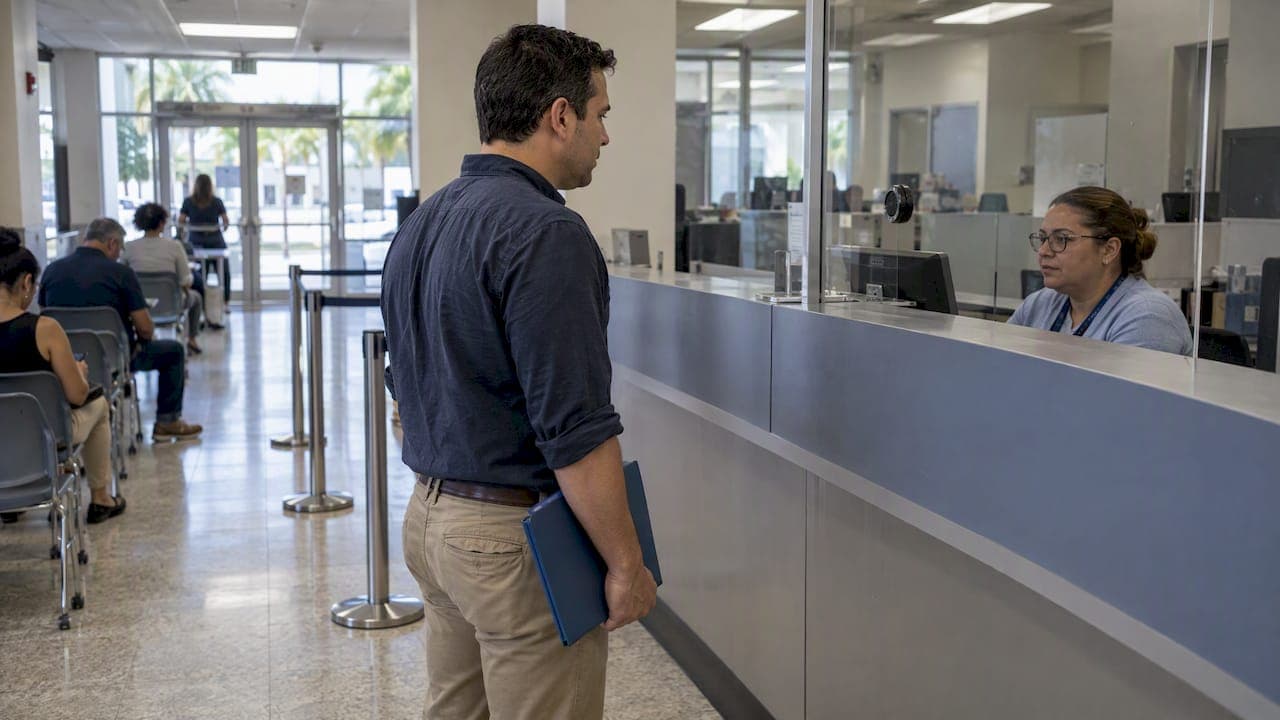
Puerto Rico is a U.S. territory, so U.S. citizens do not need a passport for direct travel between Puerto Rico and the U.S. mainland. A government-issued photo ID, like a driver's license or REAL ID, gets you through airport security. The main exceptions: foreign stopovers, international cruise ports, and trips to non-U.S. territories, according to the Department of State.
TL;DR:
- Travelers need a passport when flying through a foreign country, taking a cruise to any non-U.S. port, or traveling to other countries from Puerto Rico.
- Routine passport processing takes about 4 to 6 weeks, but expedited options can shorten this to 2 to 3 weeks or less if urgent.
- For international travel by air or cruise visiting foreign ports, a passport book is necessary, not just the passport card.
- Children’s passports require both parents’ consent and in-person application, with additional steps for lost or stolen passports or name changes.
- A passport should remain valid for at least six months beyond travel dates; renewing early avoids travel disruptions.
Table of Contents
- When a passport is required: exceptions and practical examples
- How to apply or renew a U.S. passport from Puerto Rico
- Processing times, fees, and expedited options
- Passport book vs passport card: which do you need?
- Special cases: children, lost or stolen passports, name changes
- Practical travel tips and the 6-month validity rule
- Why trust this guide: PassportCenter.ai and official sources
- Practical perspective: how travelers from Puerto Rico actually handle passport needs
- How this resource can help
- Sources
- FAQ
When a passport is required: exceptions and practical examples
"Direct travel" means your trip stays inside U.S. territory from start to finish. The moment your itinerary touches foreign soil, even briefly, the rules change. A flight from San Juan to Orlando is domestic. A flight from San Juan to Orlando with a layover in the Dominican Republic is not, because you clear a foreign port in between.
The Department of State's travel industry guidance notes that confusion about this distinction catches travelers off guard at boarding gates more often than almost any other document issue. Here is where a passport becomes necessary:
- A flight itinerary that connects through a foreign country, even for a short layover.
- A cruise that stops at any non-U.S. port, including common multi-island Caribbean routes.
- Travel from Puerto Rico to another country entirely, such as a trip to the Dominican Republic or Spain.
Airlines and cruise lines often set stricter rules than the law requires. If your itinerary includes any stop outside U.S. territory, carry a passport even when you suspect you might not legally need one.
How to apply or renew a U.S. passport from Puerto Rico
Getting your documents in order on the island works the same way it does anywhere else in the country, with one added option for urgent cases.
- Determine which form applies to you. First-time applicants, and certain people needing a replacement, use Form DS-11. Eligible renewals can use Form DS-82, which in many cases can be submitted by mail.
- Find an acceptance facility. Post offices, some public libraries, and designated government offices across Puerto Rico accept passport applications in person. These facilities verify your identity, witness your signature, and collect the standard $35 execution fee for DS-11 submissions.
- Submit required documents. Bring proof of citizenship, such as a Puerto Rican birth certificate (issued after July 1, 2010, the format accepted after the island's birth certificate law changed), a valid photo ID, and a passport photo.
- Book a San Juan Passport Agency appointment only if travel is urgent. The San Juan Passport Agency only schedules appointments for travel within 14 days or for a foreign visa application within 28 days. You will need to show proof, such as a flight itinerary or visa request letter, and appointments must be booked through the official Department of State system or the National Passport Information Center, never through a third party.
For a full walkthrough of eligibility and mailing steps, see our renewal process guide.
Pro Tip: If you already submitted an application and your travel plans suddenly became urgent, call the National Passport Information Center with your application locator number. Agencies can sometimes reprioritize a pending request when you show proof of imminent travel.
Processing times, fees, and expedited options
Routine applications generally take several weeks to process, while expedited service shortens the processing time for an additional fee, with optional faster delivery available for an extra charge, according to the Department of State.
- Routine processing: roughly 4 to 6 weeks from submission.
- Expedited processing: roughly 2 to 3 weeks, plus the $60 expedite fee.
- Optional faster return shipping adds a separate delivery charge on top of the expedite fee.
- In-person submissions at an acceptance facility typically carry a $35 execution fee in addition to the application fee itself.
If your travel date is within two weeks, skip the mail-in route and contact the National Passport Information Center directly or look into a San Juan Passport Agency appointment. Our breakdown of expedited passport costs walks through how these fees stack up for different situations.
Passport book vs passport card: which do you need?
These two documents are not interchangeable, and picking the wrong one can strand you at a border crossing.
- The passport card works for land and sea travel to Canada, Mexico, Bermuda, and parts of the Caribbean, according to the Department of State, but it is not valid for international air travel.
- The passport book is required for any international flight and is usually the document foreign countries expect when you apply for a visa.
- If you expect to fly internationally or take a cruise that visits a foreign port at any point, get the book. The card alone will not cover you.
Special cases: children, lost or stolen passports, name changes
A few situations add extra steps no matter where in the country you apply.
- Children's passports require both parents' consent in most cases, along with an in-person DS-11 submission, proof of citizenship, and proof of the parent-child relationship. A minor cannot renew by mail using DS-82.
- Lost or stolen passports must be reported using Form DS-64, paired with a new DS-11 application submitted in person. The in-person requirement exists because the government needs to re-verify your identity once the old document is no longer trustworthy.
- Name changes require supporting legal documents, such as a marriage certificate or court order, attached to your application so the new passport reflects your current legal name accurately.
Practical travel tips and the 6-month validity rule
Many countries and airlines enforce a rule requiring your passport to stay valid for at least six months beyond your travel dates, even when the destination's own law does not strictly demand it, according to the Department of State. Airlines can deny boarding over this even if immigration itself had let you in.
- Check your destination's specific entry rules before booking, not after.
- Confirm your airline's or cruise line's own document policy, since it may be stricter than the legal minimum.
- Pack a photocopy of your passport's main page separately from the original.
- Renew early if your passport is within a year of expiring and you have any international travel planned.
Our Caribbean passport requirements guide covers destination-specific validity rules in more detail.
Pro Tip: Treat the 6-month rule as a planning deadline, not a legal technicality. Renewing a few months early costs far less time and stress than getting turned away at the gate.
Why trust this guide: PassportCenter.ai and official sources
Plain-language guides on renewal timelines, child passport steps, and destination-specific rules like the Caribbean 6-month validity requirement are built around official Department of State and CBP pages, which remain the final word on eligibility and fees. The site aims to make those rules easier to act on through clear checklists and vetted referrals when expedited help is needed.

Practical perspective: how travelers from Puerto Rico actually handle passport needs
The most common mistake isn't ignorance of the basic rule. It's assuming a cruise or connecting flight counts as domestic travel when a single foreign port turns it into something else entirely. Experienced travelers keep a passport current year-round, build in renewal buffer time, and save the San Juan agency appointment for genuine emergencies rather than routine planning.
— David
How this resource can help
Figuring out whether your specific itinerary needs a passport, a card, or nothing at all can get confusing fast once layovers and cruise ports enter the picture. The resource breaks down renewal timelines, child passport steps, and document checklists in plain language, and connects users to expedited courier services when travel plans require faster processing.
- Step-by-step checklists for first-time applications and renewals.
- Destination-specific validity rules, including the 6-month guideline many airlines enforce.
- Referrals to vetted expedited passport services for travelers facing a tight deadline.
If you also travel internationally for passport photos or appointment tracking, Lumaris Photo offers compliant photo packages, and Appointment Hopper sends real-time alerts for Global Entry slots. Visit Passportcenter for the full set of guides.
Sources
FAQ
Do Puerto Rico citizens get U.S. passports?
Yes. People born in Puerto Rico are U.S. citizens by birth and apply for U.S. passports the same way any other U.S. citizen does, using the standard DS-11 or DS-82 forms through the Department of State.
Was Bad Bunny born a U.S. citizen?
Anyone born in Puerto Rico holds U.S. citizenship from birth, since Puerto Rico is a U.S. territory. This applies regardless of profession or public profile.
Can people from Puerto Rico come to the US without a passport?
Yes, for direct travel. Since Puerto Rico is a U.S. territory, a government-issued photo ID is sufficient for direct flights or travel to the U.S. mainland, according to Usa.
Can Puerto Ricans come to the US whenever they want?
Travel between Puerto Rico and the U.S. mainland is domestic, so there are no immigration restrictions or passport checks the way there would be entering from a foreign country. The only added requirement appears when an itinerary includes a foreign stop along the way.