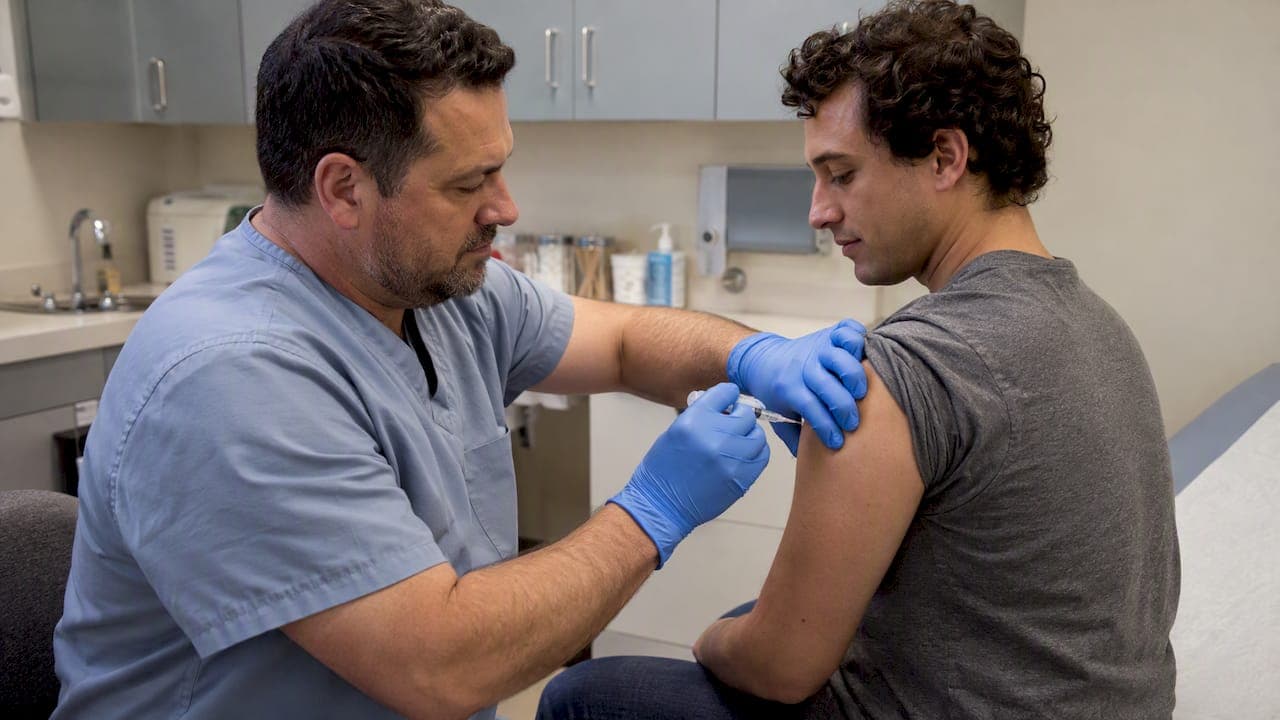
No single vaccine list covers all of South America. What you need depends on the countries you visit, where in those countries you go, what you do there and your own health history. For most U.S. travelers the conversation with a clinician centers on four things: being up to date on routine vaccines (especially measles), hepatitis A, typhoid and yellow fever. Rabies and a few others depend on your itinerary.
The CDC says vaccine planning should start well ahead of departure, and some vaccines need several doses. This guide gives you the honest version: what is recommended, what is actually required to enter a country, when to book and what to carry.
TL;DR
- There is no one required list for South America. Check the CDC page for each country on your itinerary, and start at least 1 month before you leave, ideally 6 weeks.
- Core vaccines to discuss: MMR (measles), hepatitis A, typhoid and yellow fever for risk areas.
- Yellow fever is not a blanket requirement, but some countries ask for proof of vaccination, especially if you have recently been in Brazil. Carry the paper certificate.
- Dengue and Zika have no vaccine for most travelers, so repellent and clothing matter as much as shots.
- U.S. health insurance usually does not follow you abroad. Sort out medical and evacuation coverage before you go.
Table of Contents
- Required vs. recommended: the difference that trips people up
- Start with routine vaccines, especially measles
- Hepatitis A: recommended for most travelers
- Typhoid: for most trips, and especially off the beaten path
- Yellow fever: the one with paperwork
- Situational vaccines: rabies, hepatitis B and others
- Malaria, dengue and Zika: bites matter more than shots
- Timeline: when to do what
- Your checklist by trip type
- What vaccines cost and who pays
- Beyond vaccines: money, insurance and documents
- Our perspective
- Need your passport sorted before the trip?
- FAQ
- Sources
Required vs. recommended: the difference that trips people up
Travelers often mix up two different things.
- Required: a country or airline will not let you enter without proof of a specific vaccine. For South America this is mostly yellow fever, and only in certain situations.
- Recommended: the CDC advises the vaccine to protect your health, but nobody checks it at the border.
The U.S. Department of State's page for Brazil, for example, lists no vaccinations as required and sends you to the CDC's traveler advice for health guidance. That is the pattern across the region: few entry mandates, many health recommendations. Skipping a recommended vaccine because "nobody asked for it" is how travelers end up sick.
The CDC sorts vaccines into three groups, and it helps to think the same way:
- Routine vaccines: MMR, DTaP/Tdap, polio, flu and the others you should already have.
- Travel vaccines: hepatitis A, typhoid and yellow fever, matched to where you are going.
- Situational vaccines: rabies, hepatitis B and others, based on your activities and how far you will be from medical care.
Start with routine vaccines, especially measles
This is the step people skip because it feels too basic. The CDC reports that measles cases are increasing globally, and that most imported U.S. cases occur in unvaccinated U.S. residents who get infected during international travel. Its Argentina page carries the same advice: all international travelers should be fully vaccinated against measles with the MMR vaccine.
Before you pay for anything exotic, check:
- Your MMR record. Ask your doctor or look at your state immunization registry if you are not sure.
- Tetanus, diphtheria and pertussis boosters.
- Seasonal flu. Southern Hemisphere flu season runs roughly opposite to ours, so a trip in our summer can still land you in their flu season.
- Your COVID-19 status, per current CDC guidance for your age and health.
Children need extra planning. Infants and toddlers may need vaccines earlier than the usual schedule for international trips, so tell the pediatrician the destination and dates as soon as you book. If you are also sorting out a child's passport, do both at once so neither deadline surprises you.
Hepatitis A: recommended for most travelers
Hepatitis A spreads through contaminated food and water. The CDC lists it as recommended for most travelers, as a 2-dose series with the doses at least 6 months apart. The practical point: at least one dose should be given before you travel. One dose before departure gives you protection for the trip, and the second completes the series later.
This one matters even if you plan to stay in good hotels. Street food, salads washed in tap water and ice are part of the experience in Lima, Bogotá or Buenos Aires, and part of the risk too.
Typhoid: for most trips, and especially off the beaten path
Typhoid is also spread through contaminated food and water. The CDC recommends vaccination for travelers going to a country where typhoid is endemic, and you have two options:
| Option | Schedule | Finish by |
|---|---|---|
| Injectable | 1 dose | At least 2 weeks before travel |
| Oral | 4 doses, taken every other day | At least 10 days before travel |
Those timings come from the CDC's vaccine guide. Typhoid is a stronger case if you are heading to rural areas or smaller cities, or if you eat adventurously. The vaccine does not cover everything, so food and water habits still count: eat food that is thoroughly cooked and served hot, and use bottled or treated water where tap water is questionable.
Yellow fever: the one with paperwork
Yellow fever is the vaccine most people mean when they search for South America shots. It is a mosquito-borne disease that occurs in much of tropical South America. According to the CDC's South America yellow fever page, vaccination is recommended for most travelers aged 9 months and older going to at-risk areas. The risk map covers Colombia, Venezuela, Guyana, Suriname, French Guiana, Brazil and Paraguay, plus parts of Ecuador, Peru, Bolivia, Argentina and Uruguay.
Two details change your plan:
- Risk is regional, not national. A trip to the Amazon, the Pantanal or Iguazú Falls is different from a trip to Santiago or the Chilean Patagonia. Check the CDC map for your exact route, not just the country.
- Entry rules apply in some cases. The State Department's Brazil advisory notes that countries including Bolivia, Colombia, French Guiana, Guyana, Paraguay and Suriname may require proof of vaccination if you have recently been in Brazil. If your itinerary hops between countries, you can be asked for proof at a border even if your first country asks for nothing.
Do not leave this one for the last week. Yellow fever vaccine is not stocked by every doctor's office, and it is given at designated clinics that can issue the official certificate. Ask your clinic how many days before arrival the vaccine must be given to count for entry, and book earlier than that. Our guide to yellow fever vaccine requirements for U.S. travelers goes through the certificate and timing in more detail.
Carry the yellow card on paper
The International Certificate of Vaccination or Prophylaxis (the "yellow card") is your proof. Bring the original on paper, with your passport. Photos on a phone are the kind of thing a land-border official can wave away, and trouble with documents can mean denied boarding or being turned back. Make sure the name on the certificate matches your passport exactly. A name change, a new passport or a renewal is a good moment to double-check that the two documents agree.

Situational vaccines: rabies, hepatitis B and others
These are not for everyone. They depend on what you will do.
Rabies. The risk for the average traveler is very small. The vaccine makes sense if you will handle animals (biologists, veterinarians, wildlife volunteers) or spend time in rural areas where post-exposure treatment such as immunoglobulin would be hard to reach. The CDC lists rabies among the vaccines to consider for pretravel risk assessment. Knowing how far you will be from a hospital is as important as the vaccine itself.
Hepatitis B. The CDC points to sexual contact, contaminated needles and blood products as routes of spread. It is worth discussing if you may need medical or dental care abroad, plan a long stay or have other risk factors.
Others on the CDC list. Cholera, meningococcal disease, Japanese encephalitis and tick-borne encephalitis appear on the same checklist. They rarely apply to a standard South America itinerary, but your clinician will decide based on your route and activities.
Malaria, dengue and Zika: bites matter more than shots
There is no vaccine for general travelers against dengue or Zika, which is why insect protection often counts for more than a vaccination here. Malaria is managed with prescription medication rather than a vaccine, and only in certain regions, so it is part of the same clinic conversation.
Practical steps:
- Use an EPA-registered repellent and long, light-colored clothing at dawn and dusk.
- Sleep in screened or air-conditioned rooms where you can.
- Bring your own repellent. The State Department's Argentina advisory notes that during the peak summer months of December to March, good repellents can be hard to find locally.
South American summer is also peak mosquito season, so a December trip needs more care than a July one.
Timeline: when to do what
The CDC advises checking the destination page and seeing a provider at least 1 month before departure. Six weeks is better, because hepatitis A, typhoid and any multi-dose vaccine need time.
- 8 to 6 weeks out: book a travel clinic or your primary care provider. Bring your itinerary, dates, vaccination records and medication list.
- 6 to 4 weeks out: get yellow fever (if recommended or required), the first hepatitis A dose, and any MMR or Tdap catch-up.
- At least 2 weeks out: injectable typhoid. Oral typhoid should finish at least 10 days before travel.
- 1 week out: pack the yellow card and records, repellent, prescriptions in original bottles and insurance documents.
- After you return: if you get a fever, even weeks later, tell your doctor where you traveled.
Left it late? The CDC has a page for last-minute travelers that explains what is still worth doing. Some protection is better than none, even a week out. A travel clinic can tell you which doses still make sense in your time frame.
Your checklist by trip type
| Trip | Typical discussion points |
|---|---|
| City-only (Buenos Aires, Santiago, Montevideo) | Routine vaccines including MMR, hepatitis A, typhoid; check yellow fever maps for your exact route |
| Brazil, including Amazon or Pantanal | Yellow fever, hepatitis A, typhoid, MMR; insect protection; carry the yellow card |
| Peru and Machu Picchu with jungle add-on | Yellow fever for jungle areas, hepatitis A, typhoid; ask about altitude too |
| Multi-country overland | Yellow fever certificate on paper, all of the above, border-proof documents |
| Rural, volunteer or wildlife work | All of the above plus rabies and hepatitis B discussion |
Use the table to prepare questions, not as medical advice. Your clinician decides on the vaccines for your body and your route.
What vaccines cost and who pays
Prices vary widely by clinic and insurance, and travel vaccines are often not fully covered. Ask the clinic for the cost of each vaccine and the consultation fee before you book, and check with your insurer which ones they cover. Do not assume your regular doctor stocks yellow fever vaccine; ask when you call.
Beyond vaccines: money, insurance and documents
A vaccination card does not cover you if you get hurt or sick on the road. The State Department says the U.S. government does not pay medical bills abroad, and you are responsible for hospital and medical costs. It also advises checking what your health insurance covers abroad. Many private hospitals in the region want payment up front, and Medicare and Medicaid generally do not cover care outside the U.S.
The costly scenario is evacuation from somewhere remote. If you are heading to the Amazon, Patagonia or the Andes, read how emergency transport benefits work before you buy anything. This breakdown of what emergency transport coverage does and does not include is a useful place to learn the questions to ask, though check whether any plan applies outside the U.S. before you rely on it.
Documents matter as much as shots:
- Passport validity: check the entry rules for every country. An expired or nearly expired passport can end a trip at the airport. See our guide on traveling with an expired passport.
- Visas: Brazil's rules for U.S. citizens are covered in our Brazil visa guide.
- Name match: your passport, tickets and yellow card should all show the same name.
Our perspective
The most common mistake we see is treating vaccines as a last-minute checkbox. People spend weeks on flights and hotels, then discover three weeks before departure that their passport needs renewing, their yellow card needs a clinic appointment and a typhoid course needs time to finish. All of it is easier at 6 weeks than at 2.

The honest truth is that the vaccine list for South America is shorter and more specific than the internet makes it sound. Yellow fever is the only one with a real chance of stopping you at a border, and only on certain routes. Everything else is about your health. Ask a clinician, read the CDC page for each country, carry paper proof and do not skip MMR.
We are an informational site, not a medical provider, so we do not tell you which vaccine to take. We tell you what questions to bring, what documents to carry and what deadlines to watch. That keeps the stress low when a trip gets close.
— David
Need your passport sorted before the trip?
Vaccines and passports share one problem: both have lead times. If your passport is expiring or you need it fast, PassportCenter.ai explains your options, from standard processing to expedited help through registered courier services. Start at PassportCenter.ai, and read our yellow fever guide if your route includes risk areas.
FAQ
Which vaccines are needed for South America?
None are universally required, but the CDC recommends being up to date on routine vaccines, including MMR, and discussing hepatitis A, typhoid and yellow fever. Rabies and hepatitis B depend on your activities. Check the CDC page for each country on your itinerary.
Do I need a yellow fever vaccine for travel to Argentina?
It depends on where you go. The CDC lists parts of northern Argentina as areas where vaccination is recommended, so a trip to Iguazú Falls is different from a trip to Buenos Aires or Patagonia. Check the CDC map for your route and ask a travel clinic. If you are also entering from Brazil or another risk country, ask whether proof is needed.
Do I really need a typhoid vaccine?
The CDC recommends it for travelers going to countries where typhoid is endemic, which includes much of South America. It matters most if you will visit rural areas or smaller cities, or eat street food. It is not a substitute for careful food and water habits.
How early should I get travel vaccines?
See a provider at least 1 month before you leave, and preferably 6 weeks. Injectable typhoid needs to be given at least 2 weeks before travel, and oral typhoid should finish at least 10 days ahead. If you are closer than that, still call a travel clinic.
Sources
- CDC: Think Travel Vaccine Guide
- CDC: Countries at Risk for Yellow Fever, South America
- CDC: Destinations list, global measles notice
- CDC: Argentina traveler view
- CDC: Survival Guide to Safe and Healthy Travel
- U.S. Department of State: Brazil International Travel Information
- U.S. Department of State: Brazil Travel Advisory
- U.S. Department of State: Argentina Travel Advisory
- U.S. Department of State: Medicine and Health