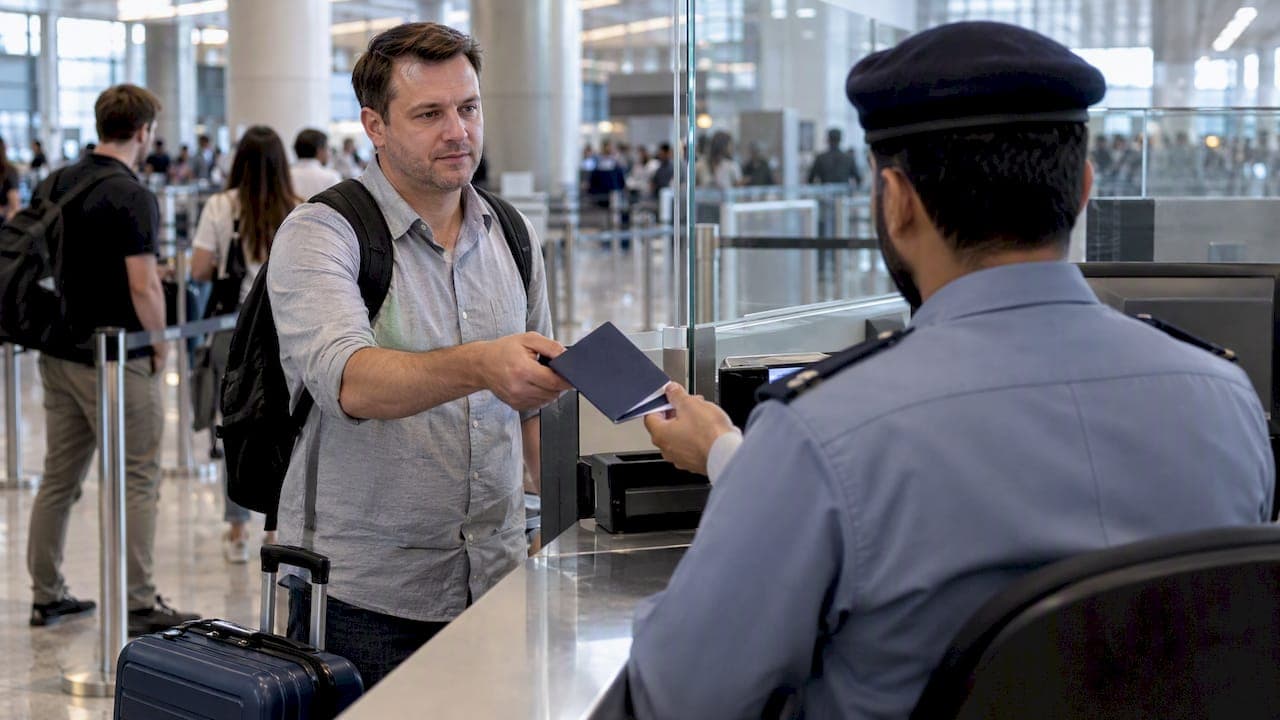
US passport holders traveling on a regular passport do not need to apply for a UAE visa before departure. At UAE border control, most travelers receive a free stamp allowing a stay of up to 90 days within a 180-day period, though some categories only permit 30 days. Your passport must stay valid for at least six months from your arrival date.
TL;DR:
- US travelers on a regular passport usually receive a free 90-day visa stamp on arrival, valid for most tourism trips within a 180-day window.
- Passports must be valid for at least six months from arrival and cannot be emergency or have an 'X' gender marker, or entry will be denied.
- Visa costs only apply for pre-arranged, longer-stay, employment, or sponsorship-based visas, with fees varying by visa type and processing speed.
- Travelers should prepare necessary documents, like proof of onward travel and accommodation, before departure to avoid entry issues.
- The US State Department currently advises reconsidering travel to the UAE due to a Level 3 advisory, making safety preparations essential.
Table of Contents
- What types of UAE visas will US travelers encounter?
- How does visa-on-arrival actually work at UAE immigration?
- What documents and passport checks should you confirm before flying?
- What does a UAE visa actually cost?
- How do you apply for a UAE visa from the United States?
- How long does processing take, and what happens if you overstay?
- What safety steps should you take before this trip?
- What travelers get wrong about UAE entry rules
- Check your passport readiness before you book
- FAQ
- Sources
What types of UAE visas will US travelers encounter?
Most Americans never apply for a visa at all. The 90-day stamp issued at arrival covers the vast majority of tourism and short visit trips, but the UAE runs several other visa categories that matter depending on why you're traveling.
Here's what you'll run into:
- Tourist/visit visas: the standard 90-day-within-180-day stamp for regular passport holders, with some categories issued for 30 or 60 days instead.
- Transit visas: typically cover 48 to 96 hours for travelers connecting through UAE airports, and eligibility depends on your onward ticket and layover length.
- Business visit visas: used when you're attending meetings or conferences rather than working; longer business engagements usually require an employer-sponsored permit.
- Employment visas: arranged by a UAE-based employer before you arrive, these require a sponsor and a job offer already in place.
- Student and residence visas: sponsored by a university or employer, these go through a separate application process and carry their own document requirements.
The ICP's 2026 eligibility expansion widened the list of qualifying countries of residence for certain 14-day and 60-day entry visa categories, which matters if you hold residency somewhere other than the United States. If you're arriving on a standard US tourist trip, though, none of this changes your arrival-stamp process.
One more distinction worth knowing: some visa categories are single-entry only, while others, including the 90-day stamp many Americans receive, function as multiple-entry permits valid for six months from the date of issue, according to Emirates' visa information.
How does visa-on-arrival actually work at UAE immigration?
Visa-on-arrival sounds automatic, but it isn't guaranteed. Immigration officers decide case by case, and the stamp you receive depends on your passport type and how you answer their questions.
Keep these points in mind:
- Regular US passport holders typically receive the free arrival stamp; no pre-travel application is required for standard tourism.
- Diplomatic and official US passports are treated differently and generally need a visa arranged before travel.
- Officers may ask about your return ticket, accommodation, and purpose of visit, so have these details ready rather than buried in email confirmations.
The UAE does not accept 12-page emergency passports or passports carrying an 'X' gender marker for entry, according to the State Department's travel advisory. Travelers carrying either document type are typically turned away at boarding, before they even reach UAE immigration, because airlines enforce these entry rules at check-in. If your passport falls into either category, confirm acceptance with your airline well before your flight rather than assuming the arrival stamp will sort it out.
What documents and passport checks should you confirm before flying?
Most denied entries trace back to a document problem that was fixable weeks earlier. Run through this list before you pack:
- Check passport validity. Your passport needs at least six months of validity remaining from your arrival date, and it must be machine-readable.
- Confirm your passport type is accepted. Emergency passports with only 12 pages and any passport with an 'X' gender marker are not accepted for UAE entry.
- Print or save your itinerary. Have a copy of your passport, your flight confirmation, and your return or onward ticket accessible both digitally and on paper.
- Confirm accommodation details. Hotel bookings or a host's address should be ready to show if immigration asks.
- Check sponsor requirements if applicable. If you're traveling on a residency card from another Gulf country or being sponsored by a UAE resident, your document requirements shift, so verify this with the sponsoring party ahead of time.
What does a UAE visa actually cost?
Here's the part that surprises a lot of travelers: if you're a US citizen arriving on a regular passport for tourism, the standard 90-day arrival stamp doesn't cost anything. The fees come into play once you step outside that standard path.
Where costs typically show up:
- Government processing fees apply to pre-arranged visas like employment, student, or longer-stay categories, and these are set by UAE authorities rather than third parties.
- Commercial service or agent fees get added when you use a courier, visa agent, or expedited processing service instead of applying directly through an airline or official channel.
- Express or priority processing usually carries a surcharge on top of the base fee, and turnaround time varies by provider.
- Payment is typically non-refundable once submitted, even if your trip changes or your application is denied.
Prices vary by visa length and entry type, with 14-day, 30-day, and 60-day categories priced differently from single-entry versus multi-entry permits.
Pro Tip: Pay official or airline-affiliated channels directly when possible. Third-party markup fees can add up fast, and a quick price comparison before you commit can save you real money.
How do you apply for a UAE visa from the United States?
You have three realistic paths, and which one applies depends entirely on your travel plans.
- Arrive and receive your visa on arrival. For standard tourism on a regular passport, this is the default. Bring your passport, return ticket, and accommodation proof, and expect the stamp to be issued at the immigration desk within minutes.
- Pre-arrange through your airline. Emirates' Manage Your Booking tool lets you apply for a visa tied to your flight reservation, which is useful if you want confirmation before you fly or if your passport category requires it.
- Apply through a sponsor. If a UAE-based employer, university, or resident is sponsoring your trip, they typically submit the application on your behalf, and you'll need to coordinate your documents with them directly.
A few practical notes:
- Stick to official airline portals or recognized government channels rather than third-party websites promising guaranteed approval.
- If you're unsure whether a service is legitimate, check whether it's tied to an airline's official booking system or a government portal before submitting payment.
- Keep copies of every confirmation email and reference number in case you need to follow up.
How long does processing take, and what happens if you overstay?
Arrival stamping is immediate: you walk up, show your documents, and walk away with your stamp in most cases. Pre-arranged visas through an airline or sponsor take longer and vary by category, so build in buffer time if you're applying before your trip rather than counting on same-day turnaround. A partner resource covering 2026 processing expectations breaks down realistic timelines by visa type if you want more detail before you apply.
- Extensions and renewals are handled at the discretion of UAE immigration authorities, and approval isn't guaranteed just because you ask.
- Overstaying your visa can result in fines that accumulate daily, and in more serious cases, detention or future entry restrictions.
- Canceling a visa before departure can also create complications if you later try to re-enter, so confirm your status before booking a return trip.
- If your visa is delayed or denied, contact the issuing channel (airline, sponsor, or government portal) immediately rather than waiting to see if it resolves on its own.
What safety steps should you take before this trip?
The State Department issued a Level 3 Travel Advisory for the UAE on March 3, 2026, recommending that US citizens reconsider travel. Non-emergency US government employees were ordered to depart the day before that advisory was published. This changes what "being prepared" means for this trip compared to a routine vacation.
Here's what that advisory level means in practice:
- Enroll in STEP (the Smart Traveler Enrollment Program) so the US Embassy can reach you in an emergency and you receive local security updates.
- Monitor local media for developments once you arrive, and have an independent exit plan that doesn't rely solely on official evacuation assistance.
- Verify your travel insurance covers medical treatment, medical evacuation, and trip cancellation, since standard policies sometimes cap evacuation coverage lower than a Level 3 situation might require.
Before you leave, run through our own quick checklist: confirm your passport's six-month validity window, save digital and printed copies of your passport and itinerary, and write down the US Embassy's contact information somewhere you can access it without WiFi.
Pro Tip: Email yourself scanned copies of your passport photo page, visa confirmation, and insurance documents before you fly. If your phone dies or your bag goes missing, you'll still have offline access through any computer.

A Level 3 advisory means the State Department is actively recommending travelers reconsider the trip, not merely flagging routine caution, according to the UAE travel advisory.
What travelers get wrong about UAE entry rules
The most common mistake we see isn't a complicated visa question. It's travelers assuming their passport is fine because it "still has time on it," when six months of remaining validity is a hard line, not a suggestion. The second most common mistake is bringing a 12-page emergency passport and finding out at the airline counter, not at UAE immigration, that it won't be accepted. Double-check your passport type and expiration date against the embassy's current guidance before you book anything, and keep your onward ticket details handy.
— David
Check your passport readiness before you book
We provide free passport tools designed to help travelers catch common issues such as expired validity windows, unsupported passport types, and missing documentation. Running your details through a checklist can help determine whether you're clear to fly or need to address an issue first.
If your passport needs renewal or you have a tight departure date, expedited courier services can help accelerate the renewal process.
- Confirm your six-month validity window before booking flights.
- Check whether your passport type is accepted for UAE entry.
- Get matched with an expedited courier service if your timeline is tight.
| What you need | Where to check it |
|---|---|
| Passport validity and type | Our free passport checklist at Passportcenter |
| Faster renewal processing | Referral to vetted expedited courier partners |
FAQ
Do US citizens get a UAE visa on arrival?
Yes, US citizens traveling on a regular passport generally receive a free visa stamp at UAE immigration without applying in advance. The stamp typically allows a stay of up to 90 days within a 180-day period, though some categories are limited to 30 days.
Can US citizens travel to the UAE right now?
US citizens can legally travel to the UAE, but the State Department issued a Level 3 Travel Advisory on March 3, 2026, recommending travelers reconsider the trip. We recommend enrolling in STEP and reviewing current advisory details before finalizing travel plans.
Is a Dubai visa free for American citizens?
For most US citizens traveling on a regular passport for tourism, the standard arrival visa stamp carries no government fee. Costs only apply when you use a pre-arranged visa category, a commercial visa service, or expedited processing.
What are the new visit visa rules for the UAE in 2026?
In 2026, the ICP expanded eligibility for certain 14-day and 60-day entry visa categories and widened the list of qualifying countries of residence. This mainly affects travelers with residency outside the United States rather than standard US passport holders using the 90-day arrival stamp.
How long before my UAE trip should I check my passport?
Check your passport validity and document type as soon as you book your flight, since the UAE requires at least six months of remaining validity and does not accept 12-page emergency passports or passports with an 'X' gender marker. Giving yourself weeks of lead time means you can still renew if there's a problem.
Sources
- United Arab Emirates Travel Advisory
- ICP expands eligibility for UAE Entry Visa for nationals of certain countries
- UAE visa information | Emirates