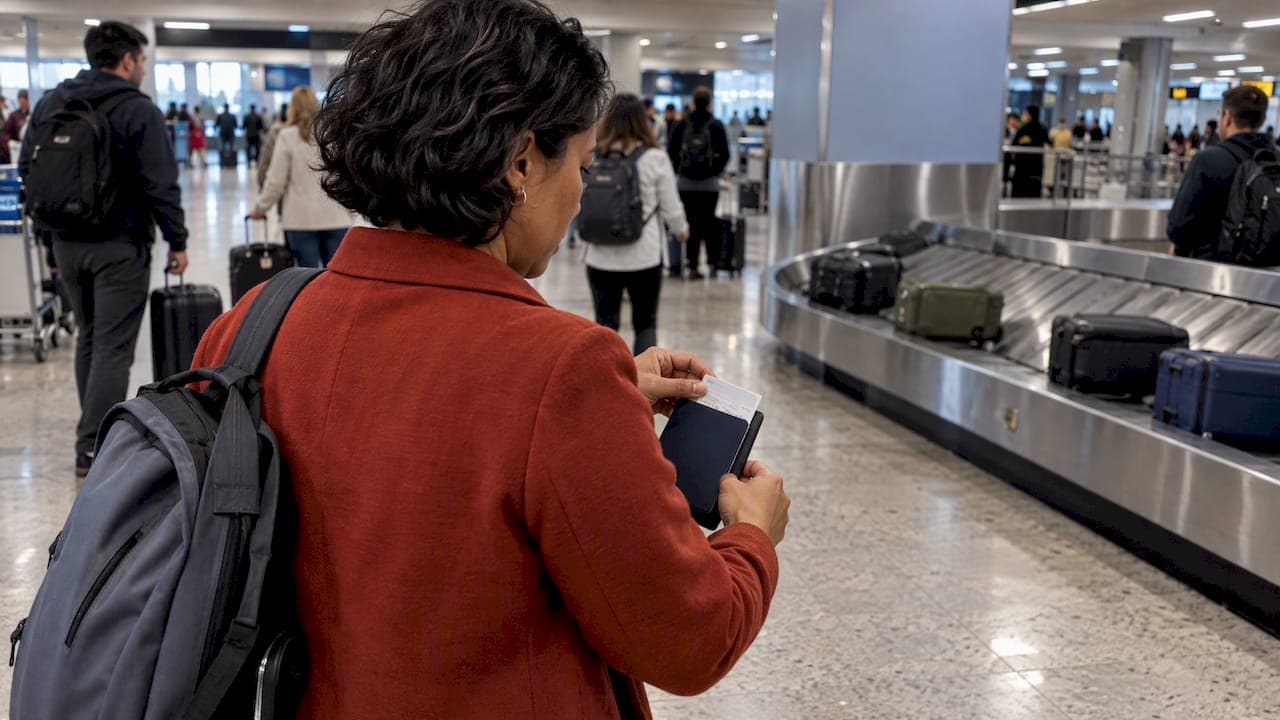
Most US citizens do not need a visa to visit Chile. If you are traveling on a regular (tourist) US passport for tourism, business meetings or an academic conference, you can arrive without any visa and receive permission to stay for up to 90 days. What you do need is a passport in good condition, proof you can pay your way, and a plan for where you will sleep.
This guide covers what the rule means in practice, what officers may ask for at the border, how extensions work, and the situations where you do need a visa.
TL;DR
- No visa for tourism or business: US citizens with a tourist passport can enter Chile for up to 90 days without applying in advance, according to the U.S. Embassy in Chile.
- Official and diplomatic passports are different: those holders must get a visa before traveling.
- Be ready to show proof: a lodging reservation or invitation letter and evidence of at least $46 per day of your stay.
- Work, study or living in Chile needs a visa applied for in advance. Staying longer than allowed can mean a fine before you can leave.
- Check your passport first: it must be undamaged and valid for your whole stay.
Table of Contents
- The short answer: do US citizens need a visa for Chile?
- Quick reference: Chile entry rules for US citizens
- Step by step: preparing for a visa-free trip to Chile
- Passport requirements: condition matters as much as dates
- Proof you may be asked for at the border
- The Tourist Card: the "form" everyone asks about
- Staying longer than 90 days
- When a US citizen does need a visa
- Traveling with kids, or to more than one country
- Health coverage on the trip
- Our perspective: where Chile trips go wrong
- If your passport is the problem
- FAQ
- Sources
The short answer: do US citizens need a visa for Chile?
No, not for a normal trip. The U.S. Embassy in Chile states that US citizens traveling for recreation, tourism, business or academic conferences do not need to obtain a visa before arrival. The State Department's Chile country page says the same: no visa for 90 days or less for tourist-passport holders.
Chile's own immigration service, SERMIG, describes this as a Permanencia Transitoria (temporary stay) permit in the tourist subcategory. Under SERMIG's tourist page, no prior authorization or visa is required for entry and stay as a holder of this permit. The stay is capped at 90 days.
In plain terms: you show up with your passport, the border officer admits you, and you receive a Tourist Card showing how long you may stay.
What counts as a tourist or business trip
The free entry covers a short list of purposes:
- Vacation, sightseeing, visiting friends or family
- Sports and similar activities
- Business meetings and academic conferences
It does not cover earning a salary from a Chilean employer. SERMIG says holders of temporary stay are not authorized to perform paid activities, though some can apply for a special work authorization. If your trip involves anything beyond meetings or conferences, sort out the right permission before you fly.
Quick reference: Chile entry rules for US citizens
| Question | Answer | Source |
|---|---|---|
| Visa for tourism? | Not required | U.S. Embassy |
| Visa for business or conferences? | Not required | U.S. Embassy |
| Maximum stay | Up to 90 days | U.S. Embassy |
| Extension | One more period of up to 90 days, with a fee | SERMIG FAQ |
| Funds to show | At least $46 per day | State Department |
| Official or diplomatic passport | Visa required before travel | U.S. Embassy |
| Work, live or study | Visa required in advance | U.S. Embassy |
Step by step: preparing for a visa-free trip to Chile
- Check your passport. Make sure it is a regular tourist passport, undamaged, and valid for your entire stay.
- Book your lodging, or get an invitation letter. Keep the confirmation where you can pull it up fast.
- Prepare proof of funds. Know how you would show $46 for each day you plan to stay.
- Pack your Tourist Card plan. You get the card on arrival. Put it somewhere safe, because you must hand it back when you leave.
- Check your airline's rules. Airlines can apply their own passport checks at check-in, so confirm with yours.
Passport requirements: condition matters as much as dates
The embassy's wording is that US passports must be in good condition and valid for the period of stay. It also warns that the embassy cannot secure entry for travelers who lack a valid passport, hold a damaged or mutilated passport, or need a visa and do not have one.
So a passport with a water-damaged data page, a torn cover or loose pages is a real risk, even when the expiration date looks fine. If yours is worn, replace it before you book nonrefundable flights.
Chile's stated rule is validity for the period of stay, not the six-month rule that some other countries apply. Airlines and other countries on the same itinerary may be stricter, though. If your trip also touches other destinations, read our guide to the six month passport rule. If you are not sure your passport is still valid, start with what happens when you travel on an expired passport.
Passport renewal by mail through the State Department can take weeks, so do not leave this until the last month. If you are cutting it close, that is where a registered expedited courier can help (see the section below).
Proof you may be asked for at the border
A visa-free entry still comes with questions. Two checks are worth preparing for.
Lodging or an invitation letter
Chile's official tourism site, Chile Travel, advises visitors to carry a hotel or lodging reservation, or a notarized invitation letter, so it can be verified if requested. You may never be asked. But if you are, having it on your phone or printed saves a long conversation.
If you are moving between several places, a reservation for the first few nights plus your itinerary is a sensible minimum. Staying with a friend or relative? An invitation letter is the document to ask them for, and it needs to be notarized.
Proof of funds: $46 per day
The State Department says tourists must be able to show at least $46 per day to cover expenses in Chile. Chile Travel adds that proof of economic solvency can be a copy of a bank account or another document establishing that amount for each day of the stay.
Here is what that looks like:
| Length of trip | Funds to be able to show |
|---|---|
| 7 days | $322 |
| 14 days | $644 |
| 30 days | $1,380 |
| 90 days | $4,140 |
These figures are simple multiplication of the $46 daily amount. A recent bank statement or a banking app screenshot is the easiest evidence. A credit card with a decent limit is also practical to carry, though what the officer accepts is their call.
If you carry cash in addition, count it before you leave and keep it reasonable. Our partners at a currency exchange service publish a guide on preparing dollars for a trip, which is useful if you prefer to start with cash.

The Tourist Card: the "form" everyone asks about
Readers often ask what form they must fill in before entering Chile. For US citizens on a tourist trip, the key document is the Tourist Card, which is issued to you for a stay of up to 90 days. SERMIG's current system calls it the Tarjeta Única Migratoria.
Three practical points from the U.S. Embassy:
- You must surrender the card when you leave Chile.
- Failing to return it can delay your departure.
- If it is lost or stolen, replace it through International Police or at the airport before you depart.
Photo your card the day you receive it and keep the original with your passport, not in a checked bag.
Staying longer than 90 days
The 90 days is a ceiling. You have two ways to deal with a longer trip.
Option 1: Extend once
The embassy says an extension for another 90 days is possible on payment of a fee at the Chilean Immigration Office in Santiago. SERMIG's FAQ says temporary stay may be extended once, for up to 90 consecutive days, provided you start the application before the period on your Tarjeta Única Migratoria runs out. Do not wait until the last week. Check SERMIG's site for the current fee and procedure, since both can change.
Option 2: Apply for a proper visa
If you plan to work, live or study, the embassy says you must apply for a Chilean visa in advance. Chile's consular guidance separates short visits from temporary residence, which is the route for people who want to establish themselves in Chile for a limited period.
What happens if you overstay
The State Department notes that Chile may require you to pay a fine before you leave, and that you may be prevented from departing until it is paid. That can wreck a flight connection. Put your exit deadline in your calendar the day you land.
When a US citizen does need a visa
There are a few situations that change the answer:
- Official or diplomatic passports. The embassy says people traveling on official business with these passports must get a visa at a Chilean embassy or consulate before traveling to or through Chile. If you hold one but are traveling for personal reasons, get a tourist passport, because you cannot enter Chile as a tourist on a diplomatic passport.
- Work, residence or study. Apply in advance.
- Anything involving paid work in Chile. Tourist status does not allow it.
Chile also requires prior authorization or a visa from nationals of some other countries, for reasons of national interest or reciprocity, according to Chile's consular service. That matters if you are traveling with a companion who holds a different passport. Each traveler should check their own nationality.
Can you apply for a Chilean visa online?
Yes. Chile's consular service says applicants for a required prior authorization or visa should use the Ministry of Foreign Affairs' Sistema de Atención Consular (SAC). Start well ahead, since residence-type visas involve supporting documents.
Traveling with kids, or to more than one country
Families need to think about the passport side early. Each child needs their own passport, and the rules for getting one include parental consent. Our guide to child passport consent walks through how to avoid a rejected application.
If Chile is one stop on a South American trip, rules differ sharply from country to country. For example, see our guide to the Argentina visa for US citizens before you plan a border crossing across the Andes. And if your flights route through Europe, our guide to passport validity rules for Europe covers that leg.
Health coverage on the trip
The entry rules do not ask you to show insurance, but a medical emergency far from home can cost more than the flight. If you are 65 or older, check how your Medicare plan treats care outside the United States before you go. This explainer on Medicare foreign travel coverage is a reasonable place to begin. Then decide whether a separate travel medical policy makes sense for you.
Our perspective: where Chile trips go wrong
We write about entry rules every week, and the Chile question is one of the easier ones. The rule itself is simple. The trouble comes from the small things around it.
The most common problem is not the visa. It is the passport. Travelers assume that a passport with a few months left, or with a damaged page, is fine because no visa is needed. Then an airline agent or border officer disagrees. The embassy's language about condition and validity is not boilerplate, and we treat it as the first check on any trip.

The second is the proof requirement. Many travelers have never been asked for a hotel booking or bank statement, so they skip it. It costs nothing to keep a screenshot ready.
The third is trusting an old rule. Older articles mention a reciprocity fee for US citizens. Do not rely on that kind of page. Go to the embassy, the State Department and SERMIG, and check again a few weeks before you fly. Our approach is to read the official sources, explain them in plain language, and tell you when a rule can change.
— David
If your passport is the problem
If your passport is expired, damaged or about to expire and your flight is close, routine processing may not fit. Government channels are the default and are free of third-party fees. If time is short, a registered expedited passport courier can help you with the paperwork and submission. PassportCenter.ai is a free information resource, and we connect travelers who need fast help with vetted courier services. Start at PassportCenter.ai to see your options and timelines before you book anything nonrefundable.
FAQ
Do US citizens need a visa for Chile?
Not for tourism, business or academic conferences. The U.S. Embassy says no visa is needed before arrival, and you get a Tourist Card for a stay of up to 90 days. Work, study and residence need a visa in advance.
Is there a fee to enter Chile as a US citizen?
The official sources we reviewed for this guide do not list an entry fee for US citizens on a tourist stay. Some older pages mention a reciprocity fee, so rely on the embassy and SERMIG for current rules. Fees do apply to extending your stay.
Can I extend my stay in Chile?
Yes, once. SERMIG says temporary stay can be extended for up to 90 more consecutive days, if you apply before your current period ends. The embassy says it requires a fee paid at the Chilean Immigration Office.
What do I need to show when I arrive?
A valid, undamaged passport is the main document. Be ready to show lodging or a notarized invitation letter, and proof of at least $46 per day of your stay. You will get a Tourist Card to keep until you leave.
What happens if I lose my Tourist Card?
Replace it before you depart, through International Police or at the airport. The embassy warns that failing to return the card can delay your departure, so deal with it early.
Sources
- Entry and Exit Requirements, U.S. Embassy in Chile
- Chile country information, U.S. Department of State
- People entering for tourism, sports or similar purposes, SERMIG
- Frequently asked questions, SERMIG
- Entry and visa requirements, Chile Travel
- Visa information for entering Chile, Consulado.gob.cl