
For any applicant under 16, both parents or legal guardians must appear in person to apply. If one can't show up, the absent parent submits notarized Form DS-3053, and if that parent can't even be located, you use Form DS-5525 instead. The DS-3053 consent expires within a limited validity period after notarization, so timing matters as much as paperwork.
TL;DR:
- Both parents or guardians must appear together or notarize consent using Form DS-3053 within 90 days; delays or incorrect timing lead to rejection.
- Only one parent needs to appear for children aged 16 and 17, with the process being less strict about notarized consent and contacting the other parent.
- Proper completion of the DS-3053 includes signing in front of a notary, attaching matching ID copies, and ensuring notarization occurs within the validity window.
- When a parent cannot be reached, Form DS-5525 can be used with detailed documentation of attempts to locate the other parent and supporting legal documents.
- Organized parents should download all forms and regulations in advance, avoid corrections or outdated templates, and consider expedited courier services for tight deadlines.
Table of Contents
- What Does U.S. Law Require for a Child Passport Under 16?
- How Do You Fill Out Form DS-3053 Correctly?
- What if the Other Parent Can't Be Reached at All?
- What Documents Prove Sole Custody or Guardianship?
- How Do You Get Form DS-3053 Notarized the Right Way?
- What Mistakes Get Child Passport Applications Rejected?
- What Do You Bring to the Acceptance Facility, and How Long Does This Take?
- How Passportcenter Helps You Avoid Delays
- Need Help Moving Faster on a Child's Passport?
- Where to Find the Official Forms and Regulations
- Sources
- FAQ
What Does U.S. Law Require for a Child Passport Under 16?
The rule comes straight from federal regulation, not agency preference. 22 C.F.R. § 51.28 requires both parents or legal guardians to execute the application for a minor under 16, with narrow exceptions when specific documentary evidence proves one parent has sole authority. This isn't bureaucratic caution for its own sake. The rule exists to prevent one parent from taking a child out of the country without the other's knowledge, a real and documented problem long before passport rules tightened around it.
The age split matters, too. Kids under 16 need the strictest version: both parents present, or notarized consent standing in for the missing one. Teens aged 16 and 17 face a lighter version of the same idea. Only one parent needs to appear with them, and the State Department may simply reach out to the other parent for awareness rather than requiring notarized paperwork.
According to Travel, the two-parent requirement applies regardless of custody status, marital status, or how amicably parents split. Here's what that means in practice:
- Divorced parents both still need to consent or appear, unless a court order says otherwise.
- Unmarried parents both listed on the birth certificate carry the same obligation.
- A parent living overseas or deployed still counts as a required signer unless truly unreachable.
- Remarriage or a name change doesn't remove a biological parent's consent requirement.
Some families experience confusion about this requirement, often assuming "primary custody" alone settles the question. It doesn't.
How Do You Fill Out Form DS-3053 Correctly?
DS-3053 is the notarized statement that lets one parent apply for a child's passport when the other parent can't appear in person. The absent parent completes it, and it has to happen in front of a notary public or a passport-authorizing officer, not at a kitchen table beforehand.
The form itself is short, but the sequence of steps is where people slip up:
- Don't sign anything before you're in front of the notary. A signature dated before the notarization is one of the fastest ways to get the whole application bounced. The notary needs to witness the signature happen.
- Bring a government-issued photo ID to the notary appointment. A driver's license, passport, or military ID all work, but it has to be the same ID the notary logs on the certificate.
- Confirm the notary is not related to the absent parent. Some states restrict notaries from notarizing documents for close family, so check ahead if the notary is a relative.
- Have the notary complete their section fully, including the date, and make sure that date matches what's on the parent's signature line.
- Attach a photocopy of both the front and back of the exact ID shown to the notary. Not a different card. Not just the front. Both sides of the same document the notary recorded.
- Check the 90-day clock starts the day the notary signs, not the day you mail or submit the DS-11 application. If more than 90 days pass, the consent is void and you need a new notarized form.
Small errors sink otherwise solid applications. If you write the wrong date, make corrections on the form, or use non-standard ink colors, some acceptance facility clerks may reject the form rather than accept corrections.
Pro Tip: Print a fresh DS-3053 rather than fixing a mistake on the one you already have. Acceptance clerks are trained to flag any whiteout, cross-out, or written correction as a potential tampering issue, and it's faster to start over than to argue about it at the counter.
One detail that trips up even organized parents: the DS-3053 sample forms circulating online sometimes show outdated formatting. Always download the current version directly from travel.state.gov rather than reusing a saved PDF from a previous application.
What if the Other Parent Can't Be Reached at All?
Form DS-5525, the Statement of Exigent/Special Family Circumstances, is the fallback when there's no way to get the other parent's notarized consent because you genuinely cannot locate or contact them. This form isn't a shortcut around an inconvenient co-parent. It's meant for situations where contact is truly impossible, and the applying parent has to document that in detail.
The DS-5525 needs specifics, not a general statement that the other parent is "absent." You should describe:
- The last known contact date and method (phone, email, mail).
- Concrete attempts made to locate the other parent, such as contacting relatives, checking known addresses, or hiring a search service.
- Why those attempts failed, and whether the other parent's whereabouts have been unknown for an extended period.
When DS-5525 alone doesn't fully resolve the situation, acceptance facilities often look for supporting paperwork alongside it. A certified death certificate, a certified custody order granting one parent sole legal authority, a finalized adoption decree, or a judicial declaration of incompetence all strengthen the case. Facility staff generally cross-check the DS-5525 narrative against whatever documents you provide. If your explanation says "no contact in five years" but you can't produce anything backing that up, expect the application to get flagged for additional review rather than approved on the spot.
What Documents Prove Sole Custody or Guardianship?
Certified paperwork beats a verbal claim of custody every time. Acceptance facilities and passport agents don't take a parent's word that they have sole authority. They need to see it in writing, from a court or vital records office, with specific language covering passport decisions.
The strongest documents fall into a few categories:
- A certified court order granting sole legal custody, ideally one that specifically addresses passport or international travel authority rather than general custody language alone.
- A certified birth certificate listing only one parent, which can establish that no second parent's consent is legally required.
- A death certificate for the absent parent, removing the need for their consent entirely.
- A finalized adoption decree, which legally severs the biological parent's rights and consent requirement.
- Guardianship paperwork from a court, naming a non-parent as the legal guardian with authority over the child's affairs.
One nuance legal advisors flag often: a custody order that's vague about travel or passport authority is riskier to rely on than one that spells it out explicitly. A general "primary physical custody" clause doesn't automatically confer passport authority in the eyes of every acceptance facility. If your court order predates your child's passport needs, it may be worth asking an attorney whether an amendment or clarifying order is warranted before you show up with less specific paperwork.
Guardianship documents also can't carry conditional restrictions that create ambiguity, such as language requiring the other parent's approval for specific decisions. If a court order includes shared decision-making language for travel, you likely still need consent from both parties despite the guardianship label.
How Do You Get Form DS-3053 Notarized the Right Way?
Notarization is where DS-3053 applications succeed or fail, and the process is more particular than most parents expect. Here's the correct order of operations:
- Bring your photo ID to the notary appointment, but don't sign the DS-3053 yet.
- Sign the form only in the notary's presence. This is the single most enforced rule on the entire document.
- Let the notary complete their certification section, including their commission details and the date.
- Verify the notary's date matches your signature date before you leave the office. Any mismatch invites rejection later.
- Attach a photocopy of the front and back of the exact ID the notary recorded, stapled or clipped to the completed form.
Electronic notarization is acceptable in states where remote online notarization is legally recognized, but travel.state.gov is clear that you still need a printed copy of the notarized statement when you apply. An e-notary session doesn't excuse you from bringing paper to the acceptance facility.
Parents living abroad face a slightly different path. U.S. embassies and consulates can notarize a DS-3053 for a fee, and this route is often more reliable than trying to find a local notary whose credentials the State Department will recognize. Check the specific embassy's website before you go, since appointment requirements vary by post.

Pro Tip: If you're notarizing overseas and on a tight deadline, call the embassy's American Citizen Services unit ahead of time. Notary appointments at some posts book out weeks in advance, and that delay alone can push you past your travel date.
What Mistakes Get Child Passport Applications Rejected?
Most rejections trace back to the same handful of avoidable errors, and travel.state.gov flags them consistently as the top failure points for parental consent paperwork.
The recurring offenders:
- A DS-3053 notarized outside the allowed validity period before the DS-11 submission date.
- A missing photocopy of the ID's front or back, even when the front alone was included.
- A DS-3053 signed before the notary appointment instead of during it.
- A photocopy that doesn't match the exact ID the notary recorded on the certificate.
A mismatch between the ID noted by the notary and the ID actually photocopied is a specific, well-documented cause of rejection, not a rare edge case. If a parent shows the notary a driver's license but photocopies a passport instead, that inconsistency alone can send the whole application back.
If your application does get rejected at the counter, ask the clerk exactly which requirement failed before you leave. Most acceptance facilities will let you correct a documentation issue and resubmit without starting the entire appointment process from scratch, but only if you know precisely what needs fixing.
Quick pre-visit checklist:
- DS-3053 notarized within the last 90 days
- Signature made in front of the notary, not before
- Notary section fully completed and dated
- Front and back photocopy of the exact ID shown to the notary
- DS-11 filled out but unsigned (you'll sign at the facility)
What Do You Bring to the Acceptance Facility, and How Long Does This Take?
A child passport application under 16 requires a specific stack of paperwork, and missing even one piece means a wasted trip. Bring:
- An unsigned Form DS-11, since you sign it in front of the acceptance agent.
- Evidence of the child's U.S. citizenship, typically a certified birth certificate or naturalization certificate.
- Evidence of the parent/child relationship, usually the same birth certificate.
- Valid photo ID for each applying parent or guardian.
- Photocopies of those IDs (front and back).
- A compliant passport photo for the child.
- DS-3053 or DS-5525, notarized, if one parent isn't appearing.
- Payment for application and execution fees.
Acceptance facilities, like post offices and clerk's offices, only collect and forward your paperwork. They don't issue the passport itself. That happens at a State Department passport agency, which is also where most delays actually occur, particularly during peak travel seasons in spring and summer.
Routine processing typically runs several weeks, while expedited service cuts that down for an added fee. If your travel date is close and routine timing feels too risky, that's the point where a courier service that specializes in expedited passport handling becomes worth considering rather than gambling on standard mail turnaround. Parents dealing with a citizenship-evidence gap, such as a passport arriving before a certified birth certificate does, should read Passportcenter's guide on sequencing issues when documents arrive out of order before assuming there's a problem.
How Passportcenter Helps You Avoid Delays
I've spent enough time inside these forms to know the DS-3053 rejection rate isn't about parents being careless. It's about a process built with almost no margin for interpretation, where a mismatched date or the wrong side of an ID photocopy carries the same weight as a missing signature. Passportcenter's guides exist because the State Department's own instructions are accurate but terse, and terse instructions are exactly where anxious parents make small, costly mistakes.
Our checklists walk through the same sequence acceptance facility clerks actually check, not a generic summary of the rules. If you need guidance on acceptable secondary identification for the applying parent or passport photo specifications for infants and toddlers, those resources sit right alongside the consent-form guidance, because families rarely hit just one hurdle at a time. When a case gets more complicated, like a parent who isn't listed on the birth certificate, Passportcenter also points readers toward specialized guidance such as ReplyCalmly's overview of parental rights in that situation.
— David
Need Help Moving Faster on a Child's Passport?
If your travel date is close and the standard mail timeline makes you nervous, Passportcenter is the resource built for exactly that moment. Where a lot of guidance stops at "here's the form," Passportcenter connects you to vetted expedited courier services once you've got your DS-3053 or DS-5525 paperwork in order, so you're not searching blind for a provider you've never heard of.
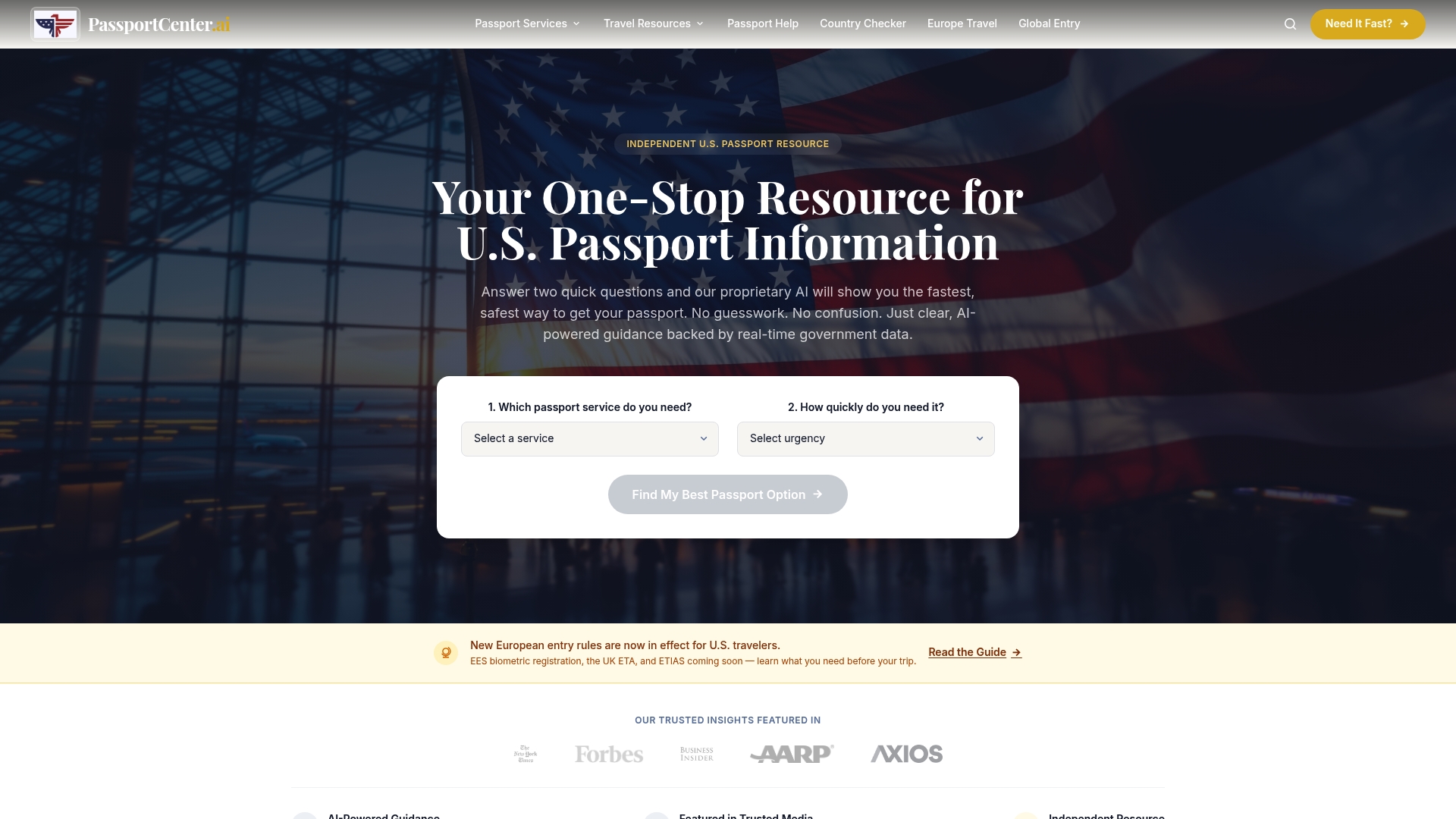
Everything on the site is free to use: form walkthroughs, printable checklists, and photo requirement guides tailored to different age groups, including newborns and infants applying for their first passport. If your situation involves a tight deadline, an overseas notarization, or documents arriving out of sequence, start with Passportcenter's full library of parent guides and use the courier referrals only if routine processing genuinely won't get you there in time.
Where to Find the Official Forms and Regulations
Download and print these before your notary or acceptance facility appointment, since some offices won't let you fill out a form on-site if the wait is long:
- Apply for a Child's Passport Under 16, the primary guidance page for consent rules and required documents.
- Form DS-3053, Statement of Consent, the notarized consent PDF itself.
- DS-5525 and other passport forms, including the exigent circumstances statement.
- 22 C.F.R. § 51.28, the federal regulation governing minor applicants.
Print each one in advance. A notary or acceptance clerk working from your own paperwork moves faster than one waiting for you to find a printer.
Sources
- Travel
- STATEMENT OF CONSENT: U.S. PASSPORT ISSUANCE TO A CHILD (Form DS-3053)
- Travel
- 22 C.F.R. § 51.28 - Minors (e-CFR / LII)
FAQ
How Do I Fill Out the DS-3053 Statement of Consent?
The absent parent signs the form only in front of a notary, who completes their own certification section and dates it. Attach a photocopy of the front and back of the exact ID shown to the notary, and submit it within 90 days of notarization.
What Is the Consent Form for a Minor's U.S. Passport?
The consent form is Form DS-3053, used when one or both parents can't appear in person for a child's passport application. When the other parent can't be located at all, Form DS-5525 serves as the alternative.
Do Both Parents Need to Sign for a 16-Year-Old's Passport?
No. Teens aged 16 and 17 only need one parent to appear with them, and the State Department may simply attempt to notify the other parent rather than requiring notarized consent, unlike the stricter rule for children under 16.
How Do I Write a Child Travel Consent Letter?
A travel consent letter, used when a child crosses borders with one parent or unaccompanied, is separate from passport issuance paperwork. For passport applications specifically, use the official DS-3053 or DS-5525 forms rather than an informal letter, since acceptance facilities don't accept substitute wording for consent to issuance.
What Happens if My DS-3053 Is Older Than 90 Days?
It's void, and the acceptance facility will reject the application. You'll need to schedule a new notary appointment and complete a fresh DS-3053 before reapplying.