
Yes. A Consular Report of Birth Abroad works as primary evidence of citizenship when you apply for your child's U.S. passport. Your next move is simple: complete Form DS-11, but don't sign it until an acceptance agent tells you to. Both parents typically need to appear in person, and if one can't make it, you'll need Form DS-3053 or another accepted substitute.
TL;DR:
- The child's citizen evidence must be a CRBA, foreign birth certificate with proof of U.S. parentage, Certificate of Citizenship, or a previous U.S. passport, with photocopies being fully legible and single-sided.
- Both parents generally need to appear in person, but notarized DS-3053, DS-5507, or DS-5525 documents can serve as workarounds if one parent cannot attend or in special circumstances.
- Application requires a completed but unsigned DS-11 form, one compliant passport photo, and evidence organized in a specific order, with extra photos recommended to avoid delays.
- Validity for a child's passport is five years, with renewals needing a fresh in-person application and original citizenship documentation, not just mailing in forms.
- Overseas applicants should check their embassy’s specific payment, notarization, and appointment rules, and expedite options are available for urgent travel needs.
Table of Contents
- Checklist: Documents to Bring to the Passport Appointment
- Step-By-Step: Filling Out DS-11 and Getting to Your Appointment
- When One Parent Can't Attend: DS-3053, DS-5507, and DS-5525
- How CRBA Fits Into the Passport Application
- Fees, Validity, and When to Expedite
- After You Apply: Tracking and Handling Delays
- Renewing a Child's Passport Issued Through CRBA
- Applying for a CRBA-Based Passport After an Unusual Birth Abroad
- What Trips Parents Up Most Often
- Faster Help When Your Timeline Is Tight
- Sources
Checklist: Documents to Bring to the Passport Appointment
You will not get a second shot at this appointment if you show up missing paperwork. Acceptance agents and consular officers see incomplete files every day, and they will send you home to collect what's missing. Here's what belongs in your folder before you walk in.
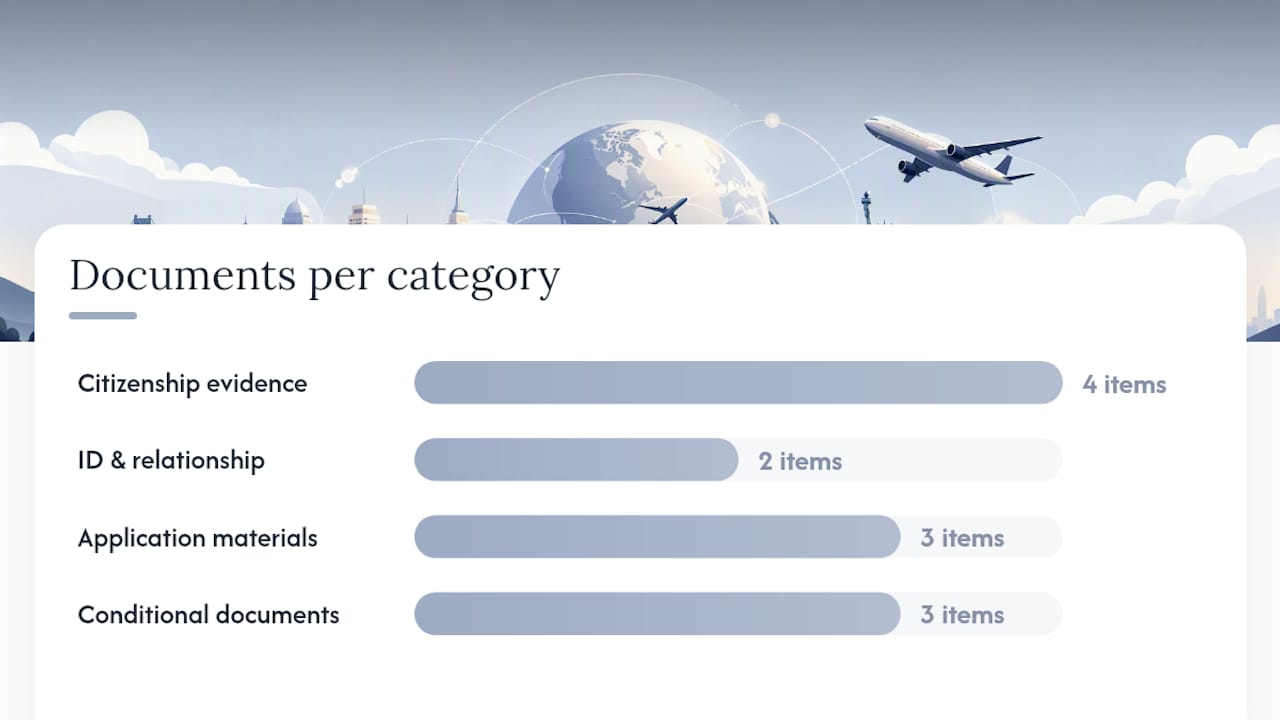
Citizenship evidence (bring one):
- The child's CRBA, which the State Department accepts directly as primary evidence of citizenship
- A foreign birth certificate paired with proof of the parent's U.S. citizenship
- A Certificate of Citizenship, if one was already issued
- A previous U.S. passport, if the child has traveled on one before
Identity and relationship proof:
- Both parents' government-issued photo IDs, originals plus photocopies
- Proof of relationship to the child (legal proof of paternity documents such as birth record, adoption decree, or the CRBA itself)
Application materials:
- A completed but unsigned DS-11 form
- One 2x2 passport photo meeting current specifications
- A payment method for the application and acceptance fees
Conditional documents, depending on your situation:
- Notarized DS-3053 if only one parent can attend
- DS-5507 if the transmitting parent needs to document past physical presence in the U.S.
- DS-5525 for special family circumstances, such as a name discrepancy or unusual custody arrangement
Photocopies matter more than most parents expect. The State Department wants them single-sided, on standard 8.5x11 paper, and fully legible. A blurry phone scan or a double-sided copy can stall your appointment just as much as a missing document.
Pro Tip: Bring two extra passport photos even if you only need one. Photo booths and drugstore kiosks near passport offices routinely run out or produce prints that don't meet the exact size standard, and you don't want to reschedule over a photo.
Step-By-Step: Filling Out DS-11 and Getting to Your Appointment
Applying for a child's passport with a CRBA in hand follows a fixed order. Skip a step and you'll likely be turned away.
- Fill out DS-11 using the online form filler, then print it single-sided. Do not sign it at home. The instructions are explicit on this point: signing happens only in front of the acceptance agent, who witnesses it as part of the oath.
- Gather your evidence packet. Pull together the CRBA or alternative citizenship proof, parent IDs, photocopies, and the passport photo, exactly as outlined in your checklist.
- Book your appointment. If you're applying from inside the United States, that means a passport acceptance facility, often a post office, public library, or clerk's office. If you're applying while living abroad, most U.S. embassies and consulates now route applicants through a MyTravelGov account and the eCRBA system, where you pay via Pay.gov before scheduling.
- Attend in person with your child. The acceptance agent or consular officer reviews your originals, has you sign the oath, witnesses the signature, staples your photo to the form, and collects the fees.
- Get your originals back. Acceptable evidence documents are returned to you, typically at the appointment or shortly after, once copies are made for the file.
If you're overseas, check your specific embassy's page before you show up. Some posts require exact payment amounts in local currency, others only accept certain card types, and appointment slots for eCRBA-linked passport applications can book out for weeks.
When One Parent Can't Attend: DS-3053, DS-5507, and DS-5525
Both parents or legal guardians generally need to appear together for a minor's passport application. Life doesn't always cooperate with that rule, and the State Department has built in specific workarounds.
- If one parent is absent, the present parent submits a notarized Form DS-3053, signed by the non-appearing parent, consenting to the application.
- A death certificate or a sole legal custody order can substitute for DS-3053 when the other parent is deceased or has no legal claim.
- DS-5507 comes into play when the U.S. citizen parent who transmitted citizenship isn't the one appearing. It documents that parent's periods of physical presence in the United States, which matters for citizenship transmission rules.
- DS-5525 covers unusual family situations. That might mean a name that doesn't match across documents or a custody arrangement that needs explaining to the reviewing officer.
Notarization rules for DS-3053 aren't uniform worldwide. In many countries, a local notary isn't sufficient, and the form has to be notarized at a U.S. embassy or consulate instead.
Pro Tip: If you're overseas and think you'll need DS-3053, check your embassy's notarization policy weeks in advance, not days. Some consular sections only offer notary services on specific days of the week, and DS-3053 must be dated within 90 days of your appointment.
How CRBA Fits Into the Passport Application
Think of the CRBA as your child's permanent citizenship record, not a document that expires or gets renewed. The USCIS Policy Manual draws this distinction clearly: a CRBA documents citizenship at birth indefinitely, while a passport is a travel document that's valid for a limited window and only serves as citizenship proof while current.
That difference matters practically. Once you have a CRBA, every future passport application (first passport, renewal, replacement) points back to that same underlying record. You don't need to requalify for citizenship each time.
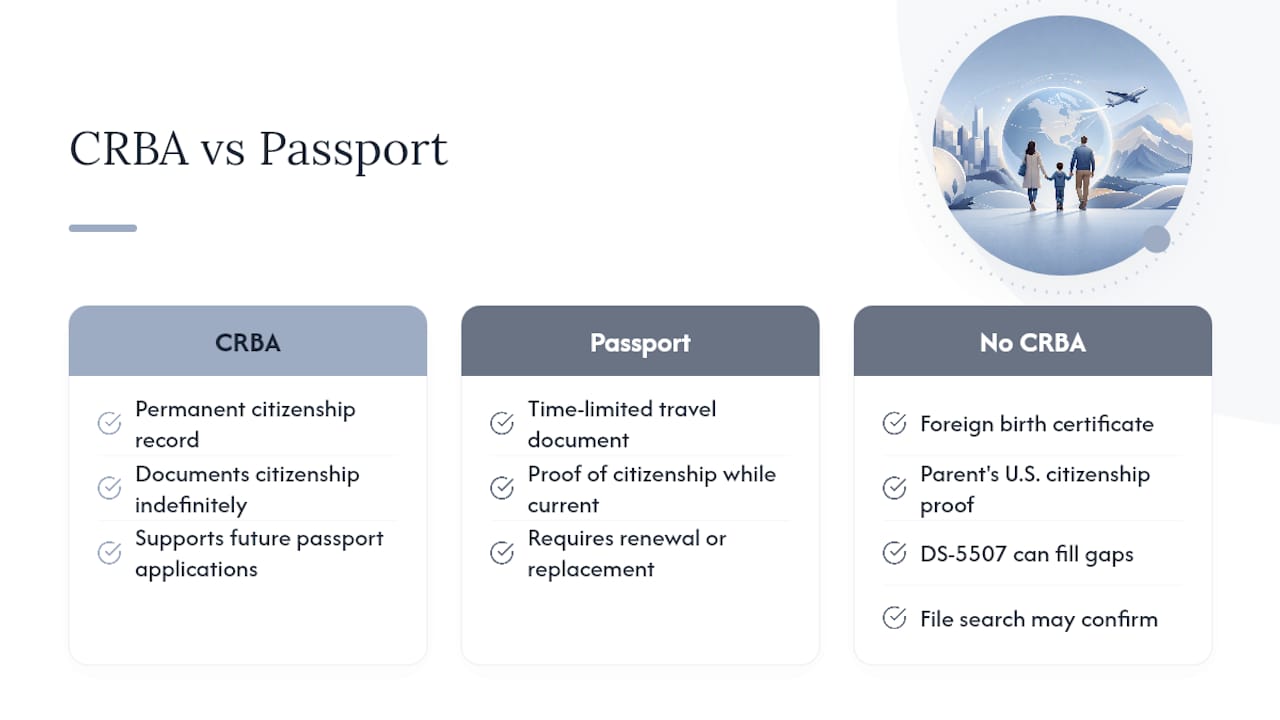
If you don't have a CRBA, you're not stuck. A foreign birth certificate combined with proof of the parent's U.S. citizenship works as an alternative, and DS-5507 can fill gaps around physical presence requirements. If a CRBA was applied for but never issued, or if it's been lost, the passport office or consular section can typically run a file search rather than starting citizenship documentation from zero. Delays here are common but rarely fatal to the application. They just take patience and sometimes a phone call to confirm what's on file.
Fees, Validity, and When to Expedite
Fee amounts change periodically, so confirm current numbers directly on travel.state.gov before you budget for the appointment. What doesn't change as often: a passport issued to a child under 16 is valid for five years, not ten, and children in that age bracket cannot renew by mail. Every renewal means another in-person appointment with fresh evidence.
- Standard processing typically takes several weeks; expedited service costs more and moves faster.
- Urgent international travel inside three weeks usually means contacting the National Passport Information Center (NPIC) or booking a regional passport agency appointment directly.
- Life-or-death emergencies abroad have separate, faster consular procedures.
After You Apply: Tracking and Handling Delays
Once you've submitted, PassportStatus.state.gov is where you check progress, using the locator number from your receipt. Original documents are usually mailed back separately from the passport itself, so don't panic if they arrive at different times. If the State Department requests additional evidence, respond quickly and specifically. Call the NPIC at 1-877-487-2778 if instructions are unclear; guessing at what they need only adds more weeks to your timeline.
Renewing a Child's Passport Issued Through CRBA
Renewal for a minor isn't a formality you can handle by mail, and that surprises a lot of parents the first time around. Because passports for children under 16 expire after five years, and children 16 and 17 need to reapply too, every renewal for a minor requires a fresh in-person DS-11 application, not the simpler DS-82 renewal form adults use.
The good news: your original CRBA doesn't expire and doesn't need to be resubmitted from scratch in most cases, since it's already documented that citizenship record permanently. You'll still need to bring the CRBA (or whatever citizenship evidence you used originally) along with the expiring passport, updated photos, and current parental consent documentation if circumstances have changed since the last application. If your child's appearance has changed dramatically, or if you've moved and now apply through a different acceptance facility or embassy, treat the renewal with the same care as the original application. The same parental appearance rules apply again, which catches some parents off guard when they assume a "renewal" means less paperwork.
Applying for a CRBA-Based Passport After an Unusual Birth Abroad
Births that happen mid-trip, during a layover, or in a country where neither parent has residency status create extra questions, but they don't block you from documenting citizenship. If your child was born during travel and you haven't yet obtained a CRBA, that's typically your first step before or alongside the passport application, handled through the nearest U.S. embassy or consulate rather than a domestic acceptance facility.
For unusual circumstances, such as a birth in a country with limited U.S. consular presence, a same-sex or non-traditional family structure, or documentation gaps because local hospitals don't issue standard birth certificates, the embassy's American Citizen Services unit is your resource. They can advise on which combination of DS-5507, DS-5525, and supplemental evidence applies to your specific case. If you were traveling briefly and returned to the U.S. before completing CRBA paperwork abroad, some cases can still be resolved domestically, though it typically takes longer and may involve additional review of the birth circumstances. Don't assume a complicated birth story disqualifies your child. It usually just means more documentation, not a different outcome.
What Trips Parents Up Most Often
The mistakes I see repeated aren't exotic. They're the same three, over and over: parents sign DS-11 before the appointment out of habit, they bring double-sided photocopies instead of single-sided ones, and they wait too long to get DS-3053 notarized when one parent can't travel. Any one of these sends you home without a completed application.
None of this is complicated once you know the rules going in. PassportCenter.ai builds printable checklists, photo requirement guides, and regional acceptance facility information specifically so parents catch these issues before the appointment, not during it.
— David
Faster Help When Your Timeline Is Tight
If your travel date is close and the standard process feels too slow, you have options beyond waiting in the regular queue. There are resources online that offer regional agency guidance and CRBA-to-passport workflows without the runaround, and they often do not charge for access.
Government processing is a fixed timeline set by NPIC and regional passport agencies. What Passportcenter adds is clarity on which path fits your situation and, when speed genuinely matters, a referral to vetted expedited courier partners who specialize in moving urgent applications faster than mailing it yourself. If you're navigating a name discrepancy or unusual custody situation, the guide on secondary ID and consent documentation walks through acceptable alternatives before you're standing at the counter. Start at Passportcenter to find your regional acceptance facility, download current forms, and see whether an expedited referral makes sense for your timeline.
Sources
- APPLICATION FOR A U.S. PASSPORT (Form DS-11) — Instructions
- Travel
- Consular Report of Birth Abroad (CRBA) — U.S. Embassy guidance (example)
Always confirm fees and appointment rules on your specific embassy's page before applying abroad, since local payment methods and notarization requirements vary by post.