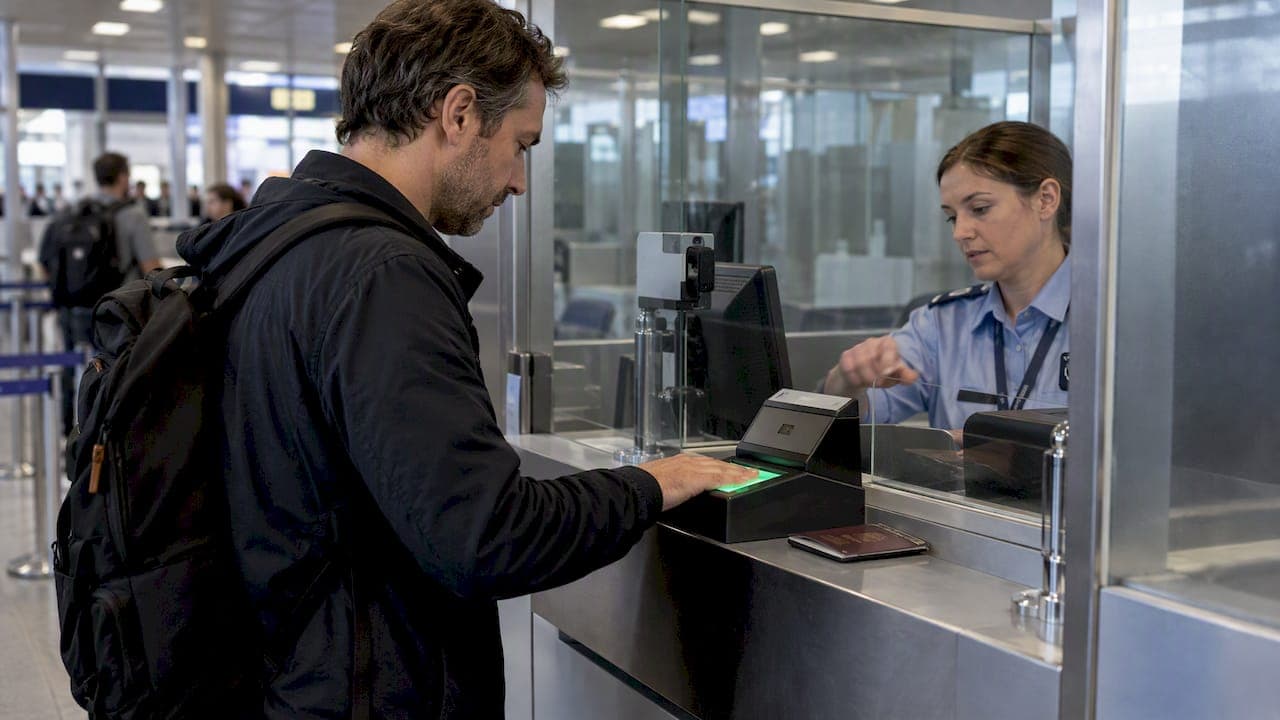
The EU Entry/Exit System (EES) digitally records non-EU short-stay entries and exits and collects a photo and, in most cases, fingerprints. It replaces passport stamping and is now how Europe tracks your 90 days in any 180-day period. There is no pre-registration, no fee, and no app to download. Just plan for a slightly longer first crossing while border officers capture your biometrics.
TL;DR:
- Short stay visitors, including visa exempt travelers, must register; EU, EEA, and Swiss nationals, residence permit holders, and long stay visa holders are generally exempt.
- Visa holders usually skip fingerprinting because their prints are already stored in the Visa Information System; visa exempt travelers provide four fingerprints and a photo.
- Children under 12 are generally not fingerprinted, but officers still take their photo; first registration can add a few minutes at busy crossings.
- Travelers who crossed before their checkpoint was automated may need biometric registration on a later visit, despite full operation since April 10, 2026.
- The official online tool calculates your remaining short stay days from your travel document and entry and exit dates before you plan another trip.
Table of Contents
- What is the EES and what does it replace?
- Who has to register with the EES?
- What data does the EES collect and how is it protected?
- What actually happens at the border
- Which countries use the EES and when did it launch?
- EES vs ETIAS: two different systems, two different jobs
- Getting your documents ready before you fly
- FAQ
- Sources
What is the EES and what does it replace?
The EES is an automated system that logs when non-EU travelers enter and exit the participating European countries during short stays. Instead of an officer stamping your passport by hand, a machine or border agent records your travel document details, a facial photo, and usually your fingerprints. That record becomes your official entry and exit timestamp.
The system runs under Regulation (EU) 2017/2226, and its rollout happened in stages rather than all at once.
- It replaces manual passport stamps with a digital entry/exit log.
- It aims to calculate your 90/180-day short-stay limit more accurately than ink stamps allowed.
- It is meant to speed up future border checks once your biometrics are on file.
The old system relied on border agents reading stamps and doing mental math on your allowed days. Human error crept in constantly. The EES removes that guesswork by letting the system count your days automatically.
Who has to register with the EES?
If you are a non-EU national visiting for a short stay, meaning up to 90 days in any 180-day window, the EES applies to you. That includes visitors from visa-exempt countries and those traveling on short-stay Schengen visas.
- Visa-exempt travelers (including most U.S. and UK passport holders on short trips) must register.
- EU, EEA, and Swiss nationals are exempt, since the system targets non-EU short stays.
- Residence permit holders, long-stay visa holders, diplomats, certain crew members, and local border traffic permit holders are generally exempt too.
If you already hold a short-stay Schengen visa, your fingerprints are likely already stored in the Visa Information System, so the EES may not need to collect them again at the border.
What data does the EES collect and how is it protected?
The European Union's official EES data page lists exactly what gets recorded: your travel document details, entry and exit dates, a facial image, and fingerprints. Visa-exempt travelers get four fingerprints scanned along with their photo. Visa holders usually skip the fingerprint step since those prints already sit in the VIS.
- Travel document data: passport number, nationality, and document type.
- Entry and exit dates at every border crossing.
- A facial image, plus four fingerprints for visa-exempt travelers.
- A record if you are ever refused entry.
Fingerprints for visa-exempt travelers: 4 digits scanned, matched against the facial image for identity verification, according to the EU's EES data page. Retention periods are limited by EU rules, and oversight bodies exist to handle complaints. If you believe your data is wrong or want to see what is on file, the official EES FAQ explains how to request access or correction through national authorities.
What actually happens at the border
Your first crossing after the EES takes effect will involve a short registration step. Here is what to expect:
- A border officer or kiosk scans your passport and verifies your travel document.
- The system captures your facial photo and, if you are visa-exempt, your fingerprints.
- Children under 12 are generally not fingerprinted, though their photo is still taken.
- On later trips, the system often recognizes your stored biometrics, which speeds things up.
Some larger airports and crossing points offer self-service kiosks for travelers with biometric passports, letting you complete part of the process before reaching an officer. Smaller or less-automated crossings still rely on an officer to register you manually.
Pro Tip: Build in extra time for your first EES crossing, especially during busy travel periods, since initial biometric registration adds a few minutes that stamping never did.
Carry proof of your return or onward ticket, make sure your passport meets validity requirements, and if the system ever flags your record as unclear or incomplete, ask the border officer on the spot rather than waiting until a later trip.

Which countries use the EES and when did it launch?
The EES applies across the European countries that make up the Schengen Area plus a few additional participants, though Cyprus and Ireland continue using passport stamps rather than the EES. The EU's EES pages list exactly which countries are included and which exemptions apply.
- Rollout began progressively starting in October 2025, with countries phasing in automation at different crossing points.
- Full operation across all participating external borders started on April 10, 2026.
- If you crossed during the progressive phase at a smaller or less-automated checkpoint, you might still need to complete full biometric registration on a later visit.
EES vs ETIAS: two different systems, two different jobs
It's easy to mix these up, but they do separate things. The EES is a border registration system that logs your entry and exit with biometrics, and it is already active across participating countries.
- EES: happens at the border, captures biometrics, no advance application, no fee.
- ETIAS: a planned pre-travel authorization for visa-exempt nationals, requiring a separate online application and a fee before you fly.
- Practical takeaway: EES affects how border control processes you right now, while ETIAS will be an added step you complete before booking or boarding once it launches.
For a closer look at who needs ETIAS and how the application works, our guide to ETIAS for American travelers breaks down the process.
Getting your documents ready before you fly
Based on what we've covered, a short pre-trip checklist goes a long way toward a smooth first EES crossing:
- A biometric passport (most U.S. and UK passports issued in the last decade qualify).
- Passport validity that meets Schengen guidance, typically three months beyond your planned departure date. Our passport validity guide for Europe walks through the specifics.
- A return or onward ticket, since border officers may ask for it.
- Proof of funds or accommodation if requested, and travel insurance that satisfies Schengen requirements, covered in our Schengen travel insurance overview.
- Extra time budgeted for your first biometric registration.
If you traveled during the progressive rollout and never completed biometric registration, expect to finish it on your next trip rather than assuming you're already in the system. And if you think your EES record is wrong, request a correction through the national authority listed in the official FAQ rather than waiting for it to cause problems at a future border.
For travelers juggling passport renewals alongside these new entry rules, our Passportcenter covers application steps, processing times, and connects you to vetted expedited courier services when a renewal needs to move fast. If you also hold Global Entry or are applying for it, our interview prep guide and this Trusted Traveler interview resource cover what to expect at that appointment too.
— David
FAQ
Do US citizens need EES?
Yes, U.S. citizens traveling to participating European countries for short stays are subject to EES registration since the system applies to non-EU, non-EEA, non-Swiss nationals. There's no fee or advance application required. The process happens automatically when you cross the border, according to U.S. Department of State guidance.
Do you have to do EES every time you enter Europe?
You don't repeat full biometric registration on every trip. Once your fingerprints and photo are on file, later crossings typically use your stored biometrics, which speeds up the process compared to your first registration.
Do I need to register for the EES again after having done it?
Generally no, since your biometric data stays valid for future short-stay trips within the system. If you traveled during the progressive rollout and your crossing point wasn't yet automated, you may need to complete registration on your next visit.
How do you get the EES for Europe?
There's nothing to apply for in advance. Registration happens automatically at the border when a kiosk or officer scans your passport and captures your photo and fingerprints, as confirmed by U.S. State Department guidance.
How can I check how many days I have left on a short stay?
Use the official EES online tool, which calculates your remaining authorized days from your travel document and entry and exit dates. It returns a clear "OK" or "not OK" result so you know exactly where you stand before planning further travel.
Sources
- U.S. Department of State — EU Entry and Exit System (EES)
- European Union — Entry/Exit System (EES) FAQ