
The top passport application mistakes are photo errors, choosing the wrong form, missing original citizenship documents, incorrect fees, unsigned forms, and mailing problems. Any one of these can pause or return your application. Fix them before you mail anything.
Quick fixes to apply right now:
- Check your photo against State Department photo requirements: taken within 6 months, no glasses, no filters, plain white or off-white background, no digital editing
- Confirm you are using the correct form: DS-11 for first-time applicants, DS-82 for eligible renewals
- Do not sign Form DS-11 before the acceptance agent instructs you
- Verify your fees include the correct application amount plus the $60 expedite fee if you need faster service
- Use a trackable mailing method and do not include a pre-paid return envelope unless the instructions say to
If you already submitted and received a letter or email requesting more information, respond within 90 days following the instructions exactly, and include the original letter when you return any documents.
Pro Tip: Call the National Passport Information Center (NPIC) at 877-487-2778 if your application shows no status update two weeks after payment was processed. A data entry error may be blocking your record.
Key Takeaways
Catching passport application mistakes before you mail is almost always faster and cheaper than correcting them after submission.
| Point | Details |
|---|---|
| Photo errors top the rejection list | Photos must be original, unedited, taken within 6 months, with no glasses or filters. |
| Form selection determines eligibility | Use DS-11 for first-time applicants; DS-82 only if you meet all renewal-by-mail conditions. |
| Add mailing time to every estimate | Routine takes 4–6 weeks and expedited takes 2–3 weeks, plus up to 2 weeks of mailing each way. |
| Respond to letters within 90 days | Missing the 90-day response window closes your application and requires reapplying with new fees. |
| Passportcenter offers free guidance | Free checklists, photo guides, and vetted courier referrals are available at passportcenter.ai. |
This article is general information, not a substitute for advice from a qualified lawyer. Consult a qualified legal professional about your own circumstances before acting on anything here.
Table of Contents
- 1. The Most Common Passport Application Mistakes and How to Fix Each One
- What to do if you already submitted and found an error
- How to choose the right processing speed for your travel date
- Special cases: children, name changes, lost passports, and Social Security issues
- Your pre-mail checklist: catch errors before you seal the envelope
- How to spot scam sites and verify legitimate passport services
- The one habit that prevents most passport delays
- Passportcenter makes the process easier when you need it most
- Sources
1. The Most Common Passport Application Mistakes and How to Fix Each One
1. Photo errors: the single most frequent cause of rejection
Your photo is rejected more often than any other part of the application. State Department guidance is unambiguous: photos must be original and unedited, taken recently, with a plain white or off-white background, a neutral expression, and no glasses. Any evidence of digital editing, AI filters, brightness adjustments, or background removal causes immediate rejection. Print the photo on matte or glossy photo-quality paper; a home inkjet printout on regular paper will not pass.
See acceptable and unacceptable photo examples before you print.
2. Signing Form DS-11 before the acceptance agent tells you to
First-time applicants must use Form DS-11 and apply in person at an acceptance facility. The form must remain unsigned until the acceptance agent witnesses your signature. Signing it beforehand invalidates the form and forces you to start over with a new one. This is one of the most avoidable delays in the entire process.
3. Choosing the wrong form: DS-11 vs. DS-82
You can only renew by mail using Form DS-82 if all of the following are true: your most recent passport is undamaged, issued after age 16, issued within the last 15 years, and you can submit it with your renewal. If any condition fails, you must apply in person using DS-11. Using DS-82 when you are ineligible results in a returned application and lost processing time. Use the State Department Form Filler on a desktop to select the correct form, format fields accurately, and print single-sided.
4. Submitting copies instead of original citizenship documents
Your proof of U.S. citizenship must be an original document, not a photocopy. For most applicants, that means a certified birth certificate with a raised or multicolored seal issued by the vital records office. Hospital birth certificates, photocopies, and laminated documents are not acceptable. Naturalization certificates must also be originals. The State Department will return unacceptable documents, which adds weeks to your timeline.
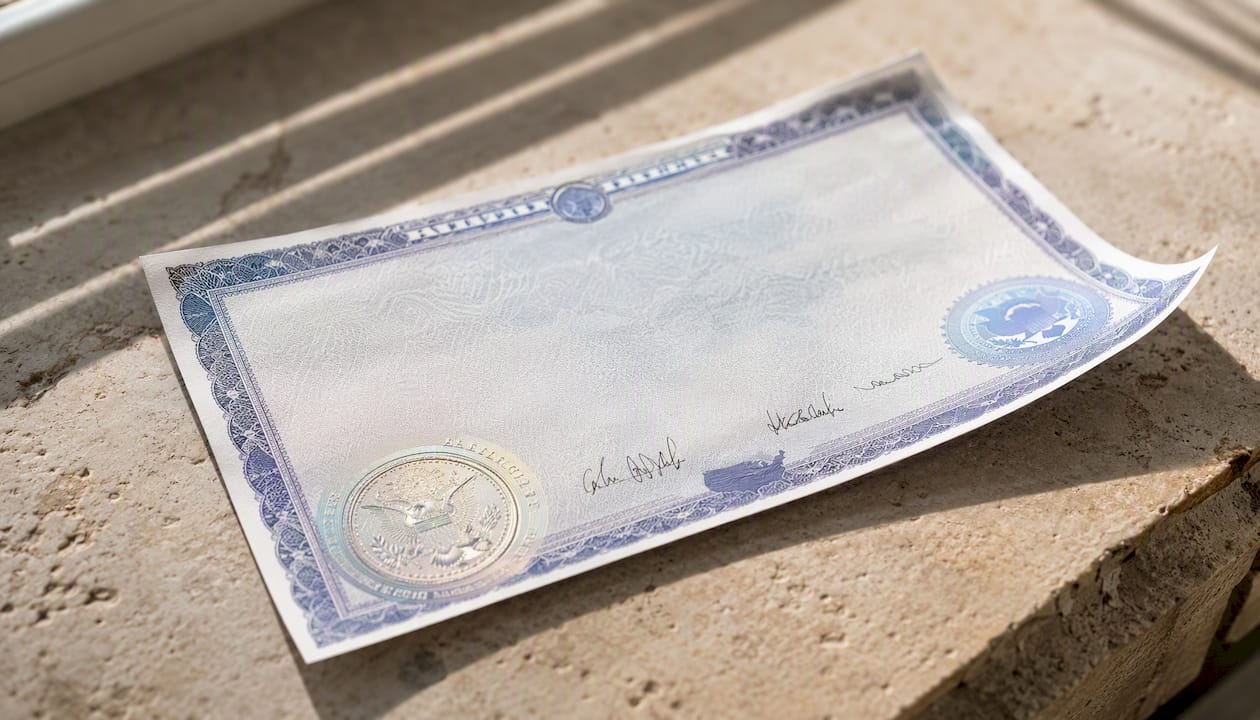
Pro Tip: Include a photocopy of your citizenship document along with the original. The agency keeps the photocopy and returns the original, which protects you if anything is lost in transit.
5. Submitting an unacceptable photo ID
Your photo ID must be a valid, government-issued document: a driver's license, state ID, military ID, or similar. Expired IDs are not accepted. You must also include a clear photocopy of the front and back of the ID. Missing the photocopy is a common oversight that triggers a request for additional information.
6. Name-change errors and missing supporting documents
If your name on your citizenship document does not match your current legal name, you must submit a certified copy of your marriage certificate, divorce decree, or court order showing the name change. A plain photocopy is not sufficient; it must be a certified copy from the issuing authority. If you changed your name multiple times, you need a document for each change in the chain. Missing even one link in that chain will pause your application.
7. Missing or incorrect Social Security number
Federal law requires you to provide your Social Security number on your passport application if you have one. Leaving it blank or entering it incorrectly can delay processing. If you have never been issued a Social Security number, you must include a signed, dated statement declaring that fact, using the specific language the State Department requires. Submitting nothing in place of the SSN is not an option.
8. Fee errors and wrong payment method
Passport fees must be paid correctly or your application will be returned. The application fee for an adult passport book is paid to the "U.S. Department of State." The acceptance facility fee is a separate check or money order paid to the acceptance facility itself. If you are requesting expedited service, add a $60 expedite fee to the U.S. Department of State payment. Cash is not accepted by mail. Credit cards are accepted at some acceptance facilities but not by mail. Double-check the payee name on every payment before you seal the envelope.
9. Mailing mistakes: wrong address, no tracking, pre-paid envelopes
Sending your application to the wrong address is more common than it sounds, especially when applicants confuse routine and expedited mailing addresses. Always use the address printed on the instructions for your specific form and service type. Use USPS Priority Mail or Priority Mail Express with tracking so you have proof of delivery. Do not include a pre-paid return envelope unless the instructions explicitly tell you to. Including one when not instructed can cause confusion at the processing facility.
10. Missing or unsigned application form pages
Every page of your application must be included and complete. Double-sided printing is not allowed; each page must be on its own sheet. Missing pages, blank required fields, or a form printed back-to-back will result in a returned application. The Form Filler tool enforces single-sided printing automatically when used on a desktop.
11. Child-specific documentation errors
Minors under 16 must apply in person using Form DS-11. Both parents or legal guardians must either appear together or one parent must provide a notarized Form DS-3053 (Statement of Consent) from the absent parent. You must also submit proof of the child's relationship to the parents, typically a birth certificate. Note that passports issued to children under 16 are valid for only 5 years, compared to 10 years for adults. For infants, photo requirements have specific accommodations; see the infant passport photo guide for details.
12. Selecting routine service when your travel date requires expedited
Applicants frequently underestimate total turnaround time. Routine processing takes 4–6 weeks and expedited takes 2–3 weeks, and neither figure includes mailing time, which can add up to two additional weeks in each direction. If your travel date is within 14 calendar days, or within 28 days and you need a visa, you must schedule an urgent appointment at a passport agency. Choosing routine service when expedited is required is one of the most costly timing errors you can make.
What to do if you already submitted and found an error
The first question most applicants ask is whether they need to reapply from scratch. In most cases, no. A letter or email from the State Department requesting more information is not a denial; it is a fixable pause.
Here is the step-by-step recovery process:
- Check your application status at Travel or call NPIC at 877-487-2778. Have your application number, last name, date of birth, and last four digits of your Social Security number ready.
- Read the letter or email carefully. The correspondence will specify exactly what is missing or incorrect and where to send the corrected materials.
- Gather the requested documents. Common reasons for a letter include a missing signature, an unacceptable photo, missing pages, wrong fees, or an ineligible renewal.
- Mail your response to the address on the letter, not to a general passport facility address. Include the original letter in your resubmission packet.
- Respond within 90 days. Per State Department guidance, failing to respond within that window will result in your application being closed.
Once the State Department receives your corrected documents, expect roughly 1–2 weeks for processing to resume. If you have no status update two weeks after your payment was processed, call NPIC — a data error may be blocking your record.
When reapplying or scheduling an agency appointment is necessary: if your passport was lost or stolen, if you are ineligible to renew by mail, or if you have urgent travel within 14 days, you will need to schedule an in-person appointment at a regional passport agency. Check the supporting documents mailed status guide if your status shows documents were returned but you have not received them.
How to choose the right processing speed for your travel date
Picking the wrong service tier is a timing mistake that cannot be undone after you mail your application. Here is a clear breakdown of your options.
| Service | State Dept. Processing Estimate | Mailing Addition | When to Use |
|---|---|---|---|
| Routine | 4–6 weeks | Up to 2 weeks each way | Travel 10+ weeks away |
| Expedited | 2–3 weeks | Up to 2 weeks each way | Travel 5–9 weeks away |
| Agency appointment | Varies (same day to a few days) | Minimal (in-person pickup) | Travel within 14 days, or 28 days with visa need |
Processing time estimates come from the State Department's processing times page and exclude mailing. Always add mailing time to your calculation.
Fees to include with your application:
- Adult passport book application fee: $130 (new applicants), $130 (renewal)
- Acceptance facility fee: $35 (paid separately to the facility, first-time applicants only)
- Expedite fee: $60 (paid to U.S. Department of State, in addition to application fee)
- Faster return shipping: $23.36 for 1–3 day USPS delivery (optional but worth it)
Pro Tip: Paying the $23.36 for Priority Mail Express return delivery when you submit your application is one of the cheapest ways to cut days off your total wait. You cannot add it after the fact.
Decision rule: Count back from your departure date. If the total of State Department processing time plus mailing time in both directions does not leave a buffer of at least one week, move up to the next service tier. For a deeper look at how current processing timelines interact with mailing, the Passportcenter processing guide breaks it down by submission method.
Special cases: children, name changes, lost passports, and Social Security issues
These situations each carry extra documentation requirements that trip up even careful applicants.
Children under 16:
- Both parents or legal guardians must appear in person, or the absent parent must provide a notarized Form DS-3053
- Submit proof of the child's relationship to both parents (birth certificate)
- Child passports are valid for 5 years, not 10
- Photo requirements for infants have specific accommodations for positioning and support
Name changes:
- Submit a certified copy of the marriage certificate, divorce decree, or court order for each name change
- If your name changed within the last year and you are renewing by mail, you must include the certified document; if the name change is older and your previous passport reflects the old name, the same rule applies
- Plain photocopies are not accepted; the document must be certified by the issuing authority
Lost or stolen passports:
- Complete Form DS-64 (Statement Regarding a Lost or Stolen Passport) before applying for a replacement
- You must apply in person using Form DS-11
- Submitting a replacement application without DS-64 can create complications if the lost passport is later used fraudulently
Social Security number:
- Federal law requires you to provide your SSN if you have one; omitting it can delay processing and may result in a penalty
- If you have never been issued a Social Security number, include a signed, dated statement using the exact language specified by the State Department
- See the State Department's FAQ on SSN requirements for the required statement language
For questions about acceptable secondary identification, the secondary ID guide covers what works when your primary ID is expired or unavailable.
Your pre-mail checklist: catch errors before you seal the envelope
Run through every item below before you drop your application in the mail. This takes five minutes and can save weeks.
Form:
- Correct form selected (DS-11 or DS-82 based on eligibility)
- Printed single-sided, no double-sided pages
- All fields complete, no blanks in required sections
- DS-11 is unsigned (sign only in front of the acceptance agent)
Photo:
- Taken within the last 6 months
- Plain white or off-white background
- No glasses, no filters, no digital editing of any kind
- Printed on photo-quality paper, 2x2 inches
Documents:
- Original citizenship document (certified birth certificate or naturalization certificate)
- Photocopy of citizenship document included
- Valid government-issued photo ID
- Photocopy of front and back of photo ID
- Name-change documents (certified copies) if applicable
- Most recent passport included (DS-82 renewals)
- Form DS-64 included if passport was lost or stolen
Payment:
- Application fee check or money order made out to "U.S. Department of State"
- Acceptance facility fee paid separately (first-time applicants)
- $60 expedite fee included if requesting expedited service
- No cash enclosed
Mailing:
- Correct mailing address for your form and service type
- Trackable shipping method selected (USPS Priority Mail or Priority Mail Express)
- No pre-paid return envelope included unless instructions specify
- Contact email and phone number included in the packet
Pro Tip: Do not digitally edit your photo for any reason, including removing shadows or brightening the background. The State Department's reviewers are trained to spot edited images, and the rejection adds weeks to your timeline.
How to spot scam sites and verify legitimate passport services
Third-party sites that mimic government pages are a real problem. Some use domain names that look official but end in .com or .org instead of .gov. Others pre-fill forms and ask for a credit card before you realize the form itself is free. These sites do not speed up your application; they add cost and sometimes introduce errors.
Red flags to watch for:
- Domain names that include words like "passport" or "official" but do not end in .gov
- Requests for a "processing fee" or "service fee" on top of official government fees
- Sites that claim to submit your application electronically (passport applications cannot be submitted online)
- Pre-filled forms that require payment before you can print
- No physical business address or verifiable contact information
When a paid courier service is legitimate:
Registered passport courier services are different from scam sites. They are authorized third-party companies that help applicants schedule agency appointments, organize documents, and physically deliver applications to passport agencies on your behalf for urgent travel situations. A legitimate courier will be transparent about its fees, list a registered business address, and not claim to be a government entity.
To verify a courier, look for clear terms of service, a verifiable business address, and independent reviews. Passportcenter connects readers to vetted, registered courier partners and discloses affiliate relationships clearly.
The one habit that prevents most passport delays
Most passport delays are not caused by complicated eligibility issues. They come from small, preventable errors: a photo taken with a filter, a form signed too early, a check made out to the wrong payee. The pattern is consistent.
The single most effective habit is completing your application on a desktop computer using the State Department's Form Filler tool, then doing one final document-by-document review against the pre-mail checklist above before sealing the envelope. The Form Filler enforces correct formatting, prevents double-sided printing, and reduces fee calculation errors. It takes the same amount of time as filling out a paper form by hand, and it eliminates the formatting mistakes that handwritten forms regularly produce.
The downstream cost of a returned application is real: two to four weeks of lost processing time, potential rebooking fees if travel is affected, and the stress of scrambling for an agency appointment. None of that is worth skipping a five-minute checklist.
Passportcenter makes the process easier when you need it most
When you want free, reliable guidance without sorting through government PDFs, Passportcenter gives you up-to-date checklists, photo examples, form guides, and plain-language explanations of processing timelines. The site also connects you to vetted, registered expedited courier services for situations where you need professional help fast.
Passportcenter is transparent about how it works: the site earns referral fees when readers connect with courier partners, and those partners are selected for reliability, clear pricing, and registered status. There is no pressure to use a paid service if the free guides cover what you need.
If your travel date is close, your situation involves a name change or a minor, or you simply want a second set of eyes on your application before you mail it, start with the free resources at Passportcenter and use the courier referral only if your timeline genuinely requires it.