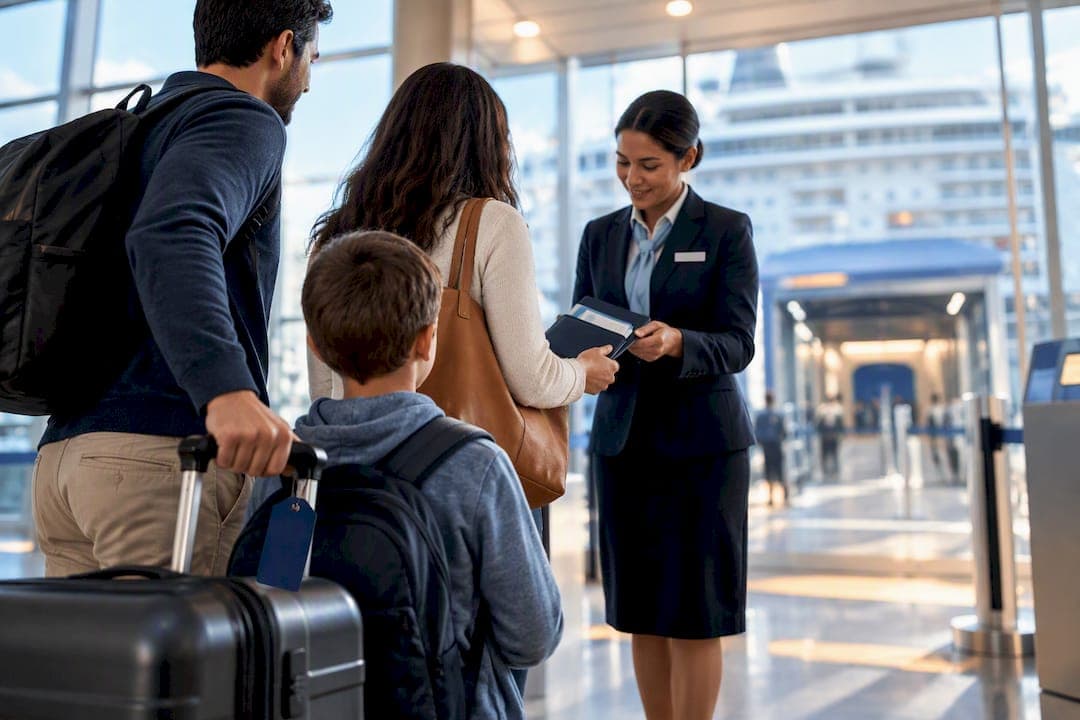
Short answer: U.S. citizens don't always need a passport for a qualifying closed-loop cruise, but a passport book is still the smarter move. The U.S. Department of State and U.S. Customs and Border Protection both confirm the closed-loop exception exists, but if you fly internationally, connect through certain ports, or need an emergency flight home, you'll need a passport book. No exceptions.
TL;DR:
- The closed-loop cruise exception only applies if the trip departs and returns to the same U.S. port and all stops remain in the Western Hemisphere, excluding one-way or repositioning sailings.
- A passport book is required for international flights, any open-jaw or non-qualifying itineraries, and specific foreign ports that demand travelers carry valid passports regardless of the cruise's closed-loop status.
- Travelers should confirm their itinerary matches CBP definitions and check cruise line policies, as some lines require passports even for closed-loop cruises, and policies vary by port and destination.
- If there's a risk of missing a cruise or needing an emergency flight home, a passport book provides essential flexibility, especially since alternate documents cannot be used for air travel.
- Always renew passports early, maintain copies of travel documents, and verify destination-specific rules to avoid delays or denied boarding before departure.
Table of Contents
- Passport for Cruise: Your Quick Document Checklist
- What Is a Closed-Loop Cruise, and Who Actually Qualifies?
- When You'll Still Need a Passport Book, No Matter What
- Passport Validity, Blank Pages, and When to Renew
- Documents for Non-Citizens, Green Card Holders, and Kids
- Why You Must Check Your Cruise Line's Own Rules Too
- Lost Your Passport Mid-Cruise? Do This Immediately
- Your Pre-Cruise Document Checklist
- How PassportCenter.ai Helps You Prepare
- Why We Still Recommend a Passport for Every Cruise
- Need a Passport Fast Before Your Cruise?
- Sources
- FAQ
Passport for Cruise: Your Quick Document Checklist
Before you dig into the fine print, run your itinerary against this list. It tells you fast whether your paperwork is ready or whether you have a problem to solve before departure.
- Passport book: The default choice and the only document accepted for international air travel. If your cruise involves flying anywhere internationally, this is not optional.
- Passport card: Works for sea and land reentry from Canada, Mexico, Bermuda, and most Caribbean ports. It is not valid for air travel, so if a passport card cruise is your plan, confirm your trip never requires a flight.
- Birth certificate plus photo ID: An original or certified birth certificate paired with a government-issued photo ID (driver's license, state ID) satisfies the closed-loop exception for U.S. citizens re-entering by sea.
- Enhanced Driver's License (EDL): Issued by a handful of states (Michigan, Minnesota, New York, Vermont, and Washington), an EDL works for sea and land border crossings but not for flying.
- Green Card (Form I-551): Required for lawful permanent residents, regardless of itinerary type.
- Naturalization certificate or Consular Report of Birth Abroad (CRBA): Acceptable proof of citizenship for closed-loop sailings if you don't have a passport, though a driver's license or state ID must accompany it.
Here's where people get tripped up: a passport card cruise plan sounds like a smart shortcut, and often it is, but it only works if every leg of your trip happens by sea or land. The same card that gets you back into the U.S. from a Caribbean port will get rejected at airport security if your itinerary changes and you suddenly need to fly. If you're wondering whether a passport card works for Canada specifically, the answer is yes for land and sea crossings, which matters if your cruise includes a stop in Vancouver or a repositioning route through Canadian waters.
Families traveling with kids should know that minors need the same documentation as adults for closed-loop cruises. A birth certificate works for a child just as it does for a parent, but if your child has a different last name from the accompanying adult, bring documentation proving the relationship (custody papers, a notarized consent letter from the other parent) to avoid a delay at the terminal.
Pro Tip: Take a clear photo of every document you're bringing and email it to yourself before you leave home. If your wallet or bag goes missing mid-cruise, you'll have a copy accessible from any phone.
What Is a Closed-Loop Cruise, and Who Actually Qualifies?
A closed-loop cruise departs from a U.S. port and returns to that exact same U.S. port, with all stops staying inside the Western Hemisphere. That's the entire definition. Miss either piece, and the exception evaporates.
CBP is clear that this convenience applies only to U.S. citizens re-entering by sea, not by air, and not to green card holders or visa holders. Here's how to check your itinerary in under a minute:
- Confirm the departure and return port match. If you leave from Miami, you need to return to Miami. A cruise that departs from Miami and ends in San Juan doesn't qualify, no matter how convenient it sounds.
- Check that every stop is within the Western Hemisphere. Caribbean islands, Mexico, and Bermuda are typically fine. A cruise that continues to Europe or Asia breaks the loop entirely.
- Rule out repositioning and one-way itineraries. Cruise lines move ships between seasonal routes (often Caribbean to Mediterranean) each spring and fall. These "repositioning" sailings are one-way by design and never qualify as closed-loop.
- Watch for open-jaw bookings. If your cruise line's own booking confirmation shows different embarkation and disembarkation ports, you're not closed-loop, even if both ports happen to be in the U.S.
A round-trip from Galveston to Cozumel and back to Galveston qualifies. A cruise from Fort Lauderdale that ends in Barcelona does not. It sounds obvious written out like that, but a surprising number of travelers assume "Caribbean" automatically means closed-loop, and that's not how CBP defines it.
One more detail worth repeating: this exception belongs to U.S. citizens only. If anyone in your travel party is a green card holder, a visa holder, or a non-U.S. citizen, they need their own valid passport regardless of how the itinerary is structured.
When You'll Still Need a Passport Book, No Matter What
Certain situations override the closed-loop exception completely, and they trip up more travelers than you'd expect.
- Any international air travel. If your cruise package includes a flight to the embarkation port in another country, or you're flying home from a foreign port for any reason, a passport book is mandatory. Passport cards, EDLs, and birth certificates are all useless at airport security for international flights.
- Open-jaw and repositioning sailings. As covered above, these one-way itineraries never qualify as closed-loop, so a passport book becomes the practical requirement.
- Specific foreign ports and shore excursions. Some destinations require passports for entry even when your overall cruise is closed-loop. Certain Caribbean territories maintain their own passport rules for anyone stepping off the ship, independent of what the cruise-line paperwork says.
- Missed-ship and medical-evacuation scenarios. If you're left behind at a port call or need to be flown home for a medical emergency, you're now dealing with international air travel, which means a passport book is the only reliable document to get you on that flight.
That last point deserves emphasis. Nobody plans to miss their ship or need a medical evacuation, but both happen often enough that cruise lines and the State Department bring them up specifically. A passenger stranded in a foreign port without a passport book faces a genuinely difficult situation, sometimes involving days at a consulate instead of hours.
Passport Validity, Blank Pages, and When to Renew
The 6-month rule isn't a law for cruise reentry to the U.S., but it's the standard both the State Department and cruise lines recommend, and many foreign countries enforce it as an entry requirement of their own. If your passport expiration is close to your return date, some ports may deny you entry even if your cruise itself doesn't require it.
Blank pages matter too. Most destinations want at least one or two blank visa pages for stamps, and a passport that's nearly full can cause problems at immigration checkpoints, even mid-cruise. If you travel internationally often and your book is filling up, renewing early rather than running out of space is worth the cost.
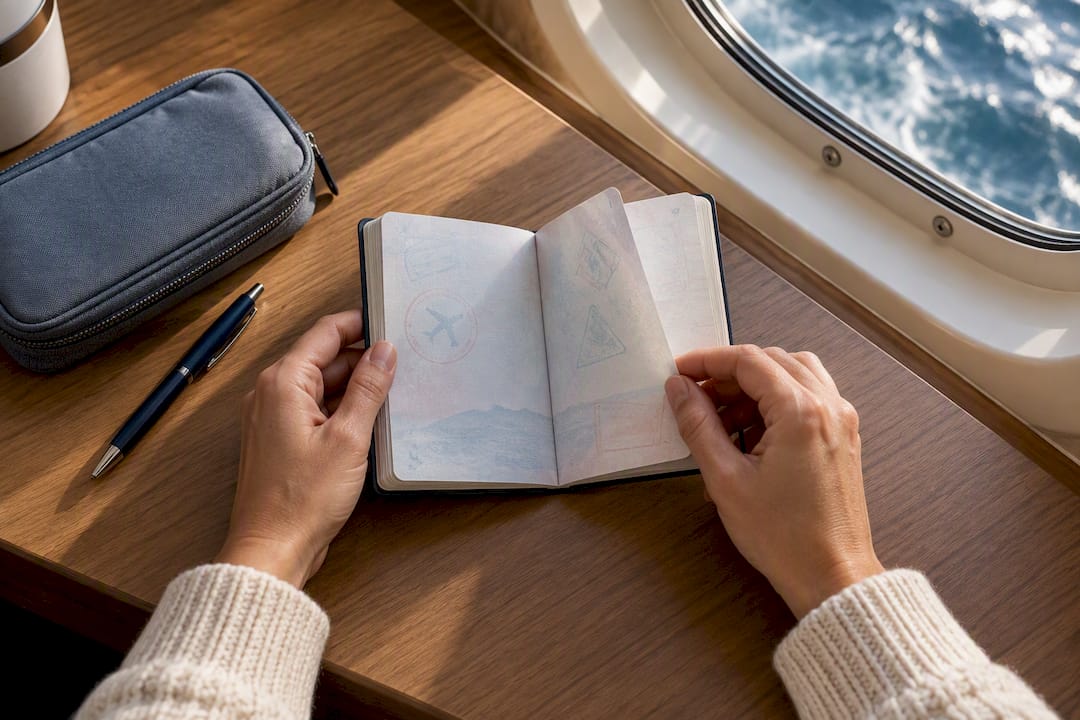
Statistic Callout: Cruise line documentation policies frequently recommend passports even on itineraries where government rules would allow an alternate document, and some lines exclude specific ports like those in Panama or Colombia from their closed-loop allowances entirely.
Here's your practical timeline for renewal:
- Routine processing typically runs several weeks. Apply as early as possible once you book your cruise, not the month before departure.
- Expedited processing through the State Department cuts that timeline down, for an added fee.
- Urgent, last-minute needs (departure inside two weeks) usually require an in-person appointment at a passport agency or a registered expedited courier service that can secure that appointment and walk your documents through faster.
If your cruise is planned well in advance, you can use standard renewal channels. When departure is closer, expedited service or a courier becomes necessary. PassportCenter.ai's guide on Caribbean passport requirements and the 6-month rule breaks down destination-specific validity quirks if your itinerary includes ports with stricter entry rules.
Documents for Non-Citizens, Green Card Holders, and Kids
The closed-loop exception is a U.S. citizen benefit. Everyone else in your cabin needs different paperwork, and getting this wrong at the terminal means missing the ship.
- Lawful permanent residents must carry their Green Card (Form I-551) for reentry. A passport from their country of citizenship may also be required, depending on the itinerary and any foreign port stops.
- Non-U.S. citizens and visa holders need a valid passport from their home country plus any visas required for the ports you're visiting, closed-loop status notwithstanding.
- Children can generally use a birth certificate for closed-loop sailings, just like adults, but bring proof of relationship if a parent's last name differs from the child's.
- Visa Waiver Program travelers using an ESTA authorization still need a valid passport from their home country. The ESTA doesn't replace it; it supplements it.
Mixed-status families are common on cruises, and it's worth checking every traveler's documents separately rather than assuming one set of rules covers the whole cabin.
Why You Must Check Your Cruise Line's Own Rules Too
Government guidance sets the floor, not the ceiling. Cruise lines are free to require more than CBP does, and many do.
- Some lines require passports even for closed-loop cruises, full stop, regardless of what CBP's baseline rules allow.
- Panama Canal transits, Colombia stops, and certain Caribbean territories commonly trigger stricter documentation requirements from the cruise line itself.
- Your booking confirmation and the cruise line's travel documents page will spell out exactly what's required for your specific sailing. Royal Caribbean's travel documents page is a good example of how detailed these policies get by itinerary.
- When cruise-line policy and government guidance conflict, follow the stricter one. The cruise line can deny you boarding at the terminal even if CBP would have let you back into the country without a passport.
Print or screenshot your line's documentation page a week before departure. Policies get updated, and the version you read three months ago when you booked isn't necessarily the version enforced at check-in.
Lost Your Passport Mid-Cruise? Do This Immediately
Losing a passport at sea or in a foreign port is stressful, but the process for fixing it is well established.
- Report the loss to ship staff immediately. Guest services can help you start the process and may have protocols in place for exactly this situation.
- Contact the nearest U.S. embassy or consulate at your next port of call. The State Department's travel resources list contact information for consular offices worldwide.
- Apply for an emergency limited-validity passport. Consular officers can issue one, often within a day or two, specifically so you can travel home.
- Coordinate with your cruise line on logistics. Lines have handled this before and can help arrange your return, including rebooking flights if you disembark early to sort out paperwork.
- Consider an expedited courier service if you're racing a tight deadline once you're back in the U.S. and need a full replacement passport for future travel.
Pro Tip: Keep a photocopy of your passport's photo page in a separate bag from the original, and store a digital copy in a password-protected note or encrypted cloud folder. Consular officers move faster when you can hand them a copy instead of trying to reconstruct your passport number from memory.
For a fuller walk-through of the consular process, PassportCenter.ai's emergency passport guide covers what to expect at each step, and the general emergency passport guide is useful if you're facing a tight timeline even before you leave home.
Your Pre-Cruise Document Checklist
A little prep work before you leave the house prevents most document disasters.
- Bring your passport book or card, plus one backup photo ID, and leave anything you don't need (extra credit cards, your Social Security card) at home.
- Store your passport in the ship's safe when you're not actively using it for a shore excursion requiring ID.
- Photograph every document and save copies to a secure, password-protected cloud folder before departure.
- Download the Mobile Passport Control app, which speeds up reentry processing at many U.S. ports for eligible travelers.
- Save embassy and consulate contact information for every country on your itinerary before you lose cell signal at sea.
- Check whether your travel insurance covers emergency evacuation or document replacement assistance, since some policies include support for exactly this kind of situation.
Pro Tip: On shore excursions, carry a photocopy of your passport's ID page instead of the original whenever local rules allow it. If your excursion doesn't specifically require the original document, there's no reason to risk losing it off the ship.
A thorough onboard checklist built for boaters and cruisers alike covers similar ground if you want a second reference point before you pack.
How PassportCenter.ai Helps You Prepare
Passportcenter built its guides around exactly this kind of decision. If you're not sure whether your passport clears the 6-month rule, the Caribbean passport requirements guide walks through destination-specific validity rules that vary by country. If your departure date is close and you're worried about processing time, the site's emergency passport guide explains realistic timelines and what expedited options actually look like.
This site doesn't process passports directly. Instead, it helps make sense of a confusing system and can connect users to vetted, registered expedited courier services when timelines are too tight for standard State Department processing. If your cruise is inside the next few weeks and your passport is expired, damaged, or missing, that referral step can be the difference between sailing on time and missing embarkation entirely.
Start by confirming your own situation against the renewal timeline guidance before you assume you're out of options.
Why We Still Recommend a Passport for Every Cruise
Here's the honest truth: the closed-loop exception exists for a reason, and it's a legitimate, government-backed option. But recommending that travelers rely on it as their primary plan misses the point of why the State Department keeps pushing passport books in the first place. A birth certificate can't get you on a flight home if your ship breaks down in Cozumel. A passport card can't help you if your itinerary shifts mid-trip because of weather or a port closure.
Treat a passport book as inexpensive insurance against a genuinely bad day. It costs a fraction of what a missed flight or an extended consular delay would cost you in time and money. Check both the government rules and your specific cruise line's documentation policy before you pack, because the two don't always agree, and the stricter one wins at the terminal every time.
— David
Need a Passport Fast Before Your Cruise?
If your departure date is close and your passport situation isn't settled, Passportcenter is built to get you unstuck faster than piecing together government processing times on your own. Some travel blogs stop at "check the State Department website," but some sites connect travelers to vetted, registered expedited courier services when standard renewal timelines won't work for their sailing date.
Start with a quick check of your own timeline: if your passport expires within six months of your return date, or you don't have one at all, that's your signal to move now rather than wait. The Caribbean passport requirements guide helps you confirm destination-specific validity rules, and if your window is tight, the site can point you toward expedited courier partners who specialize in fast turnarounds. Visit Passportcenter to check your renewal timeline and see which option fits your departure date before you finalize your packing list.
Sources
Rules shift, and last-minute changes happen more often than travelers expect. Check these before every trip, not just once:
- Cruise Ships - Travel - U.S. Department of State
- Documents - Do I need a passport to go on a cruise? - U.S. Customs and Border Protection
- Travel Documents & Requirements - Royal Caribbean
FAQ
Does a U.S. Citizen Need a Passport for a Cruise?
Not always. U.S. citizens on a qualifying closed-loop cruise can use a birth certificate and government photo ID instead, according to CBP, but a passport book is still recommended for flexibility and required for any international flights.
Do You Need a Passport to Take a Cruise From the United States?
It depends on your itinerary. Closed-loop cruises departing and returning to the same U.S. port allow alternate documents for U.S. citizens, while open-jaw, repositioning, or fly-cruise itineraries require a full passport book.
Does My Passport Have to Be Valid for 6 Months for a Cruise?
The State Department and cruise lines recommend at least six months of remaining validity, and many foreign countries enforce this as their own entry requirement. It isn't a strict U.S. reentry law for closed-loop sailings, but skipping it risks denied entry at certain ports.
How Much Does a Cruise Passport Cost?
Passport costs depend on the type you choose and how fast you need it, and current government fees and expedited pricing are best checked directly at the time of application. Passportcenter's site lists up-to-date guidance on renewal timelines and expedited options so you can compare standard versus rushed processing before you book.
Can I Use a Passport Card for Canada Entry?
Yes, a passport card works for land and sea entry into Canada, which matters if your cruise itinerary includes a Canadian port or repositioning route. It does not work for air travel, so confirm no leg of your trip requires flying before relying on it.