
No, U.S. passport holders do not need a visa for short tourist or business trips to Singapore. What you do need: an SG Arrival Card filed within three days of landing, a passport with at least six months of validity left, and proof of an onward or return ticket. The immigration officer at the checkpoint, not a pre-issued visa, decides how many days you actually get.
TL;DR:
- U.S. travelers must file the free SG Arrival Card within three days of arrival, or risk delays at immigration, and it is mandatory for all travelers including children.
- The standard passport validity requirement is six months beyond your entry date, and airlines will deny boarding if your passport falls short, regardless of trip plans.
- Americans often receive a 90-day visit pass, but the actual duration is determined by the immigration officer at entry, and travelers should verify their permitted stay in their passport record.
- Only certain travel documents besides valid U.S. passports, like refugee or temporary passports, require a visa; check ICA's official requirements before booking.
- Most entry issues arise from passport validity, incorrect SG Arrival Card filing, lack of proof of onward travel or funds, or inconsistent answers at the checkpoint.
Table of Contents
- Singapore Visa for US Citizens: The Pre-Departure Checklist
- How Long Can Americans Actually Stay in Singapore?
- Which Travel Documents Actually Need a Singapore Visa?
- What Happens at the Singapore Checkpoint?
- What If You Need More Time or Get Denied Entry?
- Where to Confirm Current Singapore Entry Rules
- How PassportCenter.ai Helps When Your Passport Is the Problem
- What Americans Get Wrong About Traveling to Singapore
- Handling Urgent Passport Timing Before a Singapore Trip
- Sources
- FAQ
Singapore Visa for US Citizens: The Pre-Departure Checklist
The paperwork that trips up American travelers isn't a visa. It's the SG Arrival Card, and skipping it or filing it wrong is the most avoidable mistake you can make before a Singapore trip.
The SG Arrival Card (SGAC) includes an electronic health declaration, and it's mandatory for every traveler entering Singapore, adults and children alike. Each person needs their own submission. It's free, and it has to be filed within three days of arrival, including the day you land. File it too early and it won't count. File it too late and you risk a hold-up at the checkpoint.
Pro Tip: Bookmark the official ICA SGAC e-Service or download the MyICA app directly from your phone's official app store. Copycat websites charge $15 to $30 for something that costs nothing when done correctly, and they often show up first in a quick search.
Before you even think about the arrival card, check your passport's expiration date. Airlines enforce Singapore's six-month passport validity rule at check-in, and they will deny boarding if your passport falls short, regardless of how solid your travel plans are.
Here's what to confirm at least two weeks out:
- Passport valid for six months beyond your entry date, not just your return date
- Confirmed onward or return ticket, printed or saved offline
- Proof of sufficient funds for your stay (bank statement or card access is usually enough)
- Your own individual SGAC submission, filed within the three-day window
Renew now if your passport is anywhere close to that six-month mark. Our guide on Caribbean passport requirements and the six-month rule breaks down how this same rule plays out at check-in counters worldwide, and it's worth a read even if Singapore is your only stop.
How Long Can Americans Actually Stay in Singapore?
Visa-free doesn't mean unrestricted. It means you skip the embassy paperwork, not that you're guaranteed a set number of days on the ground.
U.S. citizens are generally exempt from needing a visa for short tourism or business visits, and Singapore issues a Visit Pass on arrival rather than a visa in advance. That Visit Pass is stamped or logged electronically at the checkpoint, not mailed to you ahead of time.
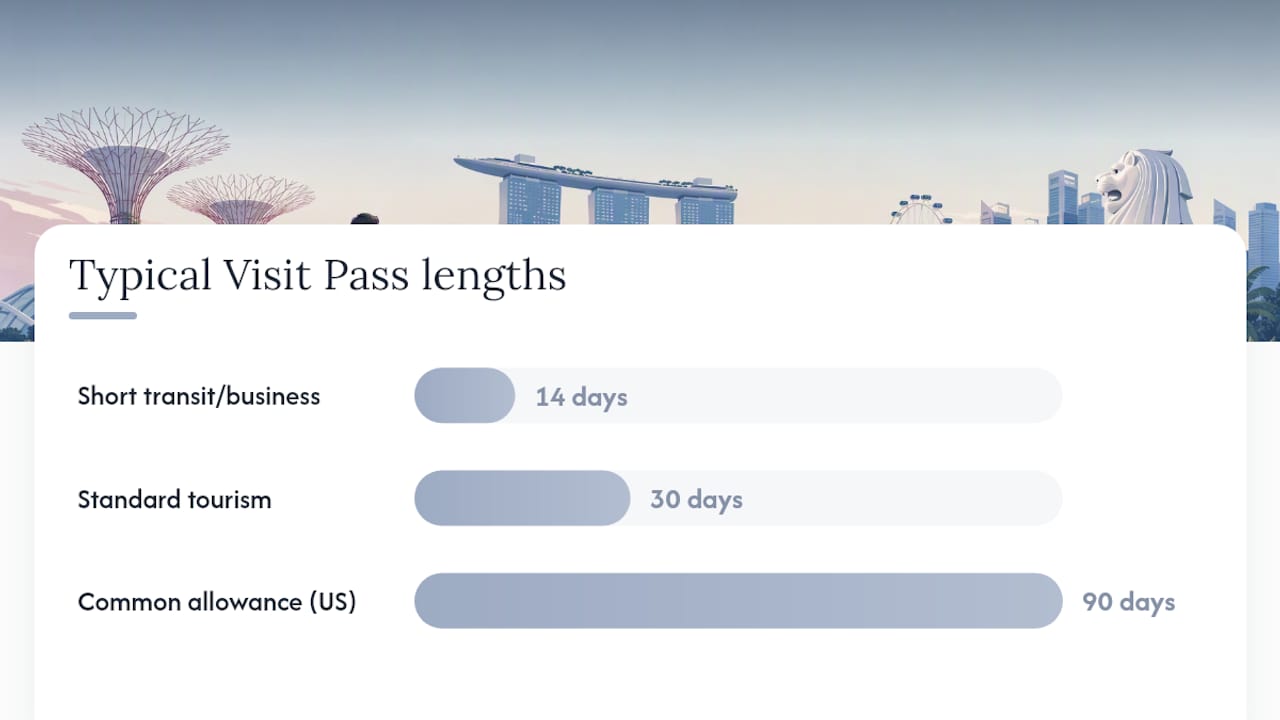
Duration varies by traveler and purpose. Common lengths include:
- 14 days for shorter transit or business stops
- 30 days for standard tourism
- Up to 90 days, which is the most common allowance for American tourists
Ninety days is typical, but it's not automatic. Possessing visa-exempt status doesn't guarantee entry or a specific length of stay; that call belongs entirely to the immigration officer reviewing your case at the point of entry. Two travelers on identical itineraries can walk away with different Visit Pass durations.
Don't assume you got the full 90 days. Check the stamp in your passport or, if you entered through automated clearance, verify your e-Pass details through your ICA arrival record or confirmation email. That record shows your actual authorized departure date, and it's the number that matters if you're planning to extend a trip or connect to another country afterward.
Which Travel Documents Actually Need a Singapore Visa?
Not every American fits the standard visa-free path. If you're traveling on anything other than a regular, valid U.S. passport, check your status before booking flights.
Singapore's visa requirements hinge on the travel document, not just citizenship. Categories that typically do require a visa or additional screening include:
- Refugee travel documents
- Certain travel documents issued to Palestinian Authority holders
- Some categories of Chinese (PRC) passports issued outside standard channels
- Temporary or emergency passports, including some UAE-issued temporary documents
Singapore also runs a Visa-Free Transit Facility (VFTF) for select nationalities transiting through Changi Airport. Eligibility depends on your nationality, your onward destination, and how long your layover runs, so it's not a blanket exemption.
If you're holding anything other than a standard U.S. passport, whether that's a permanent resident card from another country, a diplomatic document, or a refugee travel document, use ICA's official visa requirements tool before you book. When in doubt, contact the Embassy of the Republic of Singapore in Washington, D.C. directly. That call is far cheaper than a denied boarding at the gate.
What Happens at the Singapore Checkpoint?
Singapore's checkpoints run on biometric and automated systems for most travelers, which speeds things up when your paperwork is in order and slows things down fast when it isn't.
Expect fingerprint scans and facial recognition at immigration, standard procedure for most arrivals at Changi Airport. The process itself takes minutes. What causes delays is almost always paperwork, not technology.
The most common reasons Americans get flagged or denied entry:
- Passport validity under six months remaining
- No SGAC on file, or a card filed outside the three-day window
- No proof of onward or return travel
- Insufficient proof of funds for the length of stay claimed
- Inconsistent or suspicious answers about the purpose or duration of the trip
Pro Tip: Keep a digital screenshot of your SGAC confirmation and your onward ticket saved on your phone, separate from your email app, in case you lose signal at the airport. Officers move faster when you can hand over confirmation immediately instead of hunting through your inbox.
Have your documents ready before you reach the counter, and double check the email ICA sends confirming your authorized stay. That email is your actual proof of your departure deadline, not a guess based on what you read online.
What If You Need More Time or Get Denied Entry?
If your trip runs long, or if something goes wrong at the checkpoint, knowing the right move in advance saves you a scramble.
Travelers who want to stay beyond their granted Visit Pass can apply for a Short-Term Visit Pass extension through ICA, typically before the current pass expires. Approval is discretionary, and applying at the last minute reduces your odds.
Overstaying carries real consequences in Singapore, including fines and potential bans on future entry. Ignoring the deadline stamped on your Visit Pass is not a gray area.
If you're denied entry outright:
- Contact the U.S. Embassy in Singapore or, if you're still at the airport, ask airline staff for guidance immediately
- Keep copies of every document: passport pages, SGAC confirmation, tickets, and any paperwork ICA provides
- Arrange return travel promptly, since prolonged delays at the checkpoint rarely improve your situation
If a near-expiry passport played any role in the denial, our expired passport travel guide covers emergency replacement options that can help if you're stuck abroad.
Where to Confirm Current Singapore Entry Rules
Rules change, and travel blogs go stale. These are the sources that actually update in real time.
- ICA's entering Singapore page for SGAC filing, passport validity, and general entry requirements
- ICA's visa requirements tool for checking your specific travel document
- The Singapore Embassy in Washington, D.C.'s visa and entry page for U.S.-specific guidance
- The U.S. State Department's Singapore travel advisory for safety updates and consular contacts
Check these directly before you book, and again a few days before you fly. Skip any third-party site charging a fee to "process" your SGAC. Only .gov.sg domains handle that filing, and it costs nothing.
How PassportCenter.ai Helps When Your Passport Is the Problem
Most Singapore entry issues Americans run into aren't about visas at all. They're about a passport that's cutting it too close on the six-month rule, discovered two weeks before a flight.
This site publishes free guides on passport renewal timelines, the six-month validity rule, and country-specific entry checklists for destinations beyond Singapore. When you're staring down a departure date and a passport that expires in five months, timing information alone can decide whether you board.
- Free breakdowns of renewal timelines by application type
- Country-specific entry checklists you can cross-reference before booking
- Referrals to expedited passport courier services when standard processing won't beat your travel date
When the fix is renewing fast rather than filing more forms, that's the gap PassportCenter.ai is built to close.
What Americans Get Wrong About Traveling to Singapore
The visa question isn't actually where people get into trouble. It's the details around it.
I've noticed the same three mistakes surface over and over. Travelers renew their passport at the "six months and a few weeks" mark, cutting it too close to the airline's own enforcement deadline. They file the SG Arrival Card too early, thinking sooner is safer, when the three-day window is strict on both ends. And they book their return flight assuming a full 90-day stay, when that number is a common outcome, not a guarantee.
The fix isn't complicated. Renew your passport the moment it drops below nine months of validity, not six. Screenshot every confirmation, SGAC and tickets alike, the day you get them. And treat the official ICA and embassy pages as your only source, since they're the ones that actually change when rules do.
— David
Handling Urgent Passport Timing Before a Singapore Trip
If your passport check turned up a problem, that's a fixable timing issue, not a travel disaster. This resource is built for exactly this gap: free, plain-language guides on renewal timelines paired with referrals to expedited passport courier partners when your calendar won't wait for standard government processing.
Consider paid expedited help specifically when your passport falls within six months of expiration and your flight is already booked. That's the window where standard renewal mail times get risky, and a courier service closes the gap in days instead of weeks. This site doesn't process passports directly. It connects you to partners who specialize in exactly this kind of deadline pressure, so you're not guessing which expedited service is legitimate.
If your renewal clock and your travel date are cutting it close, start with Passportcenter's full guide to U.S. passport information and expedited referrals and see which option actually fits your timeline before you book anything else.
Sources
- Entering Singapore | Immigration & Checkpoints Authority (ICA)
- Visa and entry requirements | Embassy of the Republic of Singapore in Washington DC
- Check if You Need an Entry Visa | ICA - Visa requirements
- Travel
FAQ
Do I Need a Singapore Visa If I Have a U.S. Passport?
No. U.S. passport holders are visa-exempt for short tourism and business visits to Singapore. You still need to file the SG Arrival Card and meet passport validity and onward-ticket requirements.
What Is the 60-90 Rule in Singapore?
Singapore doesn't have an official Visit Pass range. What travelers usually mean is the typical allowance, where Americans commonly receive stays up to 90 days, though the exact number is set by the immigration officer at arrival, not guaranteed in advance.
What Are the Requirements for American Citizens to Travel to Singapore?
You need a passport valid for at least six months beyond your entry date, a completed SG Arrival Card filed within three days of arrival, and proof of an onward or return ticket plus sufficient funds. No pre-arranged visa is required for short trips.
How Long Does an SG Arrival Card Take to Process?
The SGAC is typically processed almost immediately after submission through the official ICA e-Service or MyICA app. Submit it within the three-day window before arrival, since submitting too early won't register and submitting too late can delay you at the checkpoint.
Where Can I Check If My Specific Travel Document Needs a Visa?
Use ICA's official visa requirements tool to check your exact document type, since requirements vary for refugee travel documents, certain PRC passports, and other non-standard papers. If you're unsure, contact the Singapore Embassy in Washington, D.C. before booking travel.