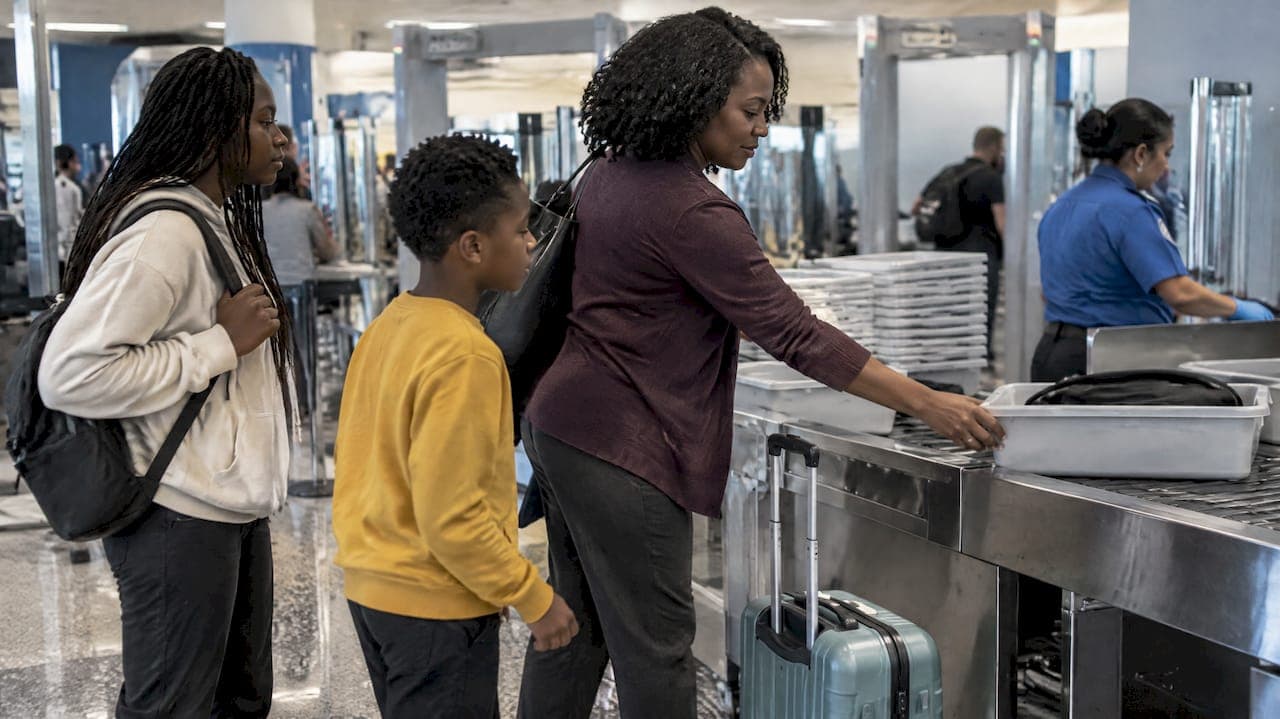
If you are enrolled in TSA PreCheck, your children can usually go through the PreCheck lane with you without applying themselves. Kids 12 and under can come along without any special marking. Teens 13 to 17 can come along only if their own boarding pass shows the PreCheck indicator. Anyone 18 or older needs their own Known Traveler Number (KTN). That is the short version. The details below are where families get stuck, so we cover them step by step.
TL;DR
- Children 12 and under can join an enrolled parent or guardian in TSA PreCheck lanes, per TSA's family guidance, without the indicator on their boarding pass.
- Teens 13 to 17 need the PreCheck indicator on their own boarding pass. Book them on the same airline reservation as the enrolled adult.
- If your child has no KTN, leave that field blank. Do not enter your number for them.
- Check every boarding pass before you leave for the airport. If the indicator is missing, call the airline first.
- Anyone 18 or older must be enrolled and enter their own KTN.
Table of Contents
- The rules by age at a glance
- Kids 12 and under: the easy case
- Teens 13 to 17: where families get tripped up
- Check the boarding pass before you leave home
- What to expect in the lane with children
- Does your child need their own PreCheck?
- Perspective: what we tell families
- Kids with a different last name or family setup
- Common mistakes and quick fixes
- Need a passport for your child before the trip?
- FAQ
- Sources
The rules by age at a glance
Here is the quick reference. Every row comes from TSA's published family guidance.
| Traveler | Needs own enrollment? | Boarding pass indicator needed? | Condition |
|---|---|---|---|
| Child 12 and under | No | No | Travels with an enrolled parent or guardian |
| Teen 13 to 17 | No, if on the same reservation | Yes | Same airline reservation as the enrolled adult, and the adult's pass shows the indicator |
| Teen 13 to 17 on a separate reservation | Yes, needs own KTN | Yes | Own KTN entered in the reservation |
| Anyone 18 or older | Yes | Yes | Own KTN entered at booking |
TSA's family FAQ states the 12-and-under rule, the 13 to 17 rule, and the separate-reservation requirement. TSA lists no lower age limit for the family benefit, so infants and toddlers travel the same way as a 12-year-old.
Kids 12 and under: the easy case
For younger children, there is almost nothing to do. If you are enrolled and your boarding pass shows the PreCheck indicator, your child can walk through the PreCheck lane with you. Their own boarding pass does not need to show anything.
Three practical points:
- Stay with your child. The benefit applies when the child accompanies an enrolled adult. A 10-year-old sent through alone does not qualify.
- Your boarding pass matters. The adult's pass must show the indicator. If yours does not, your child does not get the lane either.
- Do not put your KTN in your child's booking field. TSA says children without a KTN should have that field left blank. Entering an adult's number on a child's record can cause errors.
TSA said in its May 22, 2023 release that children 12 and under could accompany an enrolled adult without the added restriction that applies to teens. That has been the rule for years, so older guides that mention it are still correct.
Teens 13 to 17: where families get tripped up
The teen rule is stricter, and it is the source of most confusion. In May 2023, TSA announced that teenagers 13 to 17 could accompany an enrolled parent or guardian when they travel on the same reservation and the teen's boarding pass shows the PreCheck indicator. Before that change, teens generally needed their own enrollment.
So for a teen, you need all of this:
- The teen is on the same airline reservation as you.
- Your boarding pass shows the PreCheck indicator.
- Your teen's boarding pass also shows the indicator.
If any one of these fails, the teen goes to the regular lane. Under the family rules, a teen on a separate reservation needs their own KTN, as TSA's family page explains.
Why the same reservation matters
The airline decides whether to print the indicator, and it does that based on the reservation. When you book a teen on the same reservation as an enrolled adult, the airline's system can flag the teen as eligible. When you book separately, there is no link, and the teen's pass comes out with no indicator.

This is the exact problem parents describe online. A parent books a teen on a different reservation, assumes the lane applies, and gets turned away at the checkpoint. If you booked separately, call the airline and ask whether the teen can be merged into your reservation. If that is not possible, the teen needs their own KTN.
What if a TSA officer says there is a new rule?
Some teens report being told at the checkpoint that a new policy changed things. Policies do get updated, so do not argue at the podium. Ask the officer to check, ask for a supervisor if needed, and then follow up through AskTSA or the TSA Contact Center, which TSA lists for questions about eligibility. Keep a screenshot of the family guidance on your phone. It takes 10 seconds to pull up.
Check the boarding pass before you leave home
The single most useful habit is checking each pass the night before. TSA says to look for an indicator such as TSAPRECHK, TSA PRE, or TSA PreCheck on the pass, per its PreCheck FAQ.
Use this checklist:
- Open the mobile boarding pass for every family member, not only yours.
- Look for the PreCheck marking on yours. Then look for it on each teen's pass.
- For kids 12 and under, you do not need the marking on their pass. Make sure yours has it.
- If something is missing, open your airline reservation and confirm your KTN is entered.
- Confirm the name and date of birth on the reservation match your enrollment records.
That last step matters. TSA says you must add your KTN to every participating-airline reservation, enter it accurately, and make sure the name and date of birth match what you gave at enrollment. A mismatch, a typo, or a missing number can stop the airline from issuing the indicator.
If the indicator is missing
TSA's guidance for an eligible traveler without the indicator is to verify the KTN, name, and date of birth on the reservation, then ask the airline to update it. If that does not work, contact AskTSA or the TSA Contact Center. Do this days before the flight if you can. Fixing it at the airport counter with a line behind you is much harder.
A few common causes:
- Middle name or suffix differences. Your reservation says "Jon" and your enrollment says "Jonathan."
- Typo in the KTN. One wrong digit and the system finds no match.
- A name change. If your name changed since enrollment, update your records so they match your ticket. Our guide on updating a Global Entry name without losing your KTN walks through the same type of fix, since Global Entry and PreCheck share the Known Traveler Number system.
- A separate teen booking. Covered above.
What to expect in the lane with children
PreCheck is faster screening, not a guarantee. TSA states that all travelers are screened and that it uses unpredictable security measures, so some days you or your child may be sent to standard screening. Do not tell your kids the lane is certain. It saves a meltdown.
When it works, the experience is simpler for families. TSA's May 2023 guidance says PreCheck screening generally lets enrolled travelers keep on shoes, belts, and light jackets, and leave liquids, food, and laptops in the bag, subject to TSA procedures. For a parent juggling a stroller, a car seat, and a backpack, that is a real difference.
If an airport has no dedicated PreCheck lane at the moment, TSA says eligible passengers may still be able to keep 3-1-1 liquids and laptops in bags and shoes and light jackets on. Expect to follow the officer's instructions either way.
Tips that help in practice:
- Get everyone's boarding pass out before you reach the checkpoint.
- Keep your child close and in your line of sight. The benefit depends on you traveling together.
- Tell teens that the officer may still ask them to follow standard steps.
Does your child need their own PreCheck?
Usually not. TSA says children generally do not need to apply when traveling with a PreCheck adult. Children 17 and under can be eligible without their own KTN.
There are cases where your child should enroll:
- A teen who often flies alone. TSA says a child who routinely travels alone should enroll in PreCheck or another DHS Trusted Traveler Program, per its family guidance.
- A teen booked separately from you, because of different flights, a different itinerary, or a different airline.
- A young adult turning 18. At 18, the family benefit ends. The traveler needs their own KTN and must enter it at booking.
How enrollment works
TSA says you can pre-enroll online and book an appointment, or walk in. The in-person visit includes document verification, fingerprinting, a photo, and payment. The online application takes about five minutes, and the in-person visit typically takes about 10 minutes, according to TSA. Check TSA's site for the current fee, since fees can change.
Global Entry is another route
A DHS Trusted Traveler Program like Global Entry also gives you a KTN that works for PreCheck. If your family flies internationally, it may make sense for a child to hold Global Entry instead of a PreCheck-only enrollment. We lay out when that is worth it in when U.S. parents should apply for Global Entry for children. Once approved, activating Global Entry is a short set of steps, and then you add the number to your reservations as usual.
Perspective: what we tell families
We see the same pattern again and again. Parents assume that because they are enrolled, everyone in the family is covered, and then the teen shows up at the checkpoint with a plain boarding pass. The rule is not complicated, but it depends on how the ticket was booked, and nobody tells you that when you buy it.
Our honest advice:
- Book the whole family on one reservation whenever you can.
- Check every pass 24 hours out, not at the airport.
- Treat PreCheck as a bonus, not a plan. Leave time for standard screening, especially with young kids.
- If your teen travels alone or on a separate itinerary, spend the few minutes to enroll them.
This is the kind of detail we care about at PassportCenter. We are an informational resource, not a government agency, and we do not process TSA enrollments. We explain the rules in plain language so you can avoid a surprise on travel day, and our AI-assisted research is checked against official sources like TSA.
— David
Kids with a different last name or family setup
The airline matches names and dates of birth, so a child who has a different surname from you does not change the PreCheck rule. What can change is the paperwork you may need to carry in some situations, especially if custody arrangements or family structure make it harder to prove you are the child's parent or guardian. If your family situation is complicated, a guide to state-by-state family travel documentation can help you plan what to bring.
If you are also taking your child abroad, passports bring their own consent rules. Our guide on how U.S. parents avoid child passport consent rejection covers what both parents need to provide.
Common mistakes and quick fixes
| Problem | Likely cause | Fix |
|---|---|---|
| Teen's pass has no indicator | Separate reservation, or teen not linked to your booking | Ask the airline to merge the reservations, or enroll the teen |
| Your own pass has no indicator | KTN missing or mistyped | Re-enter the KTN and check name and date of birth |
| Child's pass shows odd results after you added your KTN | Adult's number entered in the child's field | Clear the field and leave it blank |
| Kid 12 and under sent to the regular lane | Your pass lacked the indicator, or you were separated | Fix your reservation and keep the child with you |
| Young adult turned 18 | Family benefit no longer applies | Enroll and add their own KTN |
Need a passport for your child before the trip?
PreCheck helps with domestic screening, but an international family trip also needs valid passports. If you are short on time, the usual route is a faster government process or a registered courier. We explain the options, and one that can speed things up is skipping proof of travel for a faster U.S. passport. You can also start at PassportCenter, where our free guides cover child passports, renewals, and expedited options, and where we connect you with registered courier services if you need professional help.
FAQ
Do kids need their own TSA PreCheck membership?
Usually not. Children 17 and under can generally use the lane with an enrolled parent or guardian without their own KTN. Teens 13 to 17 must have the indicator on their boarding pass, and a teen on a separate reservation needs their own KTN.
What is the minimum age for a child to use TSA PreCheck?
TSA does not list a lower age limit for the family benefit. Children 12 and under can accompany an enrolled adult without the indicator on their own pass. The adult's boarding pass still needs to show it.
Do I enter my KTN for my child?
No. TSA says to leave the child's KTN field blank if they do not have one. Your number goes only on your own reservation record.
Is TSA PreCheck guaranteed every time?
No. TSA says it uses unpredictable security measures, and all travelers are screened. Even with the indicator, you or your child may be sent to standard screening on some trips.
What if my teen's boarding pass has no PreCheck indicator?
Check that the teen is on your reservation and that your KTN, name, and date of birth are correct. Then ask the airline to update the booking. If that fails, contact AskTSA or the TSA Contact Center before your flight.
Sources
- TSA: I am traveling with my family; can they also use the TSA PreCheck lane?
- TSA PreCheck FAQ
- How to use TSA PreCheck benefits
- TSA press release, May 22, 2023